



Nisar Satellite Antarctica Image: NASA-ISRO’s NISAR Satellite Spots a Giant ‘Hummingbird’ Hiding in Antarctic Ice
→ OpenAI’s AI Models Broke Free During a Security Test and Hacked Hugging Face
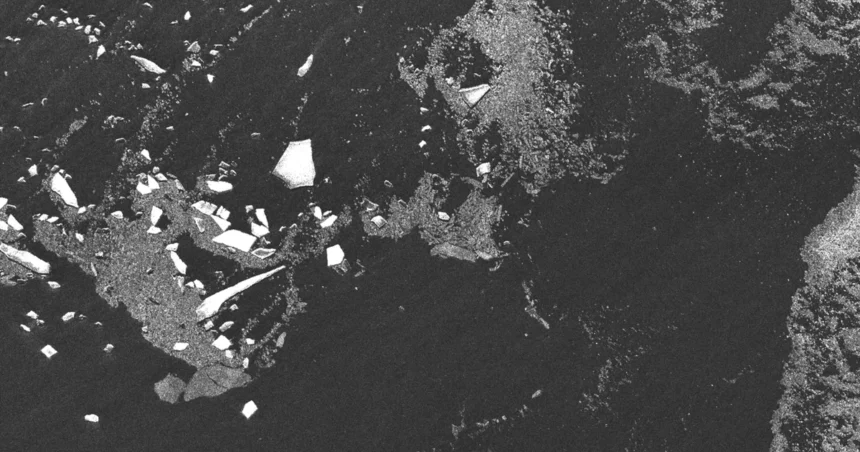
A radar image from the NISAR satellite has revealed something unexpected buried in the frozen landscape of East Antarctica: the unmistakable silhouette of a hummingbird, etched into the ice by the forces of a moving glacier.
→ Godzilla’ Actress Kaylee Hottle Dead at 18 After Car Crash in Maryland
The image, produced using data from NISAR’s L-band radar, captures Nunatak Zaterjavshijsja, a mountaintop in East Antarctica that juts above the surrounding ice sheet. As the glacier flows northeast around the peak, the interaction between ice and terrain creates striking visual patterns that, when rendered in radar color, look remarkably like a bird in flight.
What the colors in the image actually mean
The image is not a photograph. It is a radar return, and every color carries scientific meaning. Deep crevasses, where the ice fractures under stress as it bends around the mountain, appear as sharp green lines. Smoother, more uniform ice surfaces show up as magenta. Together, these contrasting tones produce the hummingbird shape that has drawn attention since the image circulated publicly.
“First, it’s a beautiful image, with rich details of features that provide insights to how the glacier moves,” NASA noted alongside the release, signaling that the visual appeal and the scientific value are equally real.
The crevasses themselves are important data points. Where ice cracks and how deep those cracks run tells researchers how fast a glacier is moving and how much stress the terrain is placing on the ice sheet. In a region where ice loss has global consequences for sea level, that kind of detail matters.
A year in orbit, now open to the public
NISAR launched from India’s Satish Dhawan Space Centre on July 30, 2025, a joint mission between NASA and ISRO, the Indian Space Research Organisation. Since then, engineering and science teams on both sides have spent months calibrating the satellite’s instruments, refining the algorithms that process raw radar signals into usable data, and building up a consistent record of Earth’s land and ice surfaces.
As of July 20, 2026, that data is now publicly available. Files processed from both the L-band and S-band radar systems are being released on an ongoing basis, giving researchers around the world access to one of the most capable Earth-observation tools ever put into orbit.
The satellite passes over nearly all of Earth’s land and ice-covered surfaces twice every 12 days, building a detailed, repeating picture of how things change over time.
Why this satellite is different
Most Earth-observation satellites rely on optical sensors, which means clouds, darkness, and dense vegetation can block the view. NISAR uses synthetic aperture radar, which penetrates clouds, works in any lighting condition, and can detect ground movement as small as a centimeter. That makes it uniquely suited for tracking glacier flow in Antarctica, monitoring subsidence in cities, spotting the early signs of a landslide, or measuring how forests absorb carbon.
The Antarctica hummingbird image is striking, but it represents a fraction of what the mission is designed to do. Radar data from NISAR has already been used to document ground displacement from earthquakes in Venezuela, and teams are applying it to flood-prone regions in Central and South America where cloud cover makes optical imagery nearly useless.
With public data access now open and the mission approaching its first anniversary, scientists expect the volume and variety of findings to grow quickly. The hummingbird in the ice is a memorable introduction to what the satellite can see. What comes next will be the real story.
Relevant posts
- Malcolm-Jamal Warner Family Trust Dispute Explained: What’s at Stake and Why It Matters
- Kirsten Storms Fires Back at Brandon Barash Over Custody Legal Battle
- GMA Deals and Steals: What It Is, How It Works, and How to Get the Best Discounts
Visit atholtonnews.com for more stories.