


Introduction
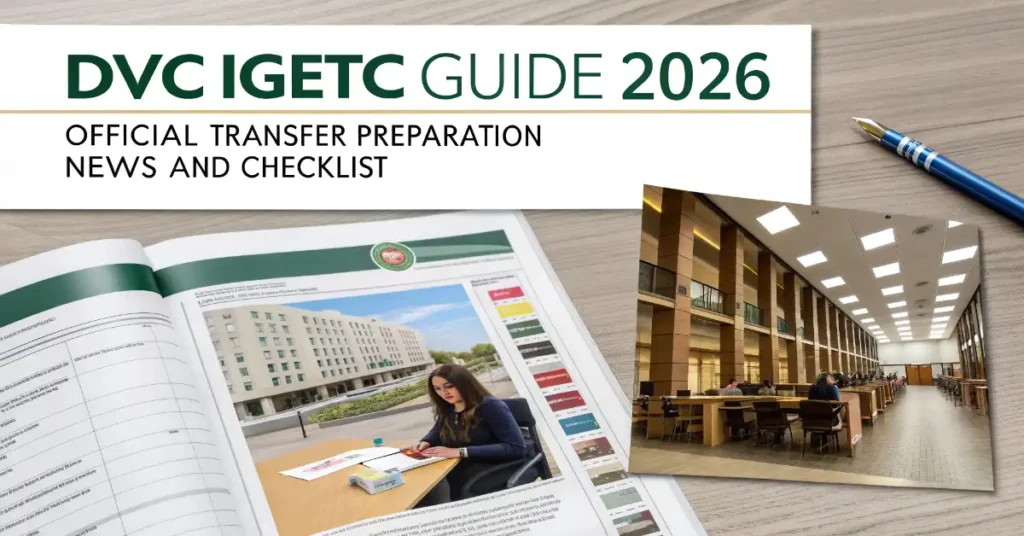
DVC IGETC Guide is essential reading whether you aim for a University of California (UC) or a California State University (CSU) campus. Completing your general education requirements early can make your transfer journey smoother and more organized. DVC IGETC Guide is a crucial pathway that allows you to satisfy lower-division general education requirements for both UC and CSU systems through courses taken at DVC or other accredited community colleges. However, significant updates to general education standards and transfer policies have reshaped how students should approach IGETC in 2026 — especially with the transition to Cal-GETC beginning in Fall 2025.
What is IGETC and Why It Matters
IGETC (Intersegmental General Education Transfer Curriculum) is a general education pattern that community college students can complete to fulfill lower-division general education requirements at most UC and CSU campuses. This means if you complete DVC IGETC Guide before transferring, you won’t need to take additional general education courses after enrollment at your university.
Benefits of DVC IGETC Guide
- Satisfies general education requirements for both UC and CSU systems.
- Offers flexibility — you don’t need separate GE patterns for different university systems.
- Helps you focus on major preparation courses earlier in your community college journey.
- Can potentially save time and money if completed before transfer.
Important Note About Cal-GETC
Beginning with students who start their general education after Fall 2025, the Cal-GETC (California General Education-Transfer Curriculum) will replace the traditional GE patterns, and it’s designed to align general education requirements across CSU and UC systems. If you started DVC IGETC Guide before Fall 2025 and opted for IGETC, your progress toward IGETC should be honored, but it’s critical to verify with a counselor about how this impacts your academic plan in 2026.
IGETC Subject Areas and Requirements (2026 Version)
IGETC typically requires completion of courses across multiple subject areas, and all courses must be completed with a grade of “C” or higher.

Here’s a summary of the subject areas and how many courses you need:
| IGETC Subject Area | What You Must Complete | Typical Units |
| Area 1: English Communication | 2–3 courses (varies for UC vs CSU) | 6+ units |
| Area 2: Mathematical Concepts | 1 course | 3 units |
| Area 3: Arts & Humanities | 3 courses (with at least one in each category) | 9 units |
| Area 4: Social & Behavioral Sciences | 2 courses across disciplines | 6 units |
| Area 5: Physical & Biological Sciences | 2 courses, one with lab | 7–9 units |
| Area 6: Language Other Than English (LOTE) | Proficiency equivalent to 2 years high school | Varies |
Note: Area 1 requirements may differ slightly between CSU and UC systems, and some campuses have unique preferences.
Completing all areas means you’ve satisfied the general education expectations of most UC and CSU campuses — but there are exceptions, so always verify with your counselor.
DVC IGETC Guide in the 2026 Transfer Landscape
The transfer environment in 2026 is rapidly evolving. One of the biggest changes is the shift toward Cal-GETC for future students. But for DVC IGETC Guide, here’s what matters:
1. Legacy IGETC Still Accepted for Eligible Students
Students who started IGETC before Fall 2025 typically continue under the previous requirements if they remain active and consistent with their educational planning.
2. New Students Should Understand Cal-GETC Differences
Cal-GETC streamlines general education across the CSU and UC systems. It may slightly alter requirements like oral communication or language proficiency — so speak with a counselor early.
3. Certification Matters
Once you finish all IGETC requirements, you must request official certification from DVC IGETC Guide Admissions and Records Office. You may receive full or partial certification depending on coursework and transfer timing. Maryland Education News
Top Transfer Preparation Tips for 2026
Whether you’re pursuing UC or CSU transfer, the following strategies will help you stay on track:
Plan Early and Meet With a Counselor
Don’t wait until your last semester to see a counselor. Early planning helps align your IGETC coursework with your major requirements and avoid surprises.
Leverage Articulation Agreements
Use tools like ASSIST.org to see how DVC IGETC Guide courses transfer to specific UC/CSU campuses — especially for major prep classes.
Monitor Unit and GPA Requirements
Most universities require a minimum of 60 transferable semester units and specific GPA thresholds — generally 2.0 or higher (higher for competitive majors).
Keep an Updated Checklist
Use this article’s checklist (below!) to stay organized.
Comprehensive 2026 Transfer Checklist
Use this step-by-step checklist to guide your DVC IGETC Guide to university transfer journey:
Decide Your Target Universities
- CSU only? UC only? Both?
- Check program impact and competitiveness.
Declare a Major Early
- This helps focus major prep courses.
Design Your Education Plan
- Include IGETC or Cal-GETC courses.
- Plan for prerequisites alongside general education.
Enroll in Required IGETC Areas
- Follow your plan each semester.
- Track grades and units carefully.
Verify Course Transferability
- Use ASSIST.org or consult a counselor.
Apply for IGETC Certification
- Request official certification after course completion.
Submit Transfer Applications
- Adhere to each university’s deadlines.
- CSU applications typically open October 1; UC applications open August 1.
Submit Transcripts and Test Scores
- Official transcripts must be sent to your target schools.
Follow Post-Application Instructions
- Check email regularly for deadlines and updates.
Consider TAG (Transfer Admission Guarantee)
- Some UC campuses offer TAG options — talk to a counselor to see if you qualify.
Conclusion
Preparing to transfer from Diablo Valley College to a UC or CSU campus is a significant step — one filled with opportunities and challenges. The DVC IGETC Guide 2026 is your roadmap to navigating this journey with confidence and clarity. By understanding the latest requirements, tracking your courses early, and using the checklist above, you’ll be well-prepared to meet your academic goals and transition smoothly into your four-year university.
For More Latest Updates Atholton News