



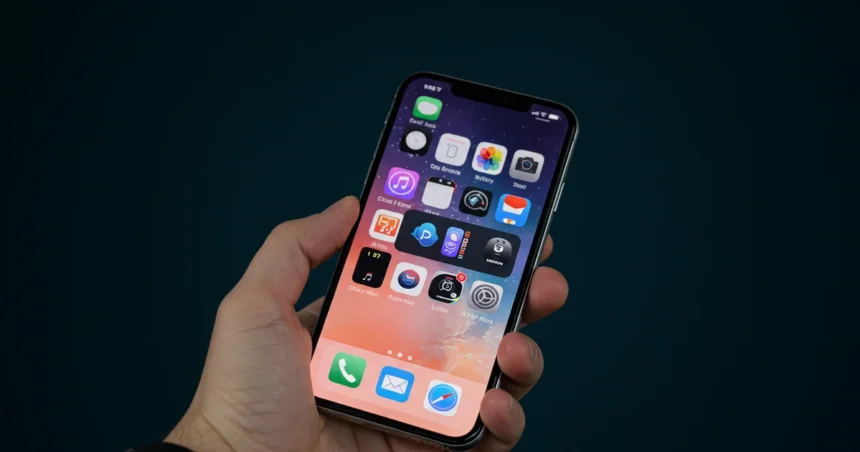
Instead of building its own dominant AI to rival ChatGPT, Apple is making a strategic pivot that could reshape the industry. The company is reportedly turning the iPhone into a central hub for competing AI services, a significant shift in its approach that will be detailed at its upcoming Worldwide Developers Conference (WWDC).
→ RC Strasbourg Alsace vs Brøndby Stats: Full Match Breakdown, Key Numbers & Player Performance
Key Takeaways
- New AI Strategy: Apple is moving away from creating a single, all-powerful AI. Instead, it is positioning iOS as an open platform where users can access various leading AI models like Google’s Gemini and OpenAI’s ChatGPT directly through Siri.
- WWDC 2026 Reveal: The company has confirmed its annual developer conference will run from June 8-12, where it is expected to unveil this new AI ecosystem as part of iOS 27.
- Leveraging Strengths: Our analysis suggests this pivot is a pragmatic move to leverage Apple’s core strengths—its massive hardware install base and tightly controlled ecosystem—rather than trying to beat rivals in the costly race to build the most powerful large language models.
For years, the tech world has anticipated a singular, groundbreaking AI from the secretive labs in Cupertino. However, as competitors like Google and OpenAI galloped ahead with increasingly powerful models, it appears the trillion-dollar company has made a calculated decision: if you can’t beat them, integrate them. This new direction for apple is not a surrender but a strategic repositioning.
The plan, expected to be a highlight of WWDC in June, involves transforming Siri from a standalone assistant into a sophisticated gateway. Users could soon be able to choose their preferred AI chatbot and have it deeply integrated into the iPhone’s operating system.
This move mirrors a playbook Apple has used for decades: control the platform, own the user experience, and let third-party developers innovate within its walled garden.
What Is Apple’s New “AI Hub” Strategy?
Industry insiders are noting that this is a fundamental redefinition of the company’s role in the artificial intelligence era. Rather than pouring endless resources into a direct competitor for Gemini, the new strategy focuses on creating an “AI App Store” layered within the existing ecosystem. This allows Apple to maintain control and take its standard commission while offering users cutting-edge AI functionality.
Our team observed that this approach turns a potential weakness—lagging in frontier model development—into a powerful advantage. It fosters competition among AI providers on its platform, ensuring iPhone users have access to the best technology available.
The table below outlines our understanding of this strategic shift.
| Old Strategy (Expected) | New Strategy (Reported) |
|---|---|
| Build a single, proprietary LLM | Integrate multiple third-party LLMs |
| Siri as a standalone AI competitor | Siri as a gateway to other AI services |
| “Apple Intelligence” as a closed system | iOS as an open platform for AI chatbots |
| High-risk, high-cost model development | Lower-risk platform and commission model |
Why Is the Company Shifting Gears Now?
The pivot seems to be a pragmatic acknowledgment of a difficult reality. Despite years of development and the rollout of features under the “Apple Intelligence” umbrella, Siri’s promised upgrades have been repeatedly postponed, and the company has struggled to match the pace of its rivals. According to a detailed report from VietNamNet, this shift to “plan B” is a strategic reset ahead of the developer conference.
This move also allows the company to focus on what it does best: hardware and user privacy. The new apple strategy emphasizes on-device processing and a secure enclave for personal data, leveraging the power of its custom silicon like the new M5 chips. This addresses growing consumer concerns about how cloud-based AIs handle private information.
Discussions on social platforms like Reddit show users are cautiously optimistic, with one commenter noting, “Pivoting and using Google Gemini was a wise decision.”
What Does This Mean for Your iPhone?
For the average user, this change could be significant. Instead of being locked into a single assistant, you might soon ask Siri to use ChatGPT to draft an email or Google Gemini to summarize a webpage, all seamlessly within iOS 27. This transforms the iPhone into a more versatile and powerful tool.
This new ecosystem will likely be supported by the latest hardware. Recent product announcements, including M5-powered MacBooks and the upcoming iPhone 18, are expected to feature hardware optimized for these on-device AI functions, as noted by Macworld. The goal for apple is to make the AI experience feel integrated, personal, and reliable.
Ultimately, the success of this platform-based apple strategy will depend on execution. If the user experience is clunky or confusing, it could backfire. But if it works as envisioned, the company will have successfully turned the AI race into a game it’s uniquely positioned to win—not by having the best AI, but by being the indispensable place where all AIs live.
Relevant posts
- Atholton April School Sports Updates: Big Wins, Player Highlights & Season Recap 2026
- Quest Diagnostics Phlebotomy Jobs Glen Burnie MD: The 2026 Shift
- Germany vs Ghana: More Than Just a Friendly
Visit atholtonnews.com for more stories.