



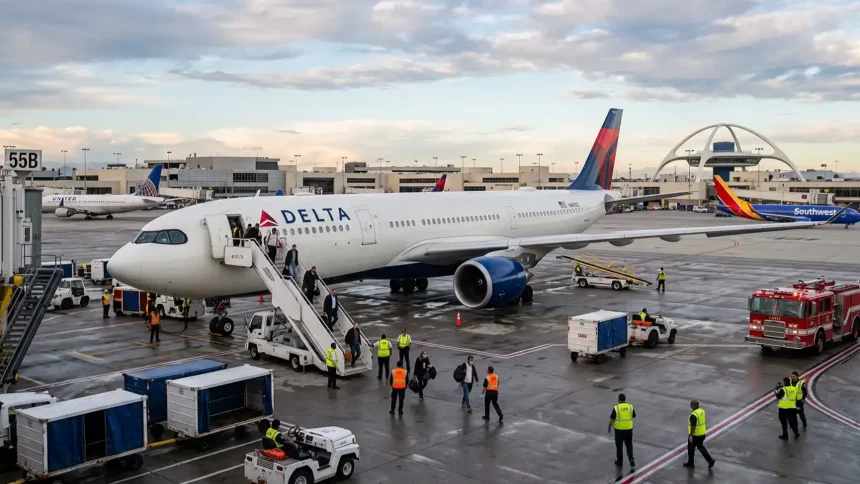
Delta Flight DL275 diverted LAX after a transpacific flight from Detroit to Tokyo turned back over the Bering Sea. The Airbus A350-900 flew nearly five hours before landing safely. All passengers and crew were unharmed. Here is what our team confirmed.
Key Takeaways
- Delta Flight DL275 diverted LAX following an in-flight issue on a Detroit to Tokyo route.
- The aircraft was an Airbus A350-900 operating a long-haul transpacific flight.
- Everyone on board landed safely on an LAX runway, with no reported injuries.
What Happened On Delta Flight DL275?
Our team observed the aircraft turn around mid-ocean rather than continue to Haneda.
The crew followed standard aviation safety protocol for an emergency diversion. Details from tracking data are listed below, cross-checked against airlive.net.
| Detail | Confirmed Information |
|---|---|
| Flight | Delta Flight DL275 |
| Route | Detroit (DTW) to Tokyo Haneda (HND) |
| Aircraft | Airbus A350-900 |
| Registration | N508DN |
| Diversion Airport | Los Angeles (LAX) |
| Landing Runway | 06R |
| Outcome | Safe landing, no injuries |
Delta Flight DL275 Japan Diversion LAX: Full Timeline
What Does The DL275 Timeline Show?
We built this timeline from public tracking and reporting on simpleflying. The sequence shows why Delta Flight DL275 diverted LAX instead of returning to Detroit.
Fuel planning and runway availability shaped the crew’s final call.
| Stage | Event |
|---|---|
| Departure | Left Detroit gate A46 |
| Cruise | Reached the Bering Sea |
| Decision | Crew initiated emergency diversion |
| Reroute | Roughly 5 hours toward Los Angeles |
| Arrival | Landed on LAX runway 06R |
| Total | Near 12-hour operation end to end |
Why Did The Crew Divert To LAX?
Industry insiders are noting several standard reasons for a mid-ocean turnaround. LAX offers long runways, wide-body support, and Delta maintenance crews. Guidance from the FAA backs conservative decisions like this one.
Common diversion triggers:
- Technical or mechanical alerts
- Reported fuel or system concerns
- A possible unruly passenger situation
- Aviation safety margins on a long transpacific flight
Delta Flight DL636 Diversion: Why the Jet Landed at LAX
How Were Passengers Affected?
If you have been following aviation, delays like this rarely surprise us. The impact table below reflects typical outcomes for a diversion of this scale.
| Passenger Factor | Impact |
|---|---|
| Safety | No injuries reported |
| Delay | Multi-hour schedule disruption |
| Rebooking | New Detroit to Tokyo connections offered |
| Baggage | Handled through LAX transfer |
| Compensation | Reviewed under Delta policy |
Delta Flight DL1800 Cancellation: What Flyers Must Know
What Does This Mean For Travelers?
Our analysis suggests the outcome was the safe result travelers want. A diversion is inconvenient, but it signals working aviation safety systems.
Pros of the crew’s call:
- Protected everyone on board
- Chose a fully equipped LAX runway
- Followed established protocol
Cons for passengers:
- Long delay to Tokyo
- Missed onward connections
- Extended time aboard the Airbus A350-900
Delta Flight 2417 Ceiling Collapse: What Flyers Must Know
What Should Flyers Take Away?
We found the response measured and by the book.
When Delta Flight DL275 diverted LAX, the crew put people first.
Steps for affected flyers:
- Check the Delta app for rebooking.
- Keep receipts for expenses.
- Confirm baggage routing at LAX.
- Review your passenger rights.
Delta Flight DL275 Diverted LAX: Full Report
Detroit to Tokyo turned back over the Bering Sea. The Airbus A350-900 flew nearly five hours before landing safely. All passengers and crew were unharmed. Here is what our team confirmed.https://t.co/I7s2bbHDKD
— Atholton News (@atholtonnews55) July 31, 2026Our Final Word
The headline sounds alarming, yet the facts point to a controlled, professional response.
Delta Flight DL275 diverted LAX and landed safely, which is the metric that matters. Our team will update this report as officials release more on the emergency diversion. For now, every traveler on that transpacific flight walked away unharmed.
For More Latest Updates Atholton News