



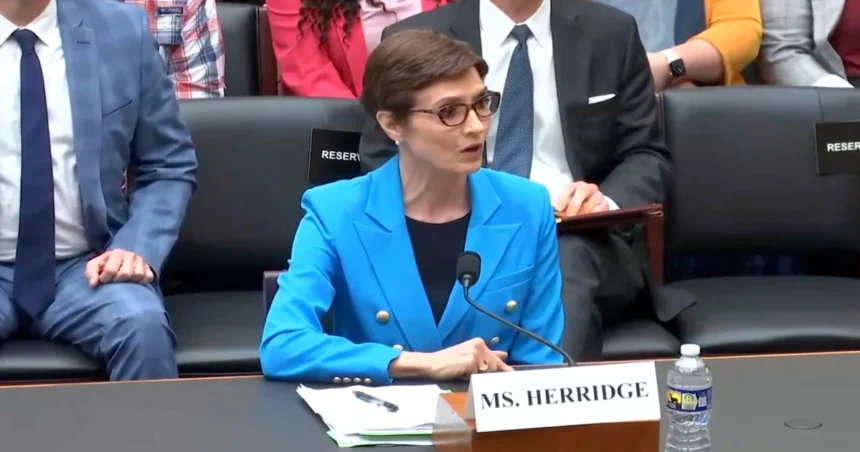
Catherine Herridge Fbi Source Dispute: Supreme Court Refuses to Shield Catherine Herridge From $800-a-Day Fine Over FBI Source
→ Speaker Johnson Pulls the Floor Agenda and Sends House Members Home Early as GOP Rebellion Grows
The Supreme Court has declined to help veteran investigative reporter Catherine Herridge avoid a mounting financial penalty tied to her refusal to identify a confidential source, leaving her exposed to fines of $800 per day until she complies with a court order.
→ East Wing Ballroom Contract Hits $500M No-Bid Deal
The high court rejected Herridge’s emergency appeal on Thursday, allowing a civil contempt ruling against her to stand. Justice Brett Kavanaugh was the lone voice in favor of granting a stay. Chief Justice John Roberts had previously paused the fine briefly while the court weighed the appeal, but that temporary relief is now gone.
What the case is actually about
The dispute traces back to a series of stories Herridge published while at Fox News, reporting on Yanping Chen, a Chinese American scientist who came under FBI investigation but was never charged with any crime. Chen later sued the federal government over what she alleges was an unlawful leak of information about her case to the press.
As part of that lawsuit, Chen’s legal team has been pushing to identify who inside the government fed Herridge the details of the investigation. Herridge has refused to say, arguing that forcing a journalist to expose a confidential source violates First Amendment protections that are central to how investigative reporting works.
Lower courts disagreed, holding her in civil contempt, and now the Supreme Court has let that ruling hold.
What this means for press freedom
The decision lands at a particularly sensitive moment for journalists who rely on government insiders to report on law enforcement and national security matters. When sources face the risk of exposure, they go quiet, and the kind of accountability reporting that depends on those sources becomes harder to do.
Herridge, who spent years covering national security for Fox News and later CBS before being laid off in 2024, has become an unlikely test case for how far federal courts are willing to go in compelling reporters to give up their sources. The $800-a-day fine is designed to coerce compliance rather than punish past conduct, meaning it keeps climbing until she talks or the legal situation changes.
No federal shield law currently exists to protect journalists from this kind of compelled disclosure in civil cases at the federal level, a gap that press freedom advocates have long flagged as a serious vulnerability.
For now, Herridge faces a stark and expensive choice, and the court has made clear it will not step in to make it easier.
Relevant posts
- John Bolton Plea Deal Shakes Washington in 2026
- Zohran Mamdani’s Endorsed Slate Sweeps New York Primaries, Ousting Two Democratic Incumbents
- Judge Rules DOJ Must Release Biden Audio Recordings From Hur Interview
Visit atholtonnews.com for more stories.