



Autoimmune Gastritis Bryan Johnson: Bryan Johnson Has Autoimmune Gastritis. Here’s What That Diagnosis Actually Means
→ Costco Is Being Sued Over Orgain Protein Powder — Here’s What Shoppers Need to Know
Bryan Johnson, the 48-year-old tech entrepreneur who has spent millions trying to biologically reverse his age, revealed recently that he has been diagnosed with autoimmune gastritis, a chronic condition in which his own immune system is attacking the acid-producing cells in his stomach. “My stomach is eating itself,” he wrote on X. He followed that with a characteristically defiant pledge: “I’m going to try and solve it.”
→ Lyndsey Fifield: The Conservative Media Voice Turning Homemaking Into a Political Statement
The diagnosis landed with particular weight given who Johnson is. He tracks nearly every measurable aspect of his biology, claims to sleep more than eight hours a night, and has publicly stated that his biological markers put his body in a state closer to his twenties than his late forties. If autoimmune gastritis can quietly take root in someone running that level of surveillance on his own health, it raises real questions about what even the most aggressive personal health monitoring can and cannot catch.
What the disease actually does
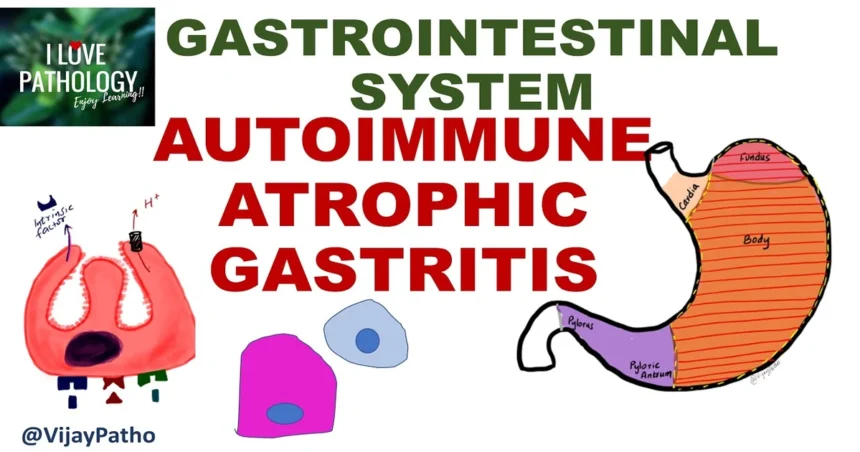
Autoimmune gastritis is a condition where the body produces antibodies that destroy the parietal cells lining the stomach. Those cells are responsible for producing stomach acid and a protein called intrinsic factor, which the body needs to absorb vitamin B12. When they are progressively damaged, the consequences come in waves.
In the early stages, the most visible sign is often iron deficiency. The stomach acid those parietal cells produce plays a key role in absorbing dietary iron, so as the cells are destroyed, iron stores drop. Johnson said years of persistently low ferritin, a protein that stores iron in the body, eventually prompted deeper investigation, including blood work, an endoscopy, and stomach biopsies that confirmed the diagnosis in May.
Over time, if enough parietal cells are destroyed, B12 deficiency follows. That can lead to pernicious anemia and, in serious cases, neurological damage. The condition also carries a meaningfully elevated risk of stomach cancer, specifically a type called gastric adenocarcinoma and, less commonly, gastric carcinoid tumors.
Why it goes undetected for so long
Autoimmune gastritis affects an estimated 4% of people globally, though experts suspect the true number is higher because the disease is genuinely difficult to catch. Early symptoms are vague, often absent entirely, and the condition does not show up on standard blood panels. Diagnosis requires a specific combination of clinical suspicion, antibody testing, endoscopy, and biopsy. Gastroenterologists frequently miss it.
Johnson’s case illustrates the gap between having access to extraordinary healthcare and having a disease that simply does not announce itself. He had years of low ferritin readings before anyone connected the dots. That is not unusual. For most people without his resources or his obsessive tracking habits, the diagnosis arrives even later, sometimes only after B12 deficiency or anemia has already set in.
What comes next for Johnson, and what it means for everyone else
There is no cure for autoimmune gastritis. Management focuses on monitoring for complications, correcting nutritional deficiencies through supplementation or B12 injections, and regular endoscopic surveillance to catch any early signs of cancer. The stomach damage caused by the disease is, as Johnson himself noted, irreversible.
What makes his diagnosis worth paying attention to beyond the celebrity angle is the broader conversation it has opened. Persistent iron deficiency, especially in someone who eats well and has no obvious reason for it, can be an early signal that something is happening in the stomach. Most people, and many doctors, do not immediately think autoimmune gastritis. Johnson’s public disclosure has pushed the condition into mainstream conversation in a way that could genuinely prompt people to ask better questions of their doctors.
He has promised to document his approach to managing the condition, which means the longevity community will be watching closely. Whether that produces anything medically useful or simply generates content remains to be seen. But the diagnosis itself is a straightforward reminder that the immune system operates on its own terms, and no amount of optimization fully puts it under your control.
Relevant posts
- Walmart, Kroger, and Target Hit by Wave of Food Recalls Over Salmonella Fears
- Atholton High School Ranking: Where the Columbia School Stands in 2026
- Cyclosporiasis Cases Are Climbing This Summer. Here’s What You Need to Know.
Visit atholtonnews.com for more stories.