



Cyclosporiasis Cases Are Climbing This Summer. Here’s What You Need to Know.
→ San Anselmo Connections Shaping Marin in 2026
A microscopic parasite is making its way through the United States this summer, and health officials are still working to figure out exactly where it’s coming from. Cyclosporiasis, an intestinal illness caused by the parasite *Cyclospora*, has been reported in hundreds of people across multiple states since May, with Michigan emerging as a particularly alarming hotspot. If you haven’t heard of it before, now is a good time to get familiar.
What this illness actually does to you
The symptom that gets the most attention is the diarrhea, and for good reason. People infected with *Cyclospora* often describe it as explosive and watery, and it can drag on for weeks or even months if the infection goes untreated. That’s not the kind of thing most people associate with a foodborne illness, which typically resolves in a few days.
→ A Whale Struck a New Jersey Fireboat on Patrol, and the Damage Was Devastating
Beyond the diarrhea, cyclosporiasis can bring on severe abdominal cramping, bloating, nausea, fatigue, and noticeable weight loss. Some people feel well for a day or two, then relapse. The illness tends to be more serious in people with weakened immune systems, though anyone can be affected.
At least 20 people have been hospitalized nationwide so far this season, which gives a sense of how debilitating the infection can become when it’s not caught early.
How the parasite spreads
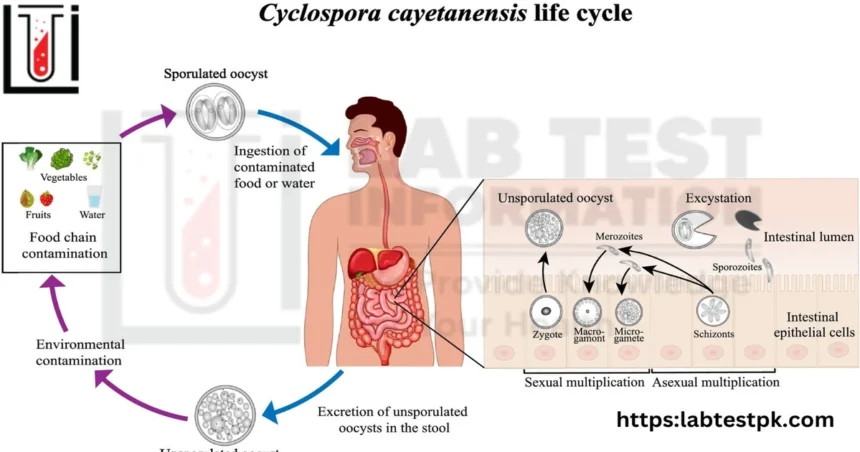
*Cyclospora* doesn’t pass directly from person to person the way a stomach bug like norovirus does. Instead, it spreads through food or water that has been contaminated with fecal matter containing the parasite’s oocysts, the hardy, microscopic form it takes outside a host. Fresh produce is the most common culprit. Past outbreaks in the United States have been traced to items like fresh herbs, raspberries, snow peas, and salad mixes.
The parasite needs time outside the body to become infectious, which is part of why direct contact between people isn’t a transmission risk. But once contaminated produce reaches a grocery store or restaurant, the exposure can spread quickly and widely.
Where cases stand right now
The CDC’s official outbreak surveillance window runs from May 1 through August 31 each year, a period when infections historically spike. As of mid-June, 145 cases had been confirmed across 17 states. By early July, Michigan alone had reported 681 cases, a dramatic jump from 170 just days earlier. Health officials in the state described the increase as sudden and large, well outside what the state typically sees in a season.
Nationally, there is no confirmed single source linking all the cases together. Investigations are ongoing, and officials are working to identify whether specific clusters point to a common food product or supplier.
Why diagnosis often gets delayed
One reason cyclosporiasis can become serious before it’s treated is that it’s frequently misidentified or missed entirely. Standard stool tests don’t always detect *Cyclospora* unless the lab specifically looks for it using a technique called modified acid-fast staining. Many routine stool panels skip this step.
If you’ve had prolonged watery diarrhea, especially after eating fresh produce, it’s worth telling your doctor specifically to test for *Cyclospora*. The infection is treatable with a course of trimethoprim-sulfamethoxazole, an antibiotic combination that clears the parasite effectively when it’s identified.
What you can do to protect yourself
There’s no vaccine for cyclosporiasis, and since the source of the current cases hasn’t been pinpointed, there’s no specific food to avoid yet. That said, a few practical steps reduce your risk during any *Cyclospora* season.
- – Wash all fresh produce thoroughly under running water, even items labeled pre-washed.
- – Be cautious with fresh herbs, leafy greens, and berries, the categories most often implicated in past outbreaks.
- – If you’re traveling internationally, particularly to tropical or subtropical regions where *Cyclospora* is more common year-round, be mindful of raw produce and tap water.
- – If you develop persistent watery diarrhea that doesn’t resolve within a few days, see a doctor and mention the possibility of a parasitic infection.
Cyclosporiasis is a nationally notifiable disease, which means healthcare providers are required to report confirmed cases to public health authorities. That reporting system is what allows the CDC and state health departments to track clusters and eventually trace them back to a source. The faster cases get reported, the faster officials can identify what’s driving an outbreak and pull the product from shelves.
The investigation is still active. If the Michigan cluster or any other regional spike leads investigators to a specific food source, a recall or public advisory would follow. Until then, staying alert to symptoms and washing your produce carefully is the most practical defense available.
Relevant posts
- Varsity University Of Maryland Trends In 2026
- Legionnaires’ Disease Outbreak Climbs to 14 Cases in Two Manhattan Neighborhoods
- Paul Pelosi Faces Hit-and-Run Charge After Napa County Crash
Visit atholtonnews.com for more stories.