

FIFA World Cup 2026 Matches: Everything You Need to Know About the Biggest Tournament in History
→ Wimbledon Championships 2026 Is Rewriting Grand Slam History
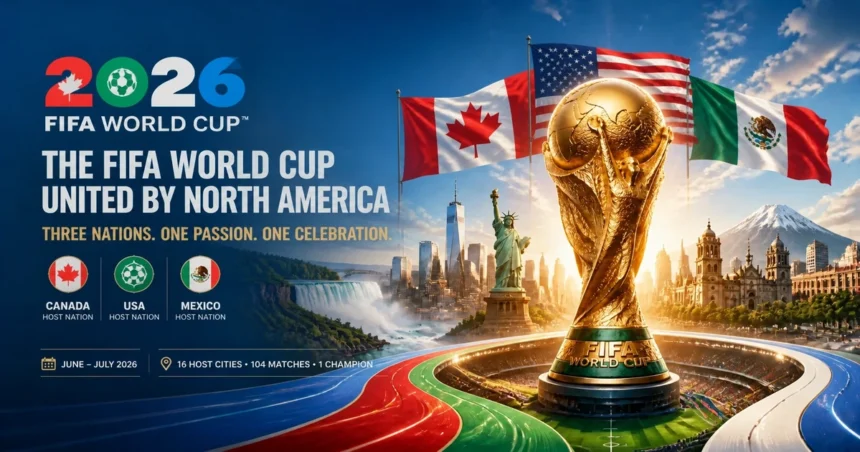
The 2026 FIFA World Cup is shaping up to be unlike anything the sport has seen before. For the first time ever, 48 teams will compete across three host countries, making it the largest World Cup in history. If you’re trying to figure out how the matches will work, where they’ll be played, and what to expect from start to finish, this guide covers it all.
Why This Tournament Is Different From Every Other World Cup
Previous World Cups featured 32 teams. This one features 48, which means more matches, more nations represented, and a longer tournament overall. The expanded format was approved by FIFA back in 2017, and the 2026 edition will be the first to use it at full scale.
→ Cross Country @ Reservoir Puts Atholton in Spotlight
The three host nations, the United States, Canada, and Mexico, are splitting hosting duties across 16 stadiums. The United States carries the heaviest load with 11 venues, while Canada hosts at two stadiums and Mexico at three. The final will be held at MetLife Stadium in East Rutherford, New Jersey, just outside New York City.
This cross-border setup also means the tournament will span multiple time zones, which has real implications for broadcast schedules and for fans traveling between games.
How the Match Format Works
With 48 teams in the field, FIFA restructured the group stage. Instead of eight groups of four teams, the 2026 World Cup uses 12 groups of four teams. Each team plays three group-stage matches, and the top two from each group advance automatically. The eight best third-place finishers also advance, bringing the total number of teams moving into the knockout rounds to 32.
That structure produces the following match breakdown:
| Stage | Number of Matches |
|---|---|
| Group Stage | 72 |
| Round of 32 | 16 |
| Round of 16 | 8 |
| Quarterfinals | 4 |
| Semifinals | 2 |
| Third-Place Match | 1 |
| Final | 1 |
| Total | 104 |
That’s 104 matches in total, up from 64 in Qatar 2022. For context, that’s a 62.5 percent increase in the number of games played.
When the Matches Start and How Long the Tournament Runs
The tournament is scheduled to run from June 11 to July 19, 2026. The opening match will be held in Mexico City at Estadio Azteca, which carries enormous symbolic weight since it will become the first stadium to host World Cup matches in three separate tournaments, having previously done so in 1970 and 1986.
The group stage is expected to run through late June, with the knockout rounds beginning in early July and building toward the final on July 19 at MetLife Stadium.
Where the Matches Will Be Played
The 16 host stadiums are spread across North America, giving the tournament a genuinely continental feel.
United States Venues
- – MetLife Stadium, New York/New Jersey
- – AT&T Stadium, Dallas
- – SoFi Stadium, Los Angeles
- – Levi’s Stadium, San Francisco Bay Area
- – Arrowhead Stadium, Kansas City
- – NRG Stadium, Houston
- – Hard Rock Stadium, Miami
- – Lincoln Financial Field, Philadelphia
- – Gillette Stadium, Boston
- – Lumen Field, Seattle
- – Soldier Field, Chicago
Mexico Venues
- – Estadio Azteca, Mexico City
- – Estadio BBVA, Monterrey
- – Estadio Akron, Guadalajara
Canada Venues
- – BC Place, Vancouver
- – BMO Field, Toronto
The geographic spread means some fans following a single team could face significant travel between group-stage matches. A team playing in Vancouver, then Toronto, then Miami, for example, would require supporters to cover thousands of miles across the continent.
Which Teams Have Qualified
FIFA’s expanded format means more confederation spots are available than ever before. The full allocation breaks down like this:
| Confederation | Allocated Spots |
|---|---|
| UEFA (Europe) | 16 |
| CAF (Africa) | 9 |
| CONMEBOL (South America) | 6 |
| AFC (Asia) | 8 |
| CONCACAF (North/Central America & Caribbean) | 6 + 3 host nations |
| OFC (Oceania) | 1 |
| Inter-confederation playoffs | Remaining spots |
The three host nations, the United States, Canada, and Mexico, qualify automatically. European qualification is ongoing through UEFA’s Nations League and qualifying rounds, with most spots expected to be confirmed by late 2025 and into early 2026.
What the Draw Will Mean for the Schedule
The official group draw will determine which teams meet in the group stage and, by extension, which cities host which matches. Until the draw takes place, the specific match schedule remains open. FIFA has announced that the draw will happen after all 48 teams are confirmed.
Once the draw is complete, fans will be able to see exact dates, kickoff times, and venues for every group-stage match. The knockout bracket then follows a pre-set path through the bracket, so the venues for the round of 32 onward are already assigned to specific slots.
What Makes These Matches Worth Watching
Beyond the sheer volume of games, the expanded field brings in nations that have never appeared at a World Cup before. More spots for Africa, Asia, and the CONCACAF region means fresh stories, unexpected upsets, and teams that will be playing on the biggest stage for the first time.
The stadiums themselves are a draw. Several of the American venues regularly host NFL games and are among the largest and most modern in the world. Capacity crowds at MetLife, AT&T Stadium in Dallas, and SoFi in Los Angeles will create an atmosphere that rivals anything seen at previous tournaments.
With 104 matches spread across 39 days and three countries, the 2026 FIFA World Cup is built to be the most watched sporting event in history. Whether you’re planning to attend in person, follow the broadcast schedule, or just keep track of results, knowing how the matches are structured makes the whole thing a lot easier to follow.
Relevant posts
- Nasdaq Futures Signal Early Trading Direction as Tech Sector Braces for Key Week
- Brazil Eliminates Haiti From 2026 World Cup With Commanding 3-0 Win
- Paraguay vs Turkey: Galarza’s 65-Second World Cup Stunner
Visit atholtonnews.com for more stories.