



Holiday Heat Wave Sent Hundreds to Maryland Emergency Rooms During Fourth of July Week
→ The Manila Clam Has Reached the Atlantic — and Scientists Have Complicated Feelings About It
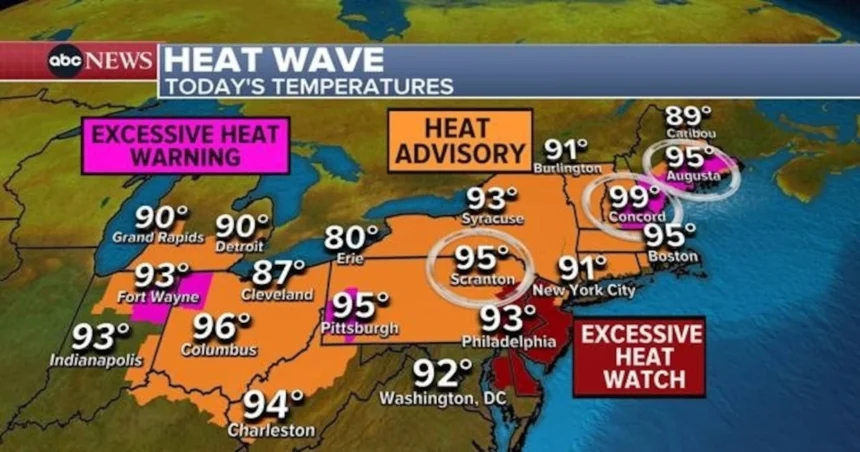
The numbers tell a stark story. Maryland recorded more heat-related emergency room visits in a single week than it had logged in the entire two months before it, as a brutal Independence Day heat wave pushed temperatures into triple digits and overwhelmed hospitals across the state.
One week undid a summer’s worth of data
From the start of Maryland’s official heat season in May through early July, the state had recorded 916 heat-related emergency room or urgent care visits. Then came the week of June 28 through July 4, and 473 of those cases arrived all at once, more than half the summer’s total in seven days.
→ Three Boaters Dead After Pontoon Collides with Commercial Barge on Lake Pepin
Emergency medical services saw the same pattern. Of the 935 heat-related EMS calls logged so far this summer, roughly half came in during that same holiday week.
The Maryland Department of Health’s Weather-Related Illness Data Dashboard, updated Wednesday, confirmed what health officials had feared when they issued warnings ahead of the holiday weekend.
Why this heat wave hit differently
It wasn’t just the heat. Temperatures reached triple digits on several days, but the combination of extreme heat and high humidity made conditions far more dangerous than the raw thermometer reading suggested.
“What made this heat wave so bad for people is that it was both very high temperatures and very high humidity,” a state health official explained in the update.
That combination matters because the human body cools itself by sweating, and when humidity is high, sweat doesn’t evaporate efficiently. The body struggles to shed heat, and core temperature can rise quickly, turning a hot afternoon into a medical emergency within hours.
What the data means going forward
Maryland’s heat season runs through the summer, and this week’s data serves as a warning for what’s still ahead. If a single holiday week can generate more ER visits than two full months of summer, any additional heat events in July and August carry serious risk.
Health officials continue to urge residents to stay in air-conditioned spaces during peak afternoon hours, check on elderly neighbors and family members, and recognize the early signs of heat exhaustion, including heavy sweating, dizziness, nausea, and rapid heartbeat. Heat stroke, where the body stops sweating and confusion sets in, is a medical emergency requiring a 911 call immediately.
The holiday weekend offered a grim preview of what extreme heat can do to a population in a short window of time. With summer far from over, public health agencies are watching the forecast closely.
Relevant posts
- What Waymo Knows About You While You Ride — And What It Can Do With That Information
- Wyatt Russell Is Living Proof That the Apple Doesn’t Fall Far From the Tree
- The Costa Concordia Disaster: The Modern-Day Shipwreck That Killed 32 People and Shocked the World
Visit atholtonnews.com for more stories.