



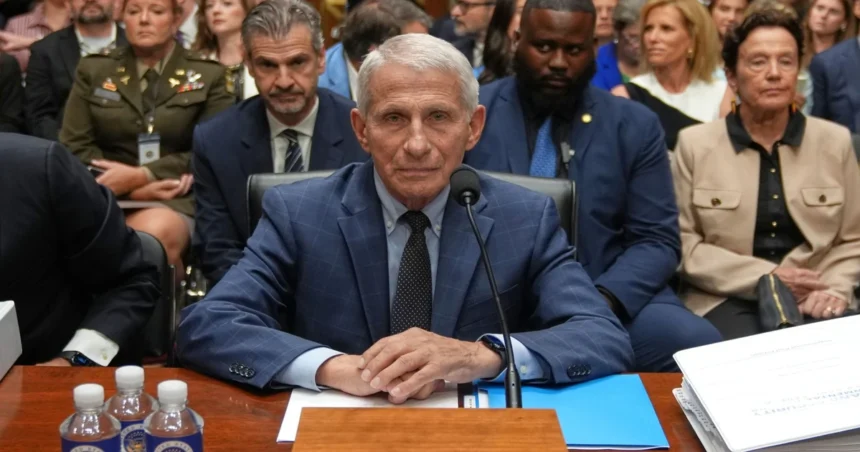
Dr Fauci: Dr. Fauci at 84: What He’s Saying Now and Why People Are Still Listening
→ Trump Administration Demands Hospitals Hand Over Emergency Room Records
Few figures in recent American history have generated as much admiration and hostility simultaneously as Dr. Anthony Fauci. The former director of the National Institute of Allergy and Infectious Diseases retired from federal service in December 2022 after more than five decades at the NIH, including 38 years leading NIAID. He is now 84 years old. And he has not gone quiet.
→ Senate Proposal Would Add $480 a Year to SSI and SSDI Benefits for Low-Income Seniors
Since leaving government, Fauci has continued to speak publicly about pandemic preparedness, the politicization of public health, and what he believes the United States got right and wrong during COVID-19. His continued visibility keeps him at the center of debates that, for many Americans, are far from settled.
The Senate Testimony That Reignited Everything
In June 2024, Fauci appeared before the House Select Subcommittee on the Coronavirus Pandemic, testifying for roughly seven hours. It was one of the most anticipated congressional hearings in years. Republican members pressed him on the origins of COVID-19, the six-foot social distancing rule, school closures, and the NIH’s funding relationship with the EcoHealth Alliance.
Fauci acknowledged that the six-foot distancing guideline was not firmly grounded in scientific data specific to COVID-19, a concession that drew significant attention. He maintained, however, that public health officials were making decisions in real time with incomplete information, and that the guidance evolved as evidence developed.
On the lab leak hypothesis, he said he remained genuinely open to either explanation, natural origin or lab incident, while stating he had never tried to suppress legitimate scientific inquiry into either possibility.
His critics called the testimony damning. His supporters called it honest and measured. Both reactions said as much about the political climate as they did about the testimony itself.
What He’s Been Doing Since Retiring
Fauci has taken on a part-time role at Georgetown University, where he is involved in global health research and mentoring medical students. He has given paid speeches, published opinion pieces, and sat for numerous long-form interviews.
His memoir, “On Call: A Doctor’s Journey in Public Service,” was published in June 2024. The book covers his entire career, from treating patients during the early AIDS crisis in the 1980s to navigating the COVID-19 pandemic under four presidents. It received strong reviews from health journalists and sharp criticism from conservatives who felt it was self-serving.
He has been candid about the personal toll of his final years in government. He and his family required around-the-clock security detail for an extended period due to credible death threats. He has described that period as genuinely frightening, particularly for his wife and daughters.
The Ongoing Political Fight Around His Legacy
Fauci remains a live political target. Several Republican lawmakers have called for criminal referrals related to NIH funding decisions and gain-of-function research. As of mid-2025, no charges have been filed against him, and no congressional investigation has produced evidence of personal wrongdoing.
At the same time, some public health researchers have offered more measured criticism from within the scientific community, arguing that certain pandemic policies, particularly around school closures and communication strategy, could have been handled better regardless of political pressure.
Why the Conversation Around Him Still Matters
The arguments surrounding Fauci are really arguments about something bigger: how democratic societies should handle expert authority during a crisis, who gets to question that authority, and what accountability looks like when decisions affect hundreds of millions of people.
Those questions do not have clean answers. What is clear is that COVID-19 exposed serious fractures in how Americans relate to public health institutions, and Fauci became the most visible symbol of that fracture.
Whether history judges him as a dedicated public servant who made imperfect calls under extraordinary pressure, or as someone whose decisions deserve harder scrutiny, is a question still being written. At 84, he seems prepared to keep making his case.
Relevant posts
- Tornado Warning vs. Tornado Watch: What the Difference Actually Means for Your Safety
- Scott Presler Claims Thune’s Staff Blocked Him From South Dakota GOP Event — Thune’s Team Calls It a Lie
- The Federal Reserve’s New Homeownership Measure Reveals Millennials Are Splitting Into Two Economic Classes
Visit atholtonnews.com for more stories.