


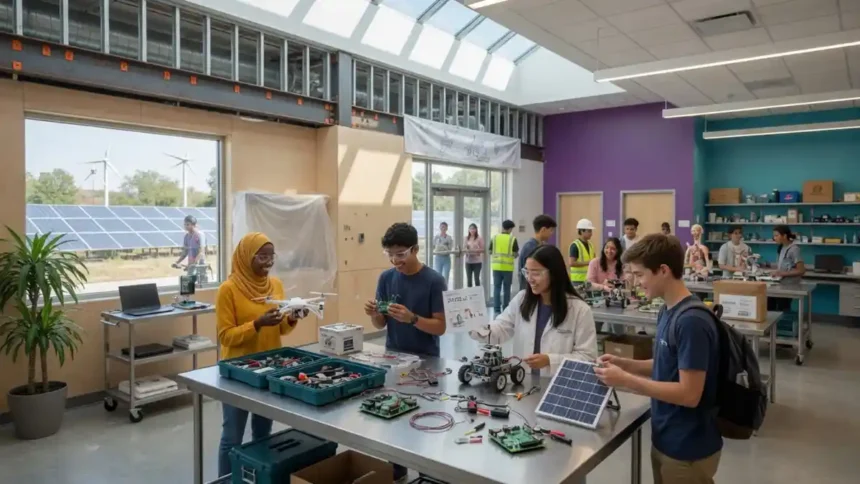
A new $326,000 investment to expand STEM opportunities for students just landed, and it targets the people who shape young scientists first: their teachers.
Society for Science has picked 100 educators for its 2026–2027 Advocate Program. The money follows the classroom, not the headline.
That choice matters more than the dollar figure itself.
How Old Was Mary When She Had Jesus?
Key Takeaways
- Society for Science selected 100 educators for the 2026–2027 Advocate Program, backed by a total $326,000 investment.
- Funding splits into 13 Lead Advocates at $5,000 each and 87 Advocates at $3,000 each, strengthening educator professional development nationwide.
- The program widens student access to science research and boosts entries into major science competitions.
What exactly did Society for Science announce?
We dug into the announcement from Society for Science, and the structure is clear. The organisation is putting $326,000 behind teachers who guide students into original research.
Each Lead Advocate receives $5,000, and each Advocate receives $3,000. That funding pays for stipends, mentorship, and year-round educator professional development.
Our analysis suggests the model works because it invests upstream, in the adults who spot talent early. If you’ve followed STEM education, this teacher-first approach won’t surprise you.
The cohort mixes public, charter, and private schools, plus one university.
United Airlines 787 Diverts to Boston After Cockpit Windshield Cracks
$326,000 Investment to Expand STEM Opportunities for Students
A new $326,000 investment to expand STEM opportunities for students just landed, and it targets the people@US_EDA @stemdotorg @NSF https://t.co/4FpZZ87eIB
— Atholton News (@atholtonnews55) August 19, 2026How does the money break down?
Here is a simple look at where the $326,000 investment goes.
| Group | Number of Educators | Amount Each | Total |
|---|---|---|---|
| Lead Advocates | 13 | $5,000 | $65,000 |
| Advocates | 87 | $3,000 | $261,000 |
| All Advocates | 100 | — | $326,000 |
The 13 Lead Advocates will mentor fellow teachers in region-specific, peer-led cohorts. They support 66 new Advocates and 21 returning Advocates.
Together they form a nationwide network built around student access to science research.
What does the CEO say about the plan?
Maya Ajmera, President and CEO of Society for Science, framed the logic plainly.
“The most powerful way to expand opportunity for young people is to invest in the educators who recognize their potential and help turn their curiosity into discovery,” she said.
She added that the Advocates will strengthen STEM education, share fresh approaches, and open doors for more students.
Her point is direct: back the teacher, and the student rises with them. We think that framing explains why the grant sizes stay modest but the reach stays wide.
Two Pregnant Women, One Mile Apart, No Answers in Gary, Indiana
Why do science competitions sit at the centre?
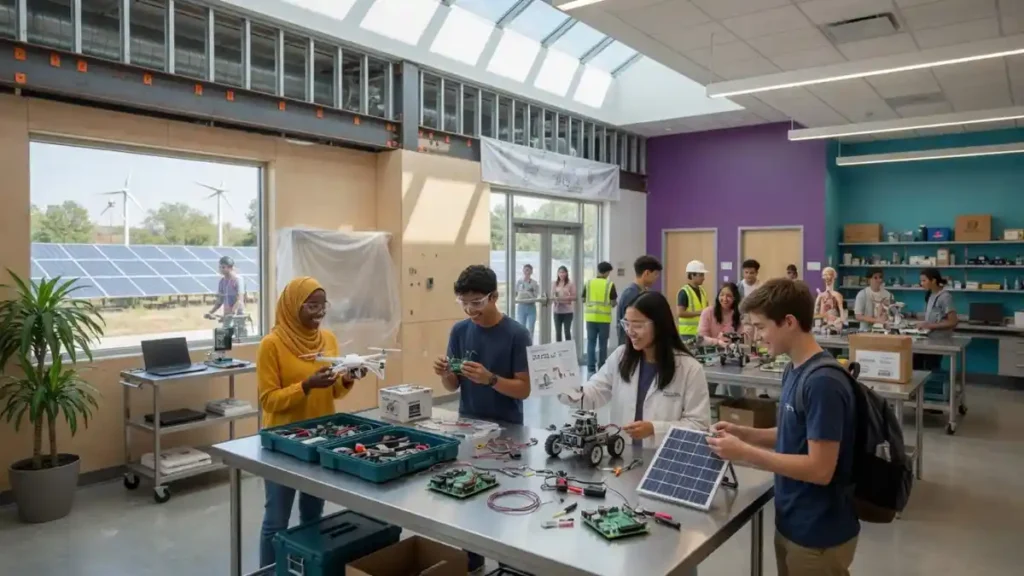
Advocates guide students from quiet lab work to public science competitions.
Here is what that support actually covers:
- Identifying the right contests, including the Regeneron Science Talent Search and the International Science and Engineering Fair.
- Navigating applications and hitting critical deadlines.
- Sharpening how students communicate their research to judges.
- Building confidence across the science and engineering journey.
Since launch, the program has supported 439 educators. Those teachers have reached more than 9,100 students.
More than 6,700 students filed over 12,000 competition entries. Those numbers show a steady pipeline, not a one-off spike.
Missing St. Louis Teen, Zoë, Last Seen Sunday in South City
What does this mean for the STEM pipeline?
We see this grant as a small lever on a large problem. National data backs the urgency.
According to NSF’s science and engineering indicators, retention through the STEM pipeline stays fragile after students declare a major.
Federal programs like YOU Belong in STEM push the same goal from the policy side. Agencies including NASA and the NSF Directorate for STEM Education fund parallel efforts.
Industry insiders are noting that teacher-led mentorship often outperforms one-time equipment grants.
Our team observed the same pattern here: the $326,000 buys sustained human support, not just hardware.
For students shut out of research before, that shift changes real outcomes.
Our bottom line
The headline number looks small next to federal budgets. But the design is smart.
By funding educator professional development first, Society for Science stretches every dollar across thousands of future students.
We’ll be watching how this cohort reshapes access over the coming year.