



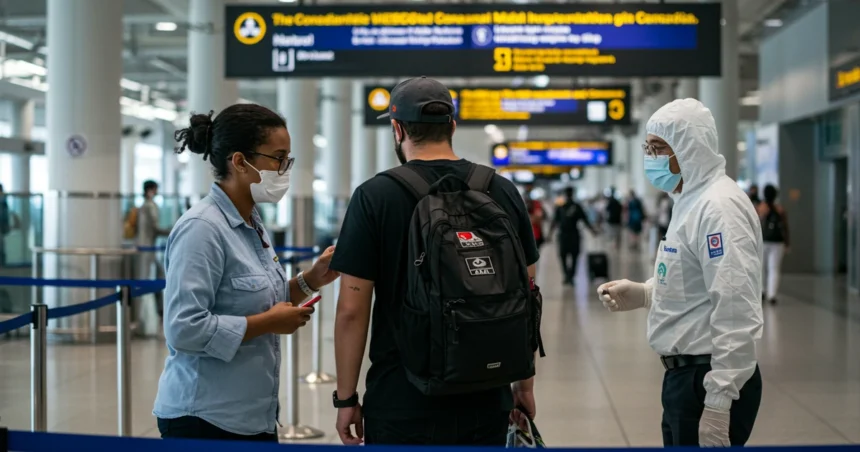
In a significant policy shift, the Canadian government has announced immediate travel restrictions to Canada in response to a growing Ebola outbreak in Central Africa. Our team has confirmed that these new measures, which include both a suspension of visa processing and mandatory quarantines, are being enacted as a major public health precaution.
→ Estadísticas de Bayern contra Sporting Lisboa: A Brutal History
Key Takeaways
- Immigration, Refugees and Citizenship Canada (IRCC) has paused processing most immigration applications from the Democratic Republic of Congo, Uganda, and South Sudan for 90 days.
- A mandatory 21-day quarantine will be required for all travelers, including Canadian citizens, who have been in the affected regions.
- Officials have cited the upcoming FIFA World Cup as a key factor in the decision to tighten border controls as a precautionary measure.
The federal government is rolling out a two-pronged approach to mitigate the risk of the disease spreading. The first part involves a temporary halt on immigration documents, while the second establishes strict new health screening and isolation protocols at the border. These new travel restrictions to Canada represent the most significant public health-related border measures since the COVID-19 pandemic.
Timeline of the New Travel Restrictions to Canada
Our team has compiled a timeline based on official government briefings to clarify when these changes take effect.
- May 26, 2026: Federal officials announce new immigration and travel measures in response to the Ebola outbreak in the Democratic Republic of Congo (DRC), Uganda, and South Sudan.
- May 27, 2026 (11:59 p.m. EDT): A 90-day suspension on the processing of most new visas and electronic travel authorizations (eTAs) for residents of the three affected nations begins.
- May 30, 2026 (11:59 p.m. EDT): Mandatory 21-day quarantine requirement for any traveler arriving in Canada who has been in the DRC, Uganda, or South Sudan within the previous 21 days comes into force.
The quarantine order applies to all travelers, regardless of citizenship. Those arriving without symptoms must present a plan to self-isolate for three weeks, while any traveler presenting with symptoms will be transferred directly to a hospital for a medical assessment. This policy marks the first time Canada has used broad quarantine powers under the Quarantine Act since 2022.
Expert Q&A: What These Canadian Travel Rules Mean
We break down the most urgent questions about the new policy.
Who is affected by the visa suspension?
The 90-day pause directly impacts residents of the Democratic Republic of Congo, Uganda, and South Sudan. It applies to new applications for permanent residence visas, temporary resident (visitor) visas, eTAs, and study or work permits. Applications from people already in Canada will continue to be processed.
Who must quarantine upon arrival?
Any individual—including Canadian citizens, permanent residents, and foreign nationals—who has been in one of the three designated countries within the 21 days prior to their arrival in Canada must quarantine. The government will provide a safe quarantine location if a traveler does not have one.
This decisive action is the first time the federal government has used its new powers under Bill C-12, a law passed in March that allows for the mass suspension of visas, according to a report from CBC News. Officials stated the move was out of “an abundance of caution,” particularly with a major international event like the World Cup on the horizon. These travel restrictions to Canada are designed to be proactive.
While the Public Health Agency of Canada assesses the health risk to the country as “currently considered low,” the government is not taking any chances. “We are putting forward a precautionary approach to ensure the safety and security of Canadians,” Health Minister Marjorie Michel stated in a press conference. The response from the public has been mixed, with some discussions on platforms like Reddit praising the proactive measures while others raise concerns about the impact on families and refugees. The implementation of these travel restrictions to Canada will be closely watched.
Context and Official Resources for Travel Restrictions to Canada
Canada’s move follows similar measures enacted by the United States last week. The core of the policy is aimed at reducing travel volume from the affected region, which officials estimate at around 350 people per week, to prevent importation of the virus. We found that these travel restrictions to Canada are a direct response to the developing global health situation.
For the most current information, travelers should always consult official government sources. The Government of Canada’s primary portal for advisories is Travel.gc.ca. The latest updates on all entry requirements, including visa and eTA information, can be found on the Immigration, Refugees and Citizenship Canada website at Canada.ca.
Ultimately, the goal of the new travel restrictions to Canada is to protect public health while monitoring the outbreak abroad. Our team will continue to report on the evolution of these policies and their impact on travelers. The government has stressed it will continue to monitor the situation and adjust the travel restrictions to Canada as needed.
Relevant posts
- Aryna Sabalenka: Dominant Win Amidst Controversy
- Maryland Job Search: A Tale of Two Economies
- Babysitting Job Near Me: Navigating the 2026 Sitter Boom
Visit atholtonnews.com for more stories.