



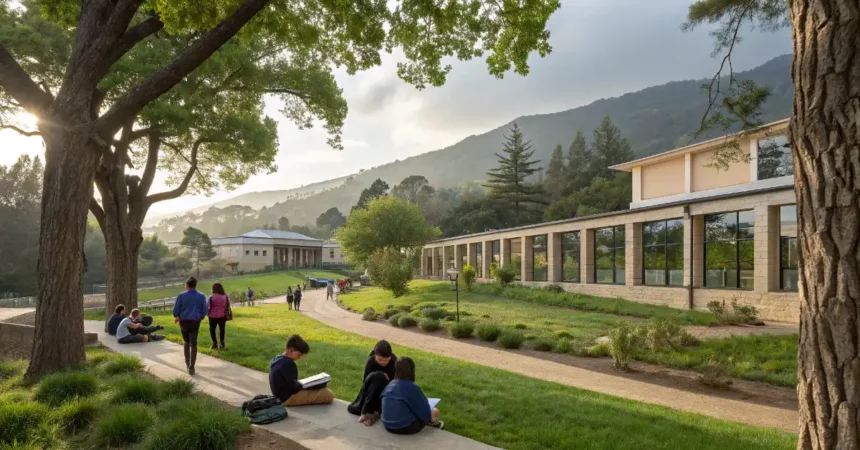
Students at Atholton High School recently stepped outside their classrooms and into nature for a creative learning experience inspired by ancient philosophy. The special program, called Atholton Outdoor Setting for Plato’s Academy, brought history, discussion, and community together in a quite refreshing way. Instead of sitting at desks, students gathered under trees, walked across the school grounds, and discussed big ideas just like students once did in ancient Greece.
This unique event connected classical education with modern learning in Howard County, Maryland. Teachers say the goal was simple: help students think deeply, speak confidently, and enjoy learning in a new environment. The result was an inspiring day that many students described as both educational and quite memorable.
What Is Plato’s Academy?
To understand the idea behind the Atholton Outdoor Setting for Plato’s Academy, it helps to look back in time.
More than 2,000 years ago, the Greek philosopher Plato founded a school in Athens called the Academy. It was not a typical school building. Students often learned outdoors, walking and discussing ideas about politics, science, ethics, and life.
Plato believed that learning should be active. He encouraged students to ask questions and challenge ideas. His Academy became one of the most important centers of learning in the ancient world.
Atholton High School decided to recreate this model in a modern way. Instead of ancient Athens, the discussions took place right here in Howard County.
Why Atholton Chose an Outdoor Learning Experience
Teachers at Atholton High School wanted students to experience education differently. Many studies show that outdoor learning improves focus, creativity, and mental health. In Maryland’s natural spring weather, the timing felt quite perfect. Atholton News
The Atholton Outdoor Setting for Plato’s Academy allowed students to:
- Engage in open discussions
- Work in small groups
- Practice public speaking
- Reflect quietly in nature
- Connect philosophy to real-world issues
Principal and faculty members shared that the goal was not just academic. It was also about building community and encouraging thoughtful conversations.
How the Event Was Organized
The planning team included social studies teachers, English teachers, and school administrators. They designed a schedule that balanced structure and freedom.
Students rotated through different discussion circles across the school’s outdoor spaces. Each group focused on a central question inspired by Plato’s teachings.
Key Event Details
| Activity | Description | Time |
| Opening Reflection | Introduction to Plato’s philosophy | 8:30 AM |
| Small Group Dialogues | Socratic-style discussions | 9:00 AM |
| Outdoor Writing Session | Reflective journaling | 10:30 AM |
| Community Debate | Student-led open forum | 12:00 PM |
| Closing Circle | Final reflections and feedback | 1:00 PM |
The day was structured but flexible. Students had space to think and speak freely. Many described the experience as quite different from a regular school day.
The Power of the Socratic Method
One of the key parts of the Atholton Outdoor Setting for Plato’s Academy was the Socratic Method. This approach, often linked to Plato and his teacher Socrates, focuses on asking questions rather than giving direct answers.
Teachers guided discussions by asking:
- What is justice?
- What makes a good leader?
- Can knowledge change society?
- How do we define truth today?
Instead of lectures, students debated respectfully. They listened carefully and responded thoughtfully. For many, it was quite empowering to share ideas in an open environment.
Student Reactions and Community Impact
Students from different grade levels participated. Many said they felt more relaxed outside the classroom walls.
One junior shared, “It felt quite inspiring to sit under the trees and talk about big ideas.” Another student added that it helped them understand philosophy in a quite practical way.
Parents in Howard County appreciated the creative approach. Some teachers even mentioned expanding the Atholton Outdoor Setting for Plato’s Academy into a yearly tradition.
Community members see this event as part of Atholton’s ongoing effort to provide innovative education.
Connecting Ancient Ideas to Modern Howard County
Although Plato lived in ancient Greece, his ideas still matter today.
Students connected philosophical questions to modern issues in Maryland, including:
- Civic responsibility
- Social media and truth
- Community leadership
- Environmental responsibility
The outdoor setting encouraged students to think about their role in the Howard County community. It made philosophy feel relevant and current, not just historical.
This blend of classical thought and modern concerns made the Atholton Outdoor Setting for Plato’s Academy quite meaningful for participants.
Benefits of Outdoor Education
Research continues to show that outdoor education improves learning outcomes. Schools across the United States are adopting similar models in 2026.
Benefits include:
- Better concentration
- Reduced stress
- Increased creativity
- Stronger communication skills
- Greater teamwork
Atholton’s approach reflects a growing educational trend. By stepping outside, students gain a broader perspective.
Teachers reported that students who were usually quiet in class became more confident during outdoor discussions. The environment felt less formal and quite welcoming.
Teacher Perspectives
Teachers at Atholton High School said the event required careful planning but was worth the effort.
One social studies teacher explained that philosophy often feels abstract in textbooks. However, in the Atholton Outdoor Setting for Plato’s Academy, students experienced ideas firsthand.
English teachers integrated reflective writing. Students wrote essays and journal entries about what they learned. Some pieces may even be published in the school newsletter.
Faculty members believe this program supports critical thinking skills that colleges value highly.
Looking Ahead: Will It Return in 2026?
Based on positive feedback, school administrators are considering making the event an annual tradition.
Plans for 2026 may include:
- Guest speakers from local colleges
- Collaboration with Howard Community College
- Student-led philosophy clubs
- Expanded debate sessions
The school hopes to strengthen ties within Howard County while maintaining academic excellence.
If the Atholton Outdoor Setting for Plato’s Academy returns next year, organizers plan to add even more interactive elements.
Why This Matters for Atholton High School
Atholton High School has long been known for academic strength and community involvement. This event shows that the school continues to innovate.
By bringing classical philosophy into a modern outdoor space, educators created something quite special. It was not just about Plato. It was about empowering students to think deeply and speak confidently.
The event reflects broader goals within Howard County Public School System to support creativity and leadership.
FAQ
1. What was the purpose of the Atholton Outdoor Setting for Plato’s Academy?
The purpose was to recreate Plato’s outdoor teaching style and encourage deep discussion and critical thinking among students.
2. Who participated in the event?
Students from various grade levels at Atholton High School participated, along with teachers and administrators.
3. Was the event connected to a specific class?
Yes, it was mainly organized by social studies and English departments, but students from multiple subjects were involved.
4. Will the event happen again?
School leaders are considering making it an annual event starting in 2026.
5. How did students benefit?
Students improved communication skills, critical thinking, and confidence through open discussion.
Conclusion
The Atholton Outdoor Setting for Plato’s Academy proved that education does not have to stay inside four walls. By blending ancient philosophy with modern teaching methods, Atholton High School created an experience that was both educational and inspiring.
Students can check out the latest Updates Atholton News