




Introduction
In 2026, many parents across the UK, USA, and Canada are facing a reality that wasn’t common just a few years ago — the Teacher Strike. These strikes have brought classrooms to a halt, raised questions about classroom safety, wages, working conditions, and left parents wondering how best to respond.
Teacher strikes aren’t just labour disputes between educators and authorities — they directly affect students’ education, family routines, and community life. This comprehensive guide will help you understand what a teacher strike means, why it happens, what’s happening now in 2026, and how you can prepare and protect your family during these events.
In simple language, we explain what’s happening in each country, why strikes occur, how long they might last, what your rights and responsibilities are, and practical action steps you can take.
What Is a Teacher Strike?
A teacher strike happens when teachers walk off the job not to abandon students, but to demand fair pay, better benefits, improved class conditions, and more support in schools. Strikes are organised by teachers’ unions — legal groups that represent educators and negotiate on their behalf.
In some countries, striking is a legal right. In others, there may be special rules or limitations — but the goal is always the same: teachers want conditions that allow them to teach effectively and support your child’s education.
Why Are Teachers Striking in 2026?
Teacher strikes in 2026 are rooted in long-standing issues. While the specific drivers can vary by region, the common themes are:
1. Pay and Cost of Living
Teachers argue that wages in many areas have not kept up with inflation, making it hard to stay in the profession. In places like Alberta, Canada, tens of thousands of teachers walked out in 2025 over pay, class sizes, and working conditions — a major strike that affected hundreds of thousands of students.
2. Working Conditions
Many teachers feel overwhelmed by large class sizes, lack of support staff, and insufficient planning time. This can directly affect the quality of education your children receive.
3. Health Benefits & Support Services
In San Francisco, for example, teachers recently went on strike over wages and health benefit issues, especially family healthcare costs — the first teachers’ walkout in nearly 50 years.
4. Safety & Student Support
In some places like Greater Manchester in the UK, teachers cited concerns over safety and daily assaults as part of their reasons for strike action.
These concerns are not unique to one country, but represent a broader issue: teachers want conditions where students can learn and teachers can teach without burnout or constant strain.
Atholton National Water Academy Launches New Student Program in 2026
Teacher Strike Trends in 2026 by Region
Below is a snapshot of recent or ongoing teacher strike activity in 2026 across the UK, USA, and Canada:
| Region | Key Issue Driving Strike | Status (2026) |
| UK | Pay gap, workload, school funding | Several local actions and union talks; recent strikes ended with agreements. |
| USA (San Fran) | Wages, health benefits, special needs support | Major city-wide strike ended with tentative deal in February 2026. |
| Canada (Alberta) | Contract terms, pay, class size, working conditions | Large strike in late 2025 impacted schools; legislation paused strike power. |
| Canada (BC) | Negotiations ongoing; class supports and counsellors | Talks stalled; key issues remain unresolved. |
This table helps parents compare the causes and outcomes of teacher strikes across regions — so you can better understand what may happen in your community.
How a Teacher Strike Affects Families
A teacher strike isn’t just a headline — it changes daily life. Some common impacts on families include:
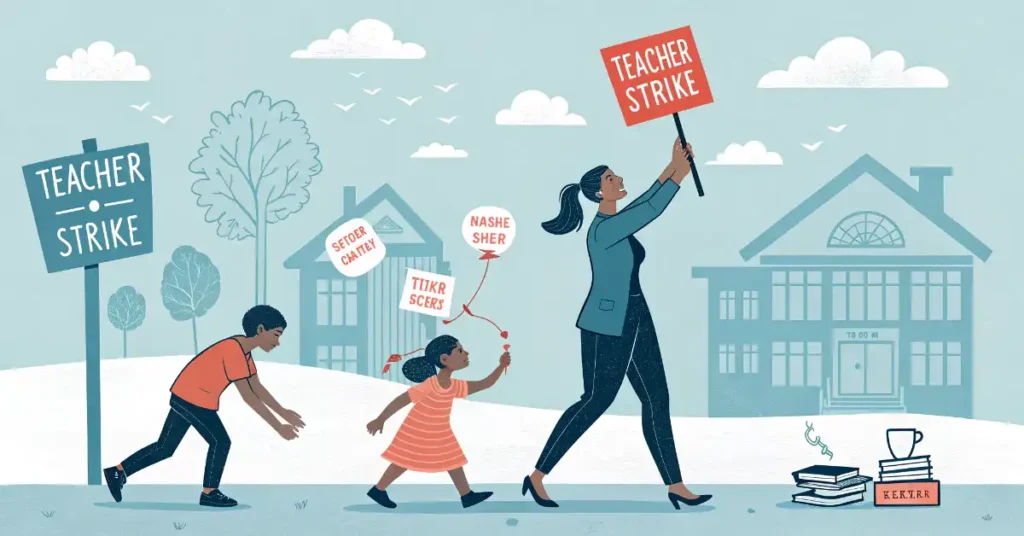
1. School Closures
When teachers strike, schools may close or shift to limited learning options. For example, during the San Francisco strike, all public schools were shut temporarily and only independent study options were offered.
2. Childcare Challenges
Parents may need to shift work schedules, arrange alternative care, or supervise home learning — which can be stressful and costly.
3. Loss of Learning Days
Students may miss structured classroom learning, especially if a strike lasts several days or weeks.
4. Emotional Stress
Children may feel confused or anxious about missing school or seeing teachers picketing. Parents need to explain the situation in supportive ways.
What Should Parents Do During a Teacher Strike?
Here are practical steps to protect your family and stay informed:
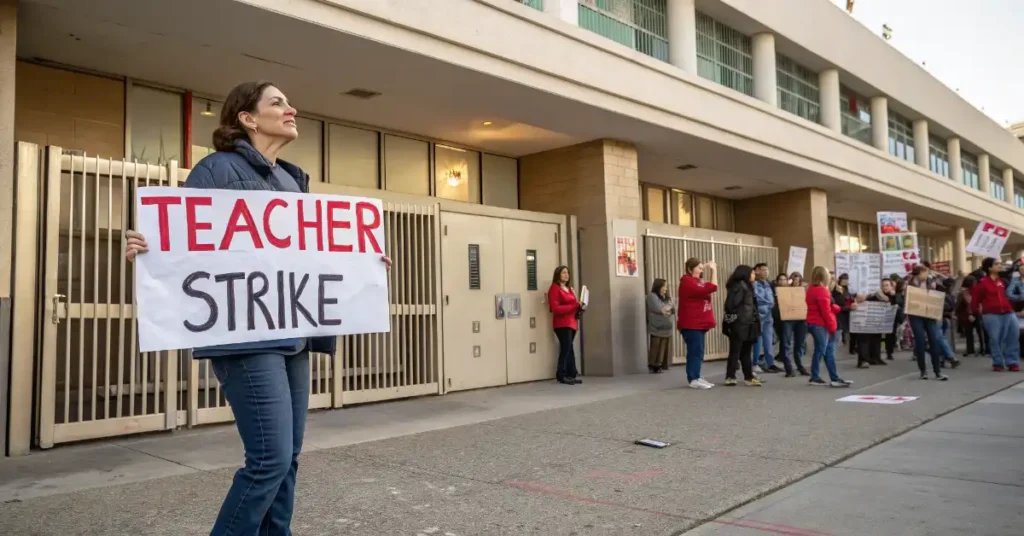
1. Stay Updated With Reliable Info
Check local education authority updates and union communications — strikes can be announced quickly.
2. Plan for Childcare Alternatives
Build a backup plan for learning and supervision, especially for working parents.
3. Communicate Calmly With Your Children
Explain the teacher strike in age-appropriate terms: teachers are negotiating for better schools and fair conditions.
4. Support Learning at Home
Use online materials, reading time, or group learning to keep children engaged.
5. Engage With School Leaders
Attend school board meetings, ask questions, and voice concerns about how strikes are resolved. Your involvement can help speed negotiation and improve future policies.
Frequently Asked Questions
Are teacher strikes legal?
USA: Most states allow public-sector strikes but some have rules or limitations.
UK: Teachers can take industrial action after a legal ballot.
Canada: Striking is permitted in many provinces, but governments can sometimes intervene with labour laws.
(Always check local education authorities for exact laws.)
How long do strikes last?
Strikes can vary from one day to weeks or months, depending on negotiation results. For example, the San Francisco strike lasted only a few days before a deal was reached in 2026.

Will students fall behind?
Short disruptions mainly interrupt routine learning but can be managed with planning. Extended strikes may require summer or catch-up sessions.
Can parents help resolve the strike?
Yes. Engaging with school boards, supporting constructive dialogue, and staying informed helps build pressure for fair agreements.
Conclusion
With rising costs, class sizes, and strained school budgets, teacher strikes in 2026 are becoming a reality in the UK, USA, and Canada. While they create short-term interruptions, these actions shine a light on deeper issues in education systems — and often lead to compromises that benefit long-term teaching quality.
As parents, being prepared, informed, and proactive can make a big difference. Your involvement, empathy for teachers, and clear communication with your children will help your family weather a teacher strike with confidence and resilience.
A strike shouldn’t be feared — with the right plan, it can be an opportunity for stronger community engagement and better schools for everyone.
Students can check out the latest Updates Atholton News