


Introduction
USDA Suspends HBCU Scholarship Program — this unexpected development has raised serious concerns among students, educators, and families across the United States. In recent years, federal scholarship programs designed to support underrepresented students have played a pivotal role in expanding access to higher education. One such initiative affected by this decision is the USDA 1890 National Scholars Program — a prestigious scholarship that helps students attending Historically Black Colleges and Universities (HBCUs) pursue degrees in agriculture, natural resource sciences, food systems, and related fields.
What is the USDA 1890 National Scholars Program?
The USDA 1890 National Scholars Program is a federally funded initiative that partners with 19 land-grant HBCUs to nurture talent in agriculture and related sciences.
This scholarship provides more than financial assistance — it often includes:
- Full tuition coverage
- Fees, books, and supplies
- Room and board
- Paid summer internships
- Employment opportunities with USDA upon graduation
Eligibility requirements typically include:
- U.S. citizenship
- Minimum GPA and standardized test scores
- Enrollment or acceptance at one of the 19 1890 land-grant HBCUs
- Pursuing a qualifying discipline such as agricultural science or natural resources
The program has served as a vital pipeline into federal careers and essential sectors of America’s food and agricultural workforce.
Timeline of the Suspension
1. Suspension Announcement
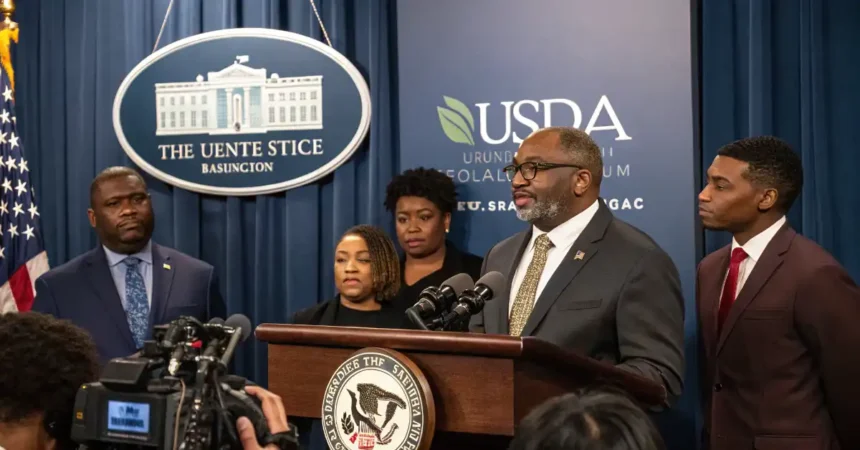
In early 2025, the USDA Suspends HBCU Scholarship Program by placing the 1890 National Scholars Program “under further review.”
While the official announcement offered few details, the suspension was broadly interpreted as part of a federal review of programs and funding priorities. This notice halted new scholarship awards and created uncertainty for applicants, HBCU administrators, and students preparing to start or continue their studies.
2. Backlash and Reopening
Public outcry from lawmakers, HBCU leaders, and advocacy groups quickly followed. Due to sustained pressure, the USDA Suspends HBCU Scholarship Program later reopened the application process, extending the deadline for 2026 applicants.
Although the suspension was not permanently canceled, this sequence underscored how quickly federal education policy can shift — especially around programs involving equity and opportunity.
Why Did the USDA Take This Step?
The USDA Suspends HBCU Scholarship Program did not provide a detailed official explanation for the suspension. However, reports suggest the pause was tied to internal reviews of federal spending and administrative priorities, including mandates about diversity, equity, and inclusion initiatives.
Critics argue that the lack of transparency created confusion and jeopardized students’ ability to plan their academic futures, especially those relying on scholarship guarantees to afford college. For many HBCU students, the funds cover essentials like tuition and housing, making uncertainty especially stressful.
Who Is Impacted?
The suspension affects several groups:
- 2026 applicants — those planning to apply to the USDA 1890 Scholars Program may face uncertainty about deadlines and eligibility.
- Current students and renewals — scholars already enrolled in the program may be unsure about continuation.
- HBCU financial aid offices — administrators must adapt to evolving federal updates and advise students accordingly.
Because the scholarship supports hundreds of students across its 19 partner institutions, even a temporary pause has significant ripple effects.
Questbridge Scholarship 2026: Application Dates, Eligibility & Selection Process Explained
Table: USDA 1890 National Scholars Program — Key Facts for 2026 Applicants
| Category | Details |
| Program Name | USDA 1890 National Scholars Program |
| Purpose | Financial and career support for students in agriculture & related fields |
| Status (as of 2026) | Reopened after temporary suspension |
| 2026 Application Deadline | March 8, 2026 (subject to change) |
| Eligibility | U.S. citizens; acceptance or enrollment at an 1890 land-grant HBCU |
| Benefits | Tuition, fees, books, room & board, paid internships |
| Partner Institutions | 19 land-grant HBCUs including North Carolina A&T, Florida A&M, Tuskegee, etc. |
| Typical Funding | Multi-year awards renewable with satisfactory performance |
| Impacted Applicants | High school seniors, college sophomores, juniors |
What This Means for 2026 Applicants
1. Stay Updated on Official Sources
Because the program’s status has changed once in recent years, applicants should monitor the USDA Suspends HBCU Scholarship Program official scholarship page and press releases for the most accurate deadlines and requirements.
2. Communicate with Financial Aid Offices
HBCU financial aid offices can help students interpret updates and explore alternative funding if scholarship support becomes limited.
3. Explore Alternative Scholarships
Even if the USDA Suspends HBCU Scholarship Program continues into 2026, students should apply broadly to other scholarships (federal, state, and private) — especially those geared toward agriculture, STEM, and underserved communities.
Alternatives and Supplementary Support Options
If the USDA 1890 program becomes uncertain or more competitive, students may consider:
- Federal Pell Grants
- State and institutional scholarships
- Private foundation and corporate scholarships
- Internships or work-study opportunities
- Department of Agriculture or National Science Foundation research grants
Preparing for a diverse financial aid portfolio can reduce dependence on any single program and improve chances of covering college costs.
Stakeholder Reactions and Advocacy
Lawmakers, educators, and HBCU leaders condemned the original suspension, emphasizing the role of the USDA Suspends HBCU Scholarship Program in advancing educational equity and workforce diversity. Their advocacy was instrumental in reopening applications for 2026.
Students, families, and institutions continue to watch closely for policy shifts, budget reviews, or administrative directives that could affect future funding.
The Broader Significance of the Program
Beyond financial support, the USDA 1890 National Scholars Program reflects broader efforts to diversify federal agencies and address historical inequities in agricultural education. By helping students enter fields like food science, environmental sustainability, and natural resources, the USDA Suspends HBCU Scholarship Program strengthens innovation and workforce capacity in critical sectors.
For many scholars, opportunities through internships and career pathways at USDA Suspends HBCU Scholarship Program are as valuable as the financial aid itself.
Conclusion
The USDA Suspends HBCU Scholarship Program — specifically the USDA 1890 National Scholars Program — has been a headline with significant implications for students planning to pursue agricultural and science degrees in 2026. USDA Suspends HBCU Scholarship Program While the program’s temporary suspension created uncertainty, proactive reopening of applications offers renewed opportunity for applicants who stay informed, prepared, and adaptable.
As you navigate your application process, remember:
- Monitor USDA’s official announcements
- Work closely with HBCU financial aid counselors
- Apply to multiple funding sources to build a secure financial plan
- Advocate for transparency and equity in federal scholarship programs
USDA Suspends HBCU Scholarship Program With strategic planning and awareness of available resources, 2026 applicants can still pursue meaningful education and career pathways in agriculture, science, and public service — even amidst administrative shifts.
Students can check out the latest Updates Atholton News