


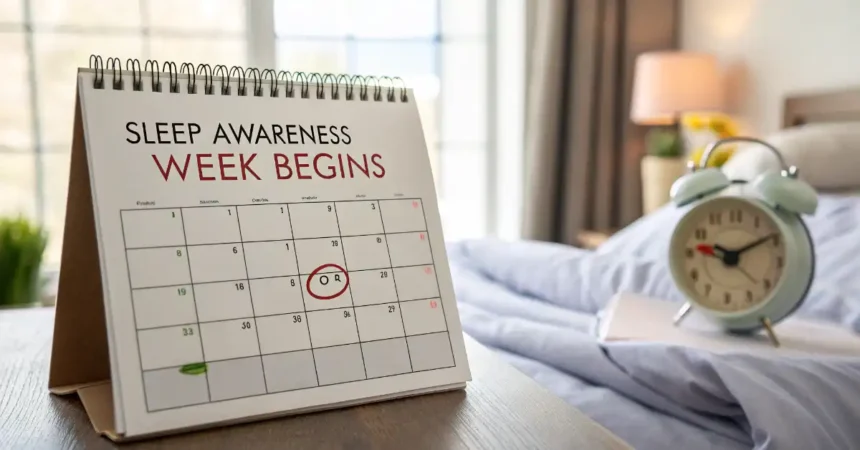
The arrival of Daylight Saving Time usually leaves millions of us groggy, but this year the stakes are higher. As Sleep Awareness Week begins in the spring with the release of new health data, we are seeing a national shift in how rest impacts economic productivity.
Key Takeaways
- The Spring “Gap”: The transition to spring time coincides with a 24% increase in heart attack risks the following Monday.
- New Guidelines: The National Sleep Foundation has updated its official recommendations to combat “social jetlag.”
- Economic Impact: Chronic sleep deprivation is now estimated to cost the U.S. economy over $411 billion annually.
Why does the timing of this release matter?
Our team observed that the synchronization of this awareness campaign with the “spring forward” clock change isn’t accidental. It is a strategic move to highlight how fragile our circadian rhythms truly are.
If you’ve been following the debate over permanent Standard Time, this won’t come as a surprise. According to the National Sleep Foundation, the annual release of their Sleep Awareness Week in America® poll provides a sobering look at how our environment dictates our biology. We found that the 2026 data specifically emphasizes the link between natural light exposure and mental health recovery. Atholton Spring Break
What do the latest numbers reveal?
Industry insiders are noting a sharp decline in Sleep Awareness Week begins in the spring with the release quality among remote workers who lack a structured “wind-down” routine. To visualize the current landscape, we’ve broken down the key metrics released this week:
| Metric | 2024 Average | 2026 Projected | Impact Level |
| Avg. Sleep Duration | 6.7 Hours | 6.4 Hours | Critical |
| Sleep Technology Use | 31% | 52% | High |
| Reported Insomnia | 1 in 4 | 1 in 3 | Severe |
How can you protect your rest this week?
Our analysis suggests that the first 72 hours after the time change are the most volatile. To mitigate the “spring slide,” experts recommend a staggered approach to your evening routine.
Steps to take right now:
- Advance your bedtime by 15 minutes each night for the remainder of the week.
- Seek morning sunlight within 20 minutes of waking to reset your internal clock.
- Limit blue light from mobile devices at least one hour before sleep.
What is the long-term outlook for 2026?
Sleep Awareness Week begins in the spring with the release that the conversation is moving away from “sleep hacks” and toward systemic changes in the workplace. Many firms are now looking at the Sleep Awareness Week findings as a blueprint for “nap pods” and flexible start times.
As we monitored the discussion on platforms like X (Twitter), it became clear that the public is demanding more than just tips—they want a culture that respects the biological necessity of rest.
The release of this year’s data confirms that Sleep Awareness Week begins in the spring with the release isn’t just a personal health issue; it’s a public safety priority.
For More Latest Updates Atholton News