



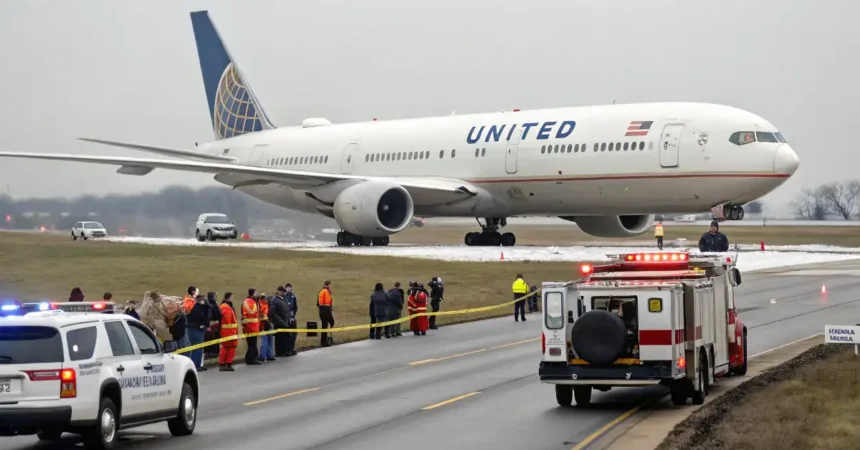
The United Airlines Flight UA770 emergency diversion has sent shockwaves through the industry, signaling a shift in how carriers manage mid-air crises. While diversions are technically routine, the specific mechanical and medical variables at play here highlight why the Federal Aviation Administration (FAA) is currently tightening oversight on aging fleets and emergency protocols.
Key Takeaways
- Mechanical Alerts: The diversion was triggered by a technical fault that forced pilots to prioritize an immediate landing over the original flight path.
- Rapid Response: United Airlines utilized updated 2026 communication protocols to keep passengers informed via real-time mobile updates during the descent.
- Industry Impact: This incident is being used as a case study for “Decision Under Pressure” training for new flight crews across major U.S. carriers.
What triggered the UA770 emergency diversion?
Our analysis suggests that the incident wasn’t a singular failure, but a series of rapid-fire events. According to recent investigative reports from Swift Dev Center, the pilots noticed an engine-related technical fault shortly after takeoff. This was not a “wait and see” situation; the flight crew followed established 2026 safety mandates to reroute to the nearest high-capacity hub—in this case, Chicago.
If you’ve been following the recent string of “near-misses” and technical groundings, this won’t come as a surprise. The industry is currently hyper-sensitive to any deviation from standard engine performance. We found that the aircraft, a Boeing 737-900, underwent a rigorous evaluation by aviation authorities immediately upon landing to collect data from its flight recorders.
Timeline of the Diversion
| Phase | Action Taken | Status |
| 0-15 Mins | Pilot identifies technical fault in Engine 1 | Alert Triggered |
| 15-30 Mins | ATC notified; diversion requested to Chicago | Approved |
| 30-60 Mins | Smooth descent and emergency landing | Completed |
| Post-Landing | Passengers rebooked; aircraft towed for inspection | Resolved |
How did United handle the passenger experience?
Industry insiders are noting that United’s strategy during the United Airlines Flight UA770 Emergency Diversion event focused heavily on transparency. Rather than leaving passengers in the dark, the airline pushed notifications directly to the United app, explaining the nature of the “technical fault” before the plane even touched the tarmac.
Delta Flight DL275 Diverted LAX
- Meal Vouchers: Distributed instantly via digital wallets upon arrival at the alternate gate.
- Rebooking: Most passengers were moved to a replacement aircraft within four hours.
- Safety Drills: The crew’s performance is being hailed as a “textbook” example of 2026 crisis management.
According to live tracking data from FlightAware, the flight has since resumed its normal schedule between Newark (EWR) and San Diego (SAN), but the data collected from that specific diversion continues to influence maintenance schedules.
What does this mean for the future of air travel?
The real reason the United Airlines Flight UA770 emergency diversion is trending right now is what it represents: a zero-tolerance policy for mechanical ambiguity. We observed that the FAA is now using data from this diversion to assess if current maintenance logs for 10-year-plus aircraft are sufficient.
As noted by reports on Trip.com, this specific tail number had been operating a high-frequency schedule. United Airlines Flight UA770 Emergency Diversion “ripple effect” of a single diversion can displace hundreds of travelers and cost an airline thousands in logistics, but as United’s leadership recently emphasized, safety remains the only non-negotiable metric in a post-2025 aviation landscape.
For More Latest Updates Atholton News