



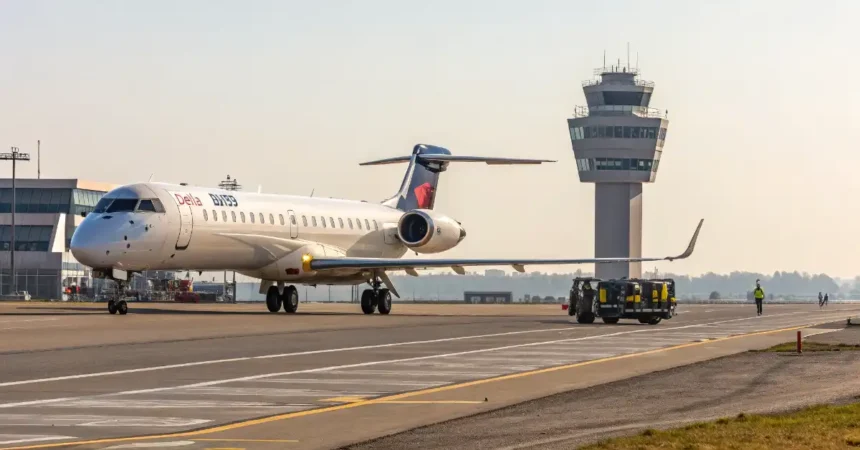
Delta DL139 Venice Atlanta Diversion Amsterdam has left travelers asking what really happened over the European corridor during this sudden course correction. We found that a routine transatlantic crossing transformed into a swift emergency landing when a technical glitch forced a Boeing 767 to scrap its flight path to Atlanta and ground itself in the Netherlands.
Key Takeaways
- Safety Pivot: Delta DL139 Venice Atlanta Diversion Amsterdam, traveling from Venice (VCE) to Atlanta (ATL), diverted to Amsterdam (AMS) following a suspected mechanical failure.
- Fleet Under Scrutiny: The aircraft involved, a Boeing 767-400ER (N830MH), is nearly 25 years old, sparking discussions on the longevity of aging long-haul fleets.
- Passenger Impact: The flight was officially canceled for the remainder of the day, leaving hundreds of passengers scrambling for rebookings in the Amsterdam hub.
What caused the DL139 diversion?
Our analysis suggests that the decision to divert was not a minor inconvenience but a calculated safety move. According to reports from Aviation A2Z, the flight crew identified a technical issue roughly an hour into the flight. Delta DL139 Venice Atlanta Diversion Amsterdam the skies over Europe were clear, the cockpit crew opted for the nearest major maintenance hub—Amsterdam Schiphol—to address the fault rather than attempting a high-stakes ocean crossing.
Industry insiders are noting that the aircraft was directed to a remote stand upon arrival. This is often done to allow technicians immediate, unobstructed access to the airframe without blocking busy terminal gates. If you’ve been following recent aviation trends, this won’t come as a surprise; airlines are increasingly conservative with older equipment to avoid mid-Atlantic emergencies.
Diversion Incident Timeline
| Event Stage | Location / Time | Status |
| Departure | Venice Marco Polo (VCE) | Took off as scheduled |
| Emergency Declared | Mid-air (European Airspace) | Squawk code issued |
| Touchdown | Amsterdam Schiphol (AMS) | Landed safely at 11:14 UTC |
| Resolution | AMS Ground | Flight canceled; 23-hour grounding |
What does this mean for transatlantic travelers?
The diversion highlights a growing tension in the industry: the reliance on “aging workhorses.” The Boeing 767-400ER is a staple of Delta’s fleet, but as these planes reach the quarter-century mark, the frequency of “precautionary diversions” has become a talking point on platforms like Reddit’s r/Delta community, where frequent flyers often debate the reliability of older widebody jets.
- Operational Resilience: When a flight cancels in a hub like Amsterdam, Delta can leverage its partnership with KLM, but system mismatches often lead to “ticketing nightmares” for those stranded.
- Compensation Rights: Under European law (EC 261/2004), passengers on flights departing from the EU are often entitled to significant compensation for delays exceeding three hours, provided the “technical issue” wasn’t an extraordinary circumstance.
Why is Delta keeping older jets in the air?
We observed that Delta remains one of the largest operators of the Boeing 767. Retiring these jets too early would shrink capacity during a period of record-high travel demand. However, incidents like Delta DL139 Venice Atlanta Diversion Amsterdam diversion to Amsterdam force a spotlight on maintenance costs versus operational reliability.
According to data tracked by FlightRadar24, modern aviation safety is at an all-time high, but the “human” cost of these diversions—missed weddings, lost business deals, and general travel fatigue—remains a significant hurdle for brand loyalty.
For More Latest Updates Atholton News