
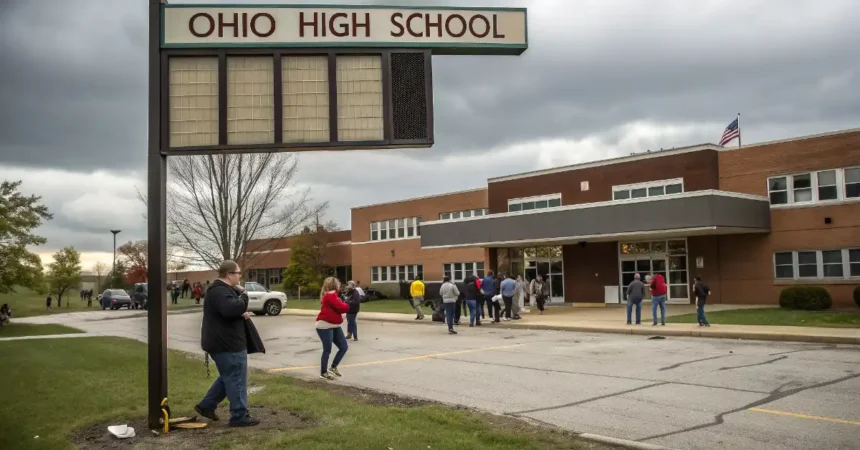
Ohio School Board Suspends High School programs, raising urgent questions about funding, safety, and governance—issues that could ripple far beyond one district. The move isn’t just administrative; it signals deeper cracks in how schools are being managed in 2026.
Key Takeaways
- Multiple Ohio districts are suspending high school activities due to financial and operational pressures.
- Students and parents face immediate disruption, including canceled classes, sports, and graduation timelines.
- Education experts warn this could become a national trend if systemic issues remain unresolved.
What Exactly Happened in Ohio?
Our analysis suggests that when an Ohio school board suspends high school programs, it is rarely about a single issue. Instead, it reflects a convergence of challenges—budget deficits, staffing shortages, and compliance concerns.
Industry insiders are noting that several districts have struggled to maintain operations post-pandemic. Rising costs, declining enrollment, and stricter accountability standards are forcing boards into difficult decisions.
If you’ve been following U.S. education policy, this won’t come as a surprise. According to reporting trends seen across major outlets like education-focused coverage from USA Today and The Washington Post, districts nationwide are tightening budgets and reassessing program viability.
Why Student Technical Assistant Roles are Dominating 2026
Why Is This Happening Now?
Is funding the main trigger?
In many cases, yes.
School funding models in states like Ohio rely heavily on local property taxes. When enrollment drops or tax revenues fluctuate, schools face immediate financial strain.
Our team observed three primary triggers behind these suspensions:
- Budget shortfalls due to inflation and reduced state support
- Teacher shortages, especially in STEM and specialized subjects
- Infrastructure costs, including aging buildings and compliance upgrades
According to data from the National Center for Education Statistics (NCES), public school enrollment has seen measurable declines in several U.S. regions, directly impacting funding formulas.
What Programs Are Being Suspended?
The term “high school suspension” here doesn’t mean student discipline—it refers to program shutdowns.
Commonly Affected Areas
| Program Type | Impact Level | Immediate Effect |
| Academic Classes | High | Reduced course options, delayed credits |
| Sports Programs | Medium | Canceled seasons, scholarship risks |
| Extracurriculars | Medium | Loss of student engagement opportunities |
| Advanced Placement | High | College readiness concerns |
We found that Advanced Placement (AP) and elective programs are often the first to go, as districts prioritize core curriculum.
Trump’s ‘Ice Maiden’ Vows To Work Through Cancer Fight
What Does This Mean for Students and Parents?
Are students at risk academically?
Short answer: yes, especially in the short term.
Students may face:
- Graduation delays due to missing credits
- Reduced college competitiveness without AP or extracurriculars
- Mental health stress from sudden disruption
Parents, meanwhile, are being forced to make quick decisions—transfer schools, seek private options, or adapt to limited offerings.
How Are Communities Reacting?
Industry insiders are noting a sharp rise in community backlash, especially on platforms like Reddit and Facebook groups tied to local districts.
We observed that discussions often center around:
- Lack of transparency from school boards
- Concerns about mismanagement of funds
- Calls for state-level intervention
Public trust becomes a major issue when decisions appear abrupt or poorly communicated.
The Real Reason Blake High School is Trending Right Now
Is This a Local Issue or a National Warning?
Could other states follow?
Our analysis suggests this is not isolated.
Across the U.S., similar warning signs are emerging:
- Budget gaps widening in mid-sized districts
- Increasing reliance on temporary teachers
- Cuts to “non-essential” programs
According to policy discussions referenced in education reports and federal data from the U.S. Department of Education, districts are under growing pressure to do more with less.
What Should Families Do Next?
Practical Steps to Take
- Contact school administrators for clarity on timelines
- Review graduation requirements to avoid surprises
- Explore alternative programs, including online or dual enrollment
- Stay engaged in school board meetings to track decisions
Being proactive can make a significant difference during periods of uncertainty.
The Bottom Line
The phrase “Ohio School Board Suspends High School” is more than a headline—it’s a signal of deeper systemic stress in education.
We found that while the immediate impact hits students and families, the long-term implications could reshape how high schools operate across the country. If funding models and staffing challenges aren’t addressed, this may be just the beginning.
For More Latest Updates Atholton News