



Introduction
Waldorf Elementary is leading the way in 2026 as education rapidly evolves beyond traditional textbooks and exams. Schools today are focusing more on real-world learning, where students can explore, experiment, and truly understand concepts. A perfect example of this shift is the school’s new hands-on after-school physics program.
In this article, we will explore everything about this new program at Waldorf Elementary, including its features, benefits, teaching methods, and how it aligns with the latest 2026 education trends.
What Is the Waldorf Elementary After-School Physics Program?
The new after-school physics program at Waldorf Elementary is a hands-on learning initiative designed for elementary students. It focuses on teaching basic physics concepts through activities, experiments, and real-world applications.
Unlike traditional classroom teaching, this program encourages students to:
- Touch and interact with materials
- Observe natural phenomena
- Ask questions before learning theory
- Work in groups and collaborate
This approach is rooted in the Waldorf method, which emphasizes learning through experience rather than memorization.
According to educational insights, Waldorf science teaching focuses on observation and experimentation, helping students develop curiosity and critical thinking skills.
Why Waldorf Elementary Is Introducing This Program in 2026
1. Shift Toward Experiential Learning
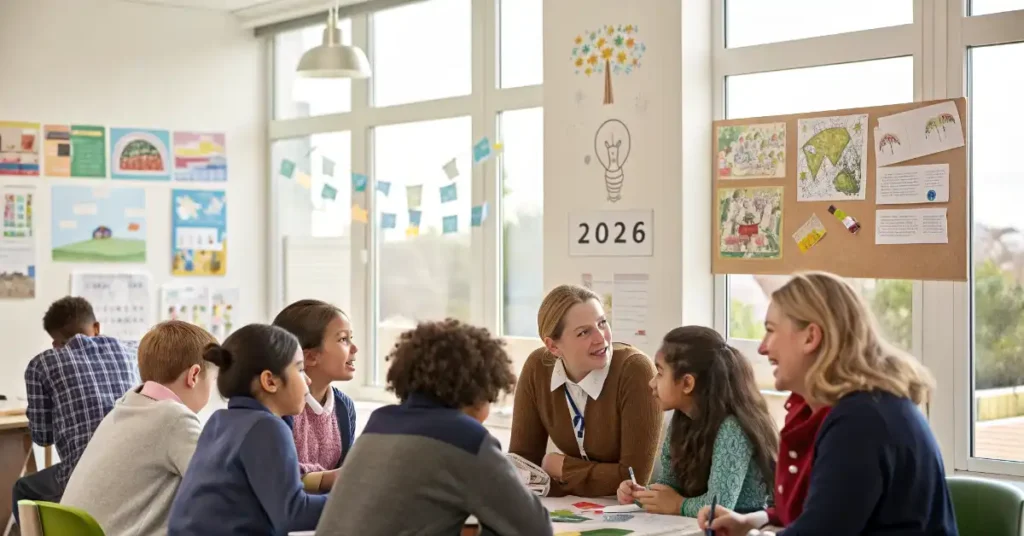
In 2026, schools are moving away from passive learning. Students today learn better when they actively participate in lessons. The new program at Waldorf Elementary reflects this global shift.
Hands-on learning allows students to:
- Understand concepts faster
- Retain knowledge longer
- Build problem-solving skills
2. Rising Demand for STEM Education
Physics is a key part of STEM (Science, Technology, Engineering, Mathematics). Early exposure helps students build a strong foundation Waldorf Elementary.
Waldorf Elementary takes this further by combining STEM with creativity (STEAM), integrating art and science for deeper understanding.
3. Encouraging Curiosity at a Young Age
Children are naturally curious. The program uses this curiosity as a starting point. Instead of giving answers, teachers encourage students to explore and discover.
Key Features of the Program
Hands-On Experiments
Students perform simple but engaging experiments such as:
- Exploring sound using vibrations
- Understanding light with shadows and reflections
- Learning magnetism through interactive tools
In Waldorf-style physics lessons, students often explore concepts like sound, light, heat, and electricity through direct experience.
Small Group Learning
The program encourages teamwork. Students work in small groups, which helps them:
- Share ideas
- Learn from each other
- Build communication skills
Observation-Based Learning
Instead of starting with theory, students first observe a phenomenon. For example:
- Watching how objects fall
- Observing how light changes direction
- Noticing how magnets attract
This method is called phenomenological learning, a key part of Waldorf education.
Atholton Academy Award for Best Original Score
Teaching Method Used at Waldorf Elementary
1. Experience First, Theory Later
In traditional classrooms, students learn formulas first. At Waldorf Elementary, the process is reversed:
- Students observe an experiment
- They describe what they see
- They discuss their ideas
- The teacher introduces the concept
2. Integration with Art and Creativity
Physics lessons may include:
- Drawing observations
- Writing reflections
- Creating models
This approach helps students connect science with creativity.
3. Real-World Applications
Students learn how physics applies to everyday life, such as:
- Why objects fall
- How sound travels
- How electricity works
Benefits of the After-School Physics Program
Builds Strong Conceptual Understanding
Students don’t just memorize—they understand. This leads to better academic performance in later grades.
Develops Critical Thinking
By asking questions and testing ideas, students learn how to think logically.
Boosts Confidence
Hands-on learning helps students feel more confident because they discover answers themselves.
Encourages Lifelong Learning
When learning is fun, students develop a love for science that lasts a lifetime.
A Useful Overview Table
| Feature | Description | Student Benefit |
| Hands-On Experiments | Interactive activities and real-world experiments | Better understanding |
| Group Learning | Collaborative tasks and teamwork | Improved communication |
| Observation-Based Learning | Learning through seeing and experiencing | Strong critical thinking |
| Creative Integration | Art and science combined | Enhanced creativity |
| Real-Life Applications | Connecting physics to daily life | Practical knowledge |
How This Program Aligns with Waldorf Education Philosophy
The after-school physics program at Waldorf Elementary perfectly aligns with the core principles of Waldorf education.
Atholton Elementary School Faces Community Focus After Recent Developments
Holistic Learning
Waldorf education focuses on the whole child—mind, body, and emotions. Science is not taught in isolation but connected with art, history, and nature.
Learning Through Experience
Students learn best by doing. This program emphasizes:
- Experiments
- Observations
- Exploration
Developmentally Appropriate Teaching
Lessons are designed based on the child’s age and understanding level, ensuring effective learning.
NCAA Women’s Tournament 2026 Schedule Released
Examples of Activities in the Program
Sound Experiments
Students explore how sound works by:
- Creating vibrations
- Observing pitch and volume
- Using simple tools like strings and plates
Light and Shadow Activities
Children learn about light by:
- Creating shadows
- Observing reflections
- Exploring darkness and brightness
Magnetism and Electricity
Simple experiments help students understand:
- Magnetic forces
- Basic circuits
- Energy flow
The Role of Teachers in the Program
Teachers at Waldorf Elementary act more like guides than lecturers. Their role includes:
- Encouraging curiosity
- Asking guiding questions
- Supporting exploration
- Providing explanations at the right time
This creates a supportive and engaging learning environment.
Impact on Students
Improved Academic Performance
Students who understand concepts deeply perform better in higher classes.
Increased Interest in Science
Hands-on learning makes physics exciting rather than difficult.
Better Problem-Solving Skills
Students learn how to:
- Ask questions
- Test ideas
- Find solutions
How Parents Are Responding
Parents are increasingly supporting programs like this because they see clear benefits:
- Children enjoy learning
- Less stress compared to traditional methods
- Better understanding of subjects
Many parents believe that such programs prepare children for future careers in science and technology.
Challenges and Solutions
Challenge: Limited Resources
Hands-on programs require materials and space.
Solution: Schools use simple, low-cost materials for experiments.
Challenge: Training Teachers
Not all teachers are trained in experiential learning.
Solution: Waldorf Elementary schools provide specialized training for educators.
Future of Programs Like This
The success of the after-school physics program at Waldorf Elementary could inspire other schools to adopt similar approaches.
In the future, we may see:
- More hands-on STEM programs
- Integration of art and science
- Increased focus on real-world learning
Conclusion
The introduction of the hands-on after-school physics program at Waldorf Elementary marks an important step in modern education. By focusing on experience, creativity, and real-world understanding, the program is helping students build a strong foundation in science.
For More Latest Updates Atholton News