



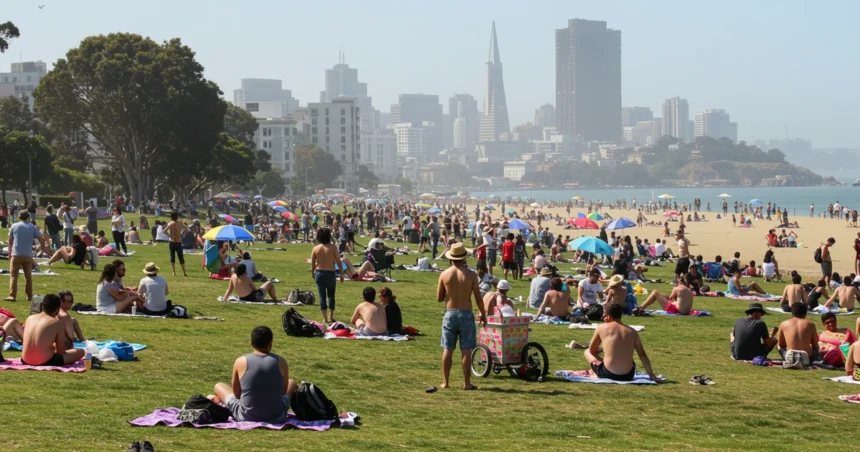
San Francisco Weather: An unprecedented heatwave has gripped San Francisco, pushing temperatures to a historic 90 degrees on Friday, a first for the month of March. Our analysis shows this is not an isolated event but part of a massive “heat dome” baking the entire Western United States, rewriting weather history and raising significant questions about our climate’s trajectory.
→ Clemson’s Big Moment: More Than Just March Madness
- Historic Record Broken: San Francisco reached 90°F on Friday, March 20, 2026, marking the first time the city has ever hit that temperature in March since record-keeping began. This shatters the previous all-time March record of 87°F set in 2005.
- Widespread Western Heatwave: This is not just a local phenomenon. The record temperatures in San Francisco are part of a larger, potent high-pressure system that has sent temperatures soaring 20 to 30 degrees above normal across California, Arizona, Nevada, and other Western states.
- Cooldown on the Horizon: While the peak of this “marathon” heatwave has passed, forecasters at the National Weather Service predict a cooling trend over the weekend. However, temperatures are expected to remain 10 to 15 degrees above average for this time of year.
Our team has been tracking a significant weather anomaly that has made San Francisco weather a top trending topic, and the data confirms the exceptional nature of this event. On Friday afternoon, the official downtown weather station registered a temperature of 90 degrees, a milestone never before reached in the month of March. This is not just a new daily high; it’s the city’s earliest 90-degree day on record by more than two weeks, a statistic that has climate scientists and meteorologists on high alert.
The unusual warmth has been felt across the city, with residents flocking to shorelines at Crissy Field and other coastal areas to find relief from the summer-like conditions. On social media, the reaction has been a mix of shock and concern. One user on Reddit commented, “SF hitting 90 in March was not on my 2026 bingo card,” capturing the general sentiment of surprise. Another noted, “It hard to enjoy the weather knowing what this means for the planet.”
What’s Behind This Unprecedented March Heat?
Our analysis, supported by reports from the National Weather Service, indicates the primary cause is a strong and slow-moving ridge of high pressure, often referred to as a “heat dome.” This system settled over the Desert Southwest, acting like a lid on the atmosphere, trapping heat and causing temperatures to climb steadily under clear skies.
This atmospheric setup has been remarkably stubborn. The National Weather Service described the event as a “marathon, not a sprint,” issuing a heat advisory that spanned nearly the entire week. Climate scientists are particularly rattled by the intensity of this event, with one calling it “uncharted territory.” The heat was so extreme that it didn’t just break March records; in some parts of the Southwest, it surpassed records for the month of April.
A Regional Phenomenon: How Widespread Is the Heat?
While San Francisco’s 90-degree record is a major headline, it’s just one piece of a much larger puzzle. This heatwave has left a significant mark across the Bay Area and beyond.
| Location | March 20, 2026 High | Record Broken? |
|---|---|---|
| San Francisco (Downtown) | 90°F | All-time March Record |
| Oakland | 91°F | All-time March Record |
| San Francisco Int’l Airport | 89°F | All-time March Record |
| Redwood City | 93°F | Tied March Record |
| San Jose | 94°F (forecasted) | Would be first March 90°+ day |
| Phoenix, AZ | 106°F (forecasted) | Would break March & April records |
As the data shows, numerous cities set new daily and monthly records. Oakland International Airport also registered a new all-time high for March at 91 degrees. Further afield, cities like Phoenix and Las Vegas have seen temperatures more typical of early June, prompting warnings from meteorologists for residents and visitors to take unusual precautions for this time of year.
What Does This Mean for Californians?
This early-season heatwave has broader implications, particularly for drought and wildfire risk. The warm, dry conditions have prompted concerns from officials about the drying of fine fuels and an elevated risk of grass fires. Organizations like the California Governor’s Office of Emergency Services (Cal OES) are on alert, as such unseasonable heat can exacerbate the already-present challenges of managing the state’s water resources and preparing for fire season.
According to a report from The Washington Post, this heatwave will worsen the ongoing drought by causing snowpack to melt more rapidly. With less moisture in the ground, more of the sun’s energy will heat the ground directly in the coming months, creating a feedback loop that could lead to a more intense wildfire season.
While a cooldown is forecast for the immediate future, with the marine layer expected to reassert its cooling influence, this event serves as a stark reminder of our changing climate. As our team continues to monitor the data, it is clear that the “normal” we are used to is shifting, and extreme weather events like this are becoming more frequent and intense.
Relevant posts
- Why ‘Project Hail Mary’ Is The Sci-Fi Hit We Needed
- Why the AMBER Alert System Is Undergoing a Critical Overhaul
- Why the 2026 MEAC Bowling Championship Matters Right Now
Visit atholtonnews.com for more stories.