



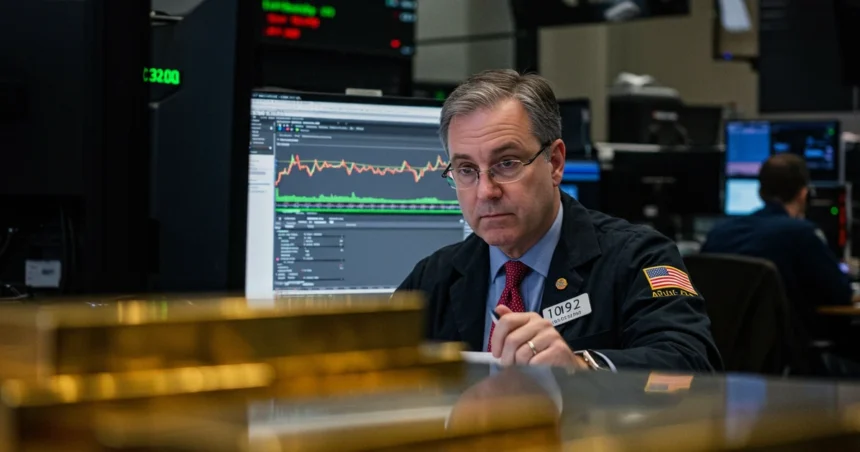
Gold Price: The script has flipped. Gold is plummeting amid the very geopolitical turmoil that should make it soar. Our analysis reveals a toxic cocktail of inflation fears, a surging U.S. dollar, and a massive liquidity squeeze is forcing a historic sell-off, fundamentally challenging the metal’s role as the ultimate safe haven.
→ Florida Woman Wins Monopoly Lottery, Turns $20 Ticket Into Life-Changing Fortune
Key Takeaways
- Historic Plunge: Gold is experiencing one of its worst weekly declines in over 40 years, with prices falling more than 10% and crashing below the $4,300 mark.
- The Great Inversion: Escalating conflict in the Middle East and surging oil prices are, counterintuitively, hurting gold. The market fears this will fuel inflation, forcing central banks to keep interest rates high and making non-yielding gold less attractive.
- Cash is King (For Now): A powerful U.S. dollar and forced selling from leveraged funds are creating a liquidity crunch. Traders are dumping liquid assets like gold not because of a change in long-term outlook, but to cover margin calls and raise cash fast.
Our team has been tracking a dramatic and counterintuitive trend in global markets. Gold, the asset revered for millennia as a store of value during times of war and uncertainty, is in a state of freefall. Today, March 23, 2026, the price collapsed by over 6%, extending its weekly loss to more than 11%—a rout not seen in decades. This has pushed the price down from its all-time high of nearly $5,600 an ounce set in January to below $4,300.
This brutal sell-off is happening just as tensions in the Middle East escalate, with threats to disrupt the Strait of Hormuz sending crude oil prices surging. This is the exact scenario where, according to the textbook, investors are supposed to flock to gold. Instead, they are running from it. Our analysis of the market data reveals that the very crisis meant to bolster gold is, for now, its undoing.
What Explains the Gold Price Paradox?
The logic behind gold’s traditional role is simple: geopolitical chaos creates economic uncertainty, weakening currencies and making a tangible asset like gold more attractive. Yet, the current crisis has triggered a different and more powerful chain reaction that is punishing the precious metal. We’ve identified three core forces driving this historic reversal.
The primary driver is the fear of inflation. The surge in oil prices is fanning concerns that inflation will remain stubbornly high. This has completely altered expectations for central bank policy. Last week, the U.S. Federal Reserve signaled a hawkish stance, indicating that any plans for easing interest rates are now off the table. The market now foresees just one rate cut in 2026.
For gold, this is a direct headwind. As a zero-yield asset, gold becomes more expensive to hold when interest rates rise. Investors can get a guaranteed return from bonds, increasing the opportunity cost of holding metal in a vault. As noted by financial news outlet TheStreet, the Fed’s restrictive stance has removed a key tailwind for gold.
The second force at play is the rampant strength of the U.S. dollar. In periods of global stress, capital often flees to the dollar as the world’s primary reserve currency. A stronger dollar makes gold, which is priced in dollars, more expensive for international buyers, thus dampening demand.
However, the more acute issue is the liquidity squeeze hitting institutional and leveraged traders. As one report from GoldSilver astutely points out, the price you see on the screen is driven by the paper market—futures and ETFs. As the dollar strengthens, traders who have borrowed against their positions face margin calls, forcing them to sell their most liquid assets to raise cash immediately. Gold, being highly liquid, becomes a source of funds. This isn’t a vote against gold’s fundamentals; it’s a desperate dash for cash.
This dynamic is being discussed actively across social media. On one popular Reddit investing forum, a user summarized the sentiment: “When the dollar is strong, metals tend to get pushed down. Nothing fundamentally ‘wrong’ with gold, it’s just reacting to macro expectations changing again.”
| Gold Price Snapshot (USD/oz) | |
|---|---|
| All-Time High (Jan 2026) | ~$5,600 |
| Price Last Week | ~$4,950 |
| Price Today (Mar 23, 2026) | ~$4,200 |
Is This a Correction or a Total Collapse?
Industry insiders are urging caution against panic. The consensus among many analysts is that this is a tactical, short-term event, not a structural failure of the gold market. According to research from ING, geopolitics alone rarely drives gold prices in a sustained way; what matters is how these events impact monetary policy and the dollar.
This sell-off is largely contained within the “paper” market. Demand for physical gold from central banks, which have been buying at a historic pace, and long-term investors remains robust. This creates a fascinating disconnect between the screen price and the underlying physical demand.
Our analysis suggests that while the short-term picture is bearish, major financial institutions are holding firm on their long-term positive outlooks. J.P. Morgan Global Research, for instance, is maintaining a forecast for gold to average over $5,000/oz by the end of 2026. Prominent gold advocate Peter Schiff argued on X (formerly Twitter) that selling gold due to inflation fears “makes no sense,” as falling real interest rates should ultimately be bullish for the metal.
For now, the market remains caught in a tug-of-war between old rules and new realities. The very geopolitical risks that once provided a reliable tailwind for the gold price are now fueling the macroeconomic headwinds of high interest rates and a strong dollar. While the long-term case for gold as a hedge against currency debasement remains intact, investors are currently being taught a harsh lesson: in a liquidity crisis, cash is king.
Relevant posts
- Why Baltimore County Suicide Prevention is Trending Right Now
- Warehouse Loader Unloader Jobs in Halethorpe 2026 – Now Hiring at Randstad
- Maryland Faculty Positions: Latest Academic Job Opportunities in 2026
Visit atholtonnews.com for more stories.