



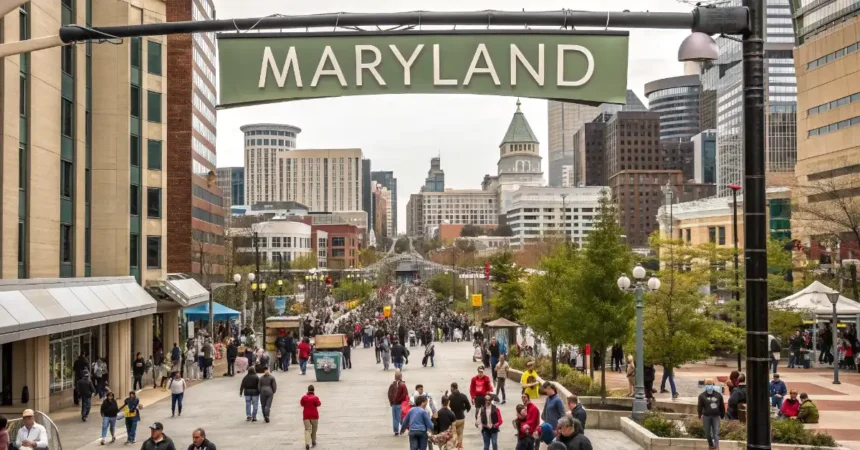
Maryland Population Shift demographic map is undergoing a radical transformation as we cross into 2026. While the “Old Line State” is officially growing, a deeper look at the data reveals a stark divide between booming suburban hubs and a persistent “brain drain” to neighboring states that is forcing a massive policy rethink in Annapolis.
Key Takeaways
- Selective Growth: Maryland added over 46,000 residents in 2026, yet this growth is almost entirely reliant on international migration offsetting domestic departures.
- The “Frederick-Montgomery” Axis: Frederick County remains the state’s growth engine with an 11.8% increase, while Montgomery County hit a milestone of 1.1 million residents.
- Economic Inflection: High living costs and tax rates are driving “domestic out-migration,” with many families moving to lower-cost neighbors like Delaware and Virginia.
What is driving the shift in 2026?
Our analysis suggests that Maryland is at a critical crossroads. According to the latest data from the Maryland Chamber of Commerce, the state has finally moved past two years of population stagnation. However, industry insiders are noting that this “rebound” is fragile.
If you’ve been following the regional economy, it won’t come as a surprise that housing affordability is the primary culprit behind the domestic exodus. While international arrivals are flocking to our biotech and federal corridors, established residents are increasingly looking at the border.
As reported by USAFacts, Maryland continues to lose thousands of residents annually to domestic migration, often cited as a search for lower taxes and more “bang for the buck” in housing.
Golden State Valkyries vs New York Liberty Timeline
How do the counties compare in 2026?
The Maryland Population Shift isn’t uniform. We found that while Baltimore City is working aggressively to reverse its long-term decline—showing early signs of a “renaissance” in housing reform—other areas are exploding.
| Jurisdiction | 2026 Estimated Population | Growth Trend |
| Montgomery County | 1,108,025 | Slow/Steady |
| Prince George’s County | 986,821 | Slight Decline |
| Frederick County | 309,643 | Rapid Growth |
| Baltimore City | 569,779 | Stabilizing |
| Queen Anne’s County | 56,120 | High Growth |
What does this mean for Maryland residents?
For the average Marylander, these numbers translate to real-world impacts on infrastructure and services. Maryland Population Shift fast-growing areas like Charles County, the surge has become so intense that officials are fast-tracking new emergency infrastructure, including the Pinefield Fire and EMS Station set to break ground in May 2026.
- For Homeowners: Expect property values to remain high in the “growth triangle” (Frederick-Montgomery-Howard), but be prepared for increased traffic and strained local services.
- For Businesses: The talent pool is shifting. Companies are increasingly looking toward the Eastern Shore and Frederick to find workforce clusters that haven’t been priced out of the state.
- For Taxpayers: The state’s reliance on international migration to maintain its tax base is a “fragile strategy,” according to recent U.S. Census Bureau reports, which highlight a national slowdown in international arrivals.
For More Latest Updates Atholton News