


The freewheeling, growth-at-all-costs era of artificial intelligence is officially over. Recent developments in artificial intelligence news signal a seismic shift, as the White House just unveiled a national policy framework aimed at taming the Wild West of AI development. This move, coupled with startling new breakthroughs in energy-efficient hardware, marks a pivotal moment where innovation is forced to contend with regulation and sustainability.
→ Blocked Subpoena Puts Donald Trump Jr. in Political Crossfire
Key Takeaways
- The White House has released its National Policy Framework for Artificial Intelligence, pushing for a unified federal approach to regulation that would preempt differing state laws.
- Breakthroughs in brain-inspired computer chips and neuro-symbolic AI promise to slash the technology’s massive energy consumption by up to 100 times.
- This regulatory push is global, with the European Parliament and South Korea also advancing their own comprehensive AI laws this month.
The rapid acceleration of AI has brought both wonders and worries. From models that can pass medical exams to those generating photorealistic video, the pace has been breathtaking. Our analysis suggests this explosive growth has finally triggered an unavoidable response from governments and scientists alike, creating a new landscape for all future artificial intelligence news.
What Does The New White House AI Policy Mean?
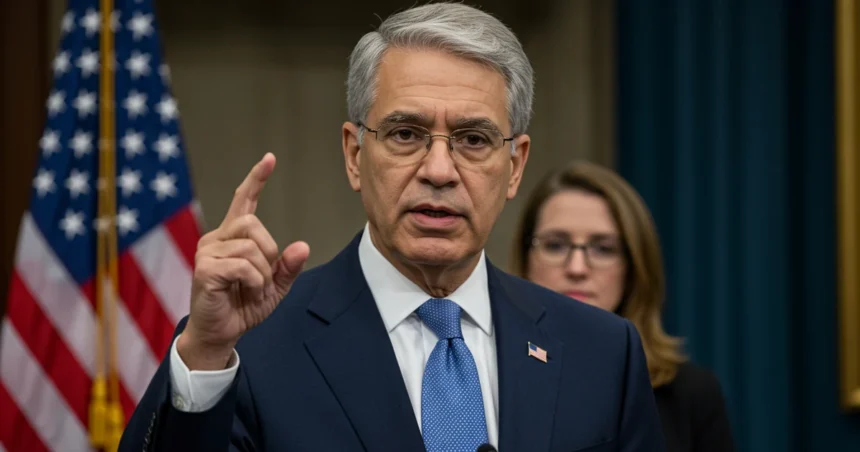
On March 20, 2026, the White House laid out its legislative priorities for governing artificial intelligence, aiming to create a single, national standard. The core objective of the National Policy Framework is to foster American innovation and competitiveness by preventing a confusing “patchwork” of state-level regulations. It calls for federal preemption, meaning a national law would override state efforts to regulate AI development.
However, this approach is not without its critics. The administration’s call for a lighter touch and the avoidance of a new federal oversight body stands in contrast to more prescriptive legislation proposed by lawmakers like Senator Marsha Blackburn. Her proposal would impose a statutory duty of care on developers, mandate bias audits, and create new avenues for lawsuits.
Our team observed that this tension highlights the central debate in artificial intelligence news: how to balance safety and accountability with the need to lead in a technology that will define the next century. As one authority, Steptoe, noted in its analysis, the framework specifically seeks to prevent states from penalizing developers for the unlawful use of their models by third parties.
| Feature | White House Framework | Senator Blackburn’s Bill |
|---|---|---|
| Primary Goal | Promote US competitiveness, avoid patchwork laws. | Impose a strict duty of care on developers. |
| Regulatory Body | Avoids creating a new federal AI agency. | Expands federal and state enforcement authority. |
| State Laws | Advocates for federal preemption over state AI laws. | Allows for new private rights of action. |
| Liability | Protects developers from third-party misuse. | Curbs liability protections like Section 230. |
Can We Solve AI’s Insatiable Energy Appetite?
While Washington debates rules, a parallel crisis has been brewing in data centers worldwide: AI’s staggering energy consumption. The International Energy Agency has warned that by 2030, the electricity used by data centers is expected to more than double, with AI being “the most important driver”. Some large AI data centers already consume as much electricity as 100,000 homes.
This trend has sparked intense debate, with some industry leaders downplaying the issue. This prompted sharp rebukes on social media, with Matt Stoller of the American Economic Liberties Project posting on X (formerly Twitter) that such comparisons are morally questionable. The latest artificial intelligence news on this front, however, offers a glimmer of hope.
Researchers at the University of Cambridge have developed a new brain-inspired computer chip material that could slash AI hardware energy use. As reported in the journal Science Advances, these components, called memristors, process and store information in the same place, mimicking the human brain’s efficiency. Separately, a team at Tufts University built a “neuro-symbolic” AI that uses up to 100 times less energy by combining neural networks with logical reasoning, proving that more power doesn’t always mean more intelligence.
What does this mean for artificial intelligence news?
This confluence of regulatory pressure and the sustainability crisis is fundamentally reshaping the industry. The era of simply building the largest possible model is giving way to a new paradigm focused on efficiency, safety, and verifiability. This is a recurring theme in recent artificial intelligence news.
Industry insiders are noting that this pivot is already underway. Meta, for example, announced it is developing four new generations of its own in-house AI chips to reduce its reliance on external vendors like Nvidia and cut down on power consumption. This trend, combined with the rise of powerful open-source models, suggests a future where AI is not controlled by a handful of giants but is more democratized and specialized. For consumers and businesses, this shift will ultimately lead to more reliable, affordable, and sustainable AI tools. This is the most impactful artificial intelligence news of the year.
The Global Race for AI Rules
The United States is not acting in a vacuum. The European Parliament just took a major step forward by adopting simplified rules and clear deadlines for its landmark AI Act. Their approach includes a ban on “nudifier” apps that generate non-consensual intimate images and sets a 2027 deadline for compliance for high-risk systems in sectors like law enforcement and education.
Furthermore, South Korea recently enacted its own significant AI regulation, aiming to become a top-three AI powerhouse by balancing innovation with clear obligations for high-impact systems. This global momentum underscores a shared understanding: the potential of AI is too vast to be left unchecked. We are witnessing the creation of the guardrails that will steer the technology for decades to come, a critical focus for all future artificial intelligence news.
Our analysis indicates that the next 18 months will be critical. The legislative debates in Washington, Brussels, and other world capitals will define the legal and ethical boundaries of artificial intelligence. At the same time, the scientific community will race to solve the energy crisis, ensuring that the future of AI is not only intelligent but also sustainable. The convergence of these two powerful forces is the most important artificial intelligence news story today.
Relevant posts
- Kaiser Permanente Maryland Jobs 2026: 100+ New Healthcare Openings Announced
- Frontier Threat Reveals New Realities for Air Travel
- Aetna Medicare Advantage Plans Closure 2026
Visit atholtonnews.com for more stories.