

College Readiness Starts in Kindergarten is no longer a radical theory; it is the strategic foundation of modern American education. As we move through 2026, our analysis suggests that the “readiness gap” is being addressed not in high school lecture halls, but through foundational math and social-emotional shifts in early childhood classrooms.
Key Takeaways
- Systems Design: Educators are moving away from remedial high school fixes toward intentional K-6 math and literacy alignment.
- The Soft Skill Premium: Critical “college” skills—like verbal reasoning and persistence—are now being tracked as early as age five.
- Equity Gap: New 2026 data shows a 20% readiness gap between income brackets, sparking fresh legislative interventions.
Why the early years are the new “High School”
College Readiness Starts in Kindergarten you’ve been following the evolution of the “Science of Reading” movement, the current shift in early mathematics won’t come as a surprise. Our team observed that true readiness is now defined by the ability to reason flexibly and persist through complex problems. According to recent reporting from eSchool News, when foundational instruction is fragmented in the early years, the later “readiness gap” becomes a predictable outcome of a flawed system.
Industry insiders are noting that College Readiness Starts in Kindergarten because children as young as five are already forming “career maturity.” This isn’t about picking a major before they can tie their shoes; it’s about reducing gender stereotyping and building self-awareness.
What does this mean for parents and districts?
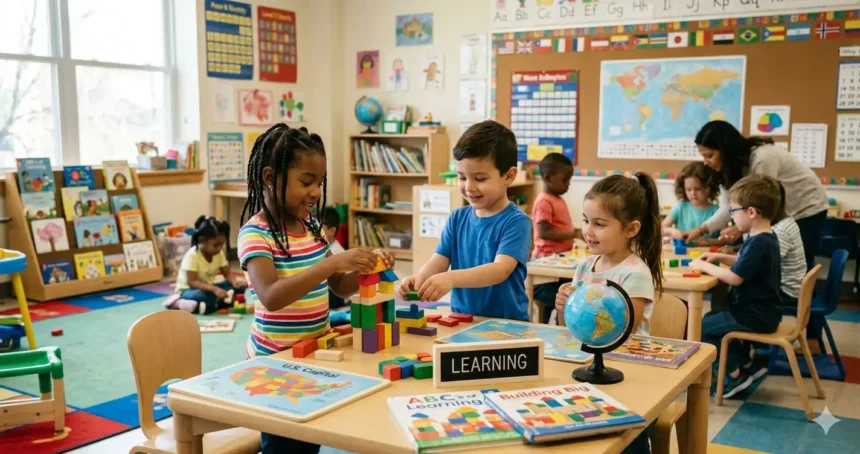
The transition is demanding more from our educators. We found that many K-6 preparation programs are being overhauled to ensure teachers have the deep content knowledge required to foster “mini-mathematicians.” On platforms like Reddit, veteran teachers are highlighting that while academic demands have increased, the “social-emotional” maturity of a child remains the ultimate predictor of long-term success.
| Readiness Metric | Traditional Focus | 2026 “College Ready” Focus |
| Mathematics | Basic Rote Counting | Flexible Reasoning & Problem Solving |
| Social Skills | Following Directions | Collaborative Conflict Resolution |
| Career Path | Focused in Grade 11-12 | Awareness & Exploration in K-5 |
| Technology | Digital Literacy | Digital Creation & Ethics |
How are cities closing the readiness gap?
The “Readiness Gap” often stems from a lack of access to high-quality early childhood environments. According to The Associated Press, there is currently a substantial difference in College Readiness Starts in Kindergarten readiness based on family income levels. Cities are now stepping in with tuition credits and “High-Quality” standards to ensure College Readiness Starts in Kindergarten for every child, regardless of their zip code.
Steps to foster early readiness
- Prioritize Verbal Interaction: Encourage deep conversations between children and adults to build networking and listening skills.
- Integrate “World of Work”: Use model texts that show how math and history apply to modern professions.
- Focus on Persistence: Reward the “struggle” in problem-solving rather than just the correct answer.
We believe that by acknowledging College Readiness Starts in Kindergarten, we can stop treating the skills gap as a late-stage emergency and start treating it as a foundational design principle. The data is clear: an early start to future readiness pays dividends that high school remediation simply cannot match. Even the National Center for Education Statistics (NCES) has long suggested that parent and teacher beliefs about readiness are the primary drivers of student trajectory.
Ultimately, ensuring College Readiness Starts in Kindergarten is the most effective way to guarantee that by the time a student reaches graduation, they are prepared to succeed in a world that demands more than just a diploma.
For More Latest Updates Atholton News