


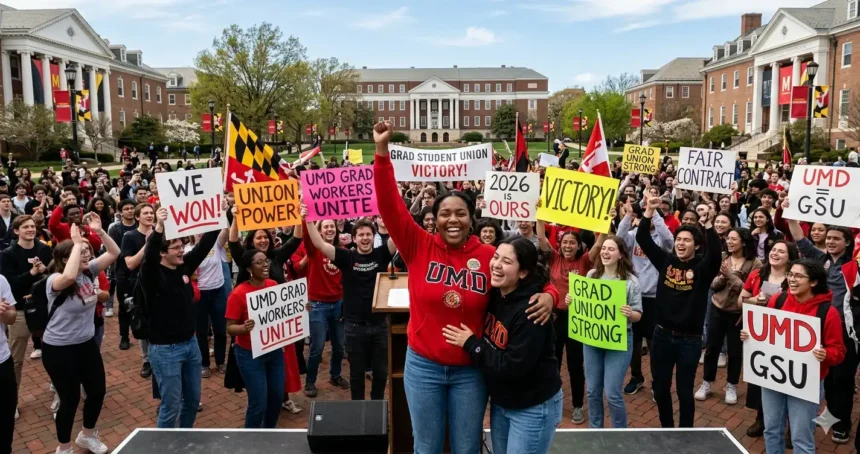
University of Maryland Graduate Student Union members are finally seeing the light at the end of a decades-long tunnel as historic collective bargaining legislation clears the Maryland General Assembly. This legislative breakthrough comes on the heels of intense spring protests over systemic payroll failures and “starvation wages” that left dozens of student workers without pay for months. The shift represents a fundamental change in how the state views academic labor, moving from a model of “educational apprenticeship” to one of “worker rights.”
Key Takeaways
- Historic Legislation: For the first time, both chambers of the Maryland General Assembly have passed versions of a bill to legalize graduate student unions.
- Critical Delays: Despite the win, current amendments suggest the University of Maryland Graduate Student Union may not be able to formally bargain until 2028.
- Systemic Issues: Ongoing payroll glitches within the “Workday” platform have fueled a 90% dissatisfaction rate among graduate assistants.
What does this mean for Maryland graduate workers?
We found that while the mood on campus is electric, it is tempered by the fine print of the new law. According to recent reporting from The Baltimore Banner, the legislation includes specific limitations, such as excluding grant-funded positions and delaying the implementation of a full contract for several years.
Our analysis suggests that this “wait-and-see” period is being met with skepticism by the University of Maryland Graduate Student Union. Just last month, as reported by The Diamondback, protesters disrupted the university president’s “State of the Campus” address, demanding immediate compensation for missed wages. For many, the promise of a union in 2028 does little to pay the rent in 2026.
Why is the university administration resisting?
Industry insiders are noting that the primary friction point remains financial control. The university has long maintained that graduate assistants are students first, not employees, a stance that UMD Graduate Student Government has fought to overturn for years. If the University of Maryland Graduate Student Union gains full recognition, the administration will lose its unilateral power to change stipend structures and employment terms.
| Issue | Current Status (2026) | Union Proposed Goal |
| Bargaining Rights | Limited/Legislative | Full Collective Bargaining |
| Minimum Stipend | Approx. $28,000 | $40,000 (Livable Wage) |
| Payroll System | Reported Errors/Delays | Contractual Timeliness Guarantees |
| Healthcare | University-Controlled | Union-Negotiated Benefits |
Goldwater Scholarships: Why They Are Reforming STEM in 2026
What steps should students take now?
If you’ve been following the labor shifts in higher education, this won’t come as a surprise: momentum is on the side of the workers. To ensure the University of Maryland Graduate Student Union remains a potent force during the transition, organizers are recommending the following:
- Document Payroll Issues: Keep a digital paper trail of every “Workday” error or delayed paycheck.
- Join the GLU-UAW: Official updates and strategy sessions are currently coordinated through the UMD Graduate Labor Union-UAW portal.
- Legislative Advocacy: Continue pressure on Annapolis to remove the 2028 “lockout” clause that prevents immediate bargaining.
We observed that the University of Maryland Graduate Student Union is no longer just a campus group; it has become a central player in the state’s broader labor movement. While the administration may hope the excitement fades before the 2028 deadline, the current “No Pay? No Way” campaign suggests that the University of Maryland Graduate Student Union is only getting started.
University of Maryland Graduate Student Union Wins Big in 2026
University of Maryland Graduate Student Union members are finally seeing the light at the end of a decades-long tunnel as historic collective bargaining legislation clears thehttps://t.co/pXDqcugunc
— Atholton News (@atholtonnews55) April 2, 2026For More Latest Updates Atholton News