

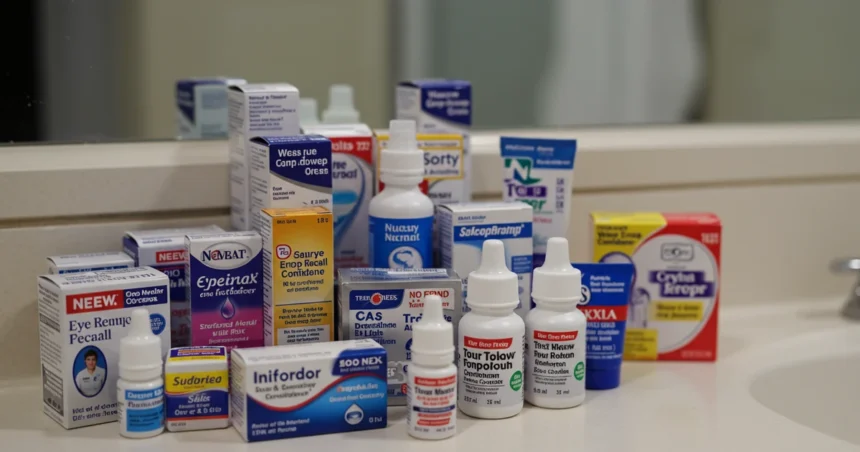
A sprawling recall of over 3.1 million bottles of store-brand eye drops has put consumers on high alert, marking the latest chapter in a troubling saga for the eye care industry. This recent action, prompted by a manufacturer’s inability to guarantee product sterility, is the newest in a series of eye drops recalled over the past few years, a trend that has seen products pulled for reasons ranging from potential contamination to confirmed, deadly bacteria.
→ Denver Broncos vs Indianapolis Colts Match Player Stats Matter in 2026 Final Score
- More than 3.1 million bottles of eye drops, spanning 26 store brands sold at major retailers like CVS, Walgreens, and Walmart, were recalled in early April 2026.
- The manufacturer, K.C. Pharmaceuticals, initiated the voluntary recall due to a “Lack of Assurance of Sterility,” meaning the production process could not be guaranteed as sterile, though no specific contamination has been confirmed in the final products.
- This follows a multi-year pattern of recalls, including a severe 2023 outbreak linked to EzriCare Artificial Tears that resulted in four deaths and multiple instances of vision loss.
What Prompted This Latest Massive Recall?
The trending news of another eye drops recalled event stems from a voluntary action by Pomona-based manufacturer K.C. Pharmaceuticals. According to reports published by the Food and Drug Administration (FDA) on March 31, 2026, the company could not ensure that sterility was maintained during the manufacturing process.
This “Lack of Assurance of Sterility” is a critical distinction. It means that while the millions of bottles recalled may not be actively contaminated, the conditions under which they were made fell short of federal standards, creating an unacceptable risk. Given that ophthalmic products bypass many of the body’s natural defenses, the FDA considers this a significant potential threat to consumer health.
Our analysis suggests this proactive, if unsettling, recall reflects a heightened sense of caution from both manufacturers and regulators. The move comes after several years of high-profile incidents that have eroded public trust in the safety of over-the-counter (OTC) eye care products.
Which Store Brands Are Part of the April 2026 Recall?
The recall is extensive, impacting numerous private-label brands that are household names for millions of Americans. Consumers are urged to check their medicine cabinets for products purchased from these retailers. The recall includes various types of drops, from standard artificial tears to advanced redness relief formulas.
Our team has compiled a list of the major retailers and brands implicated in this specific eye drops recalled event based on FDA announcements:
| Retailer/Distributor | Affected Brands |
|---|---|
| CVS Health | CVS Health Brand |
| Walgreens | Walgreens Brand |
| Walmart | Equate Brand |
| Rite Aid | Rite Aid Brand |
| Kroger | Kroger Brand |
| Cardinal Health | Leader Brand |
| McKesson | Rugby Brand |
For a complete and detailed list of every product and lot number, consumers should consult the official information on the FDA’s recall website.
Why Are We Seeing So Many Eye Drops Recalled?
The recent flood of recalls is not an isolated phenomenon but rather the culmination of growing safety concerns. Industry insiders are noting a significant shift in regulatory oversight following a catastrophic 2023 contamination event.
The pivotal moment came when the Centers for Disease Control and Prevention (CDC) and FDA linked EzriCare and Delsam Pharma’s Artificial Tears to a multi-state outbreak of an extensively drug-resistant bacteria, Pseudomonas aeruginosa. That investigation identified 68 patients, resulting in 8 cases of vision loss, 4 surgical eye removals, and 3 tragic deaths. The bacteria was traced back to the manufacturing facility in India.
That incident triggered a domino effect. Later in 2023, the FDA warned consumers to stop using 27 different OTC eye drop products from brands like CVS, Rite Aid, and Target after investigators found unsanitary conditions at a Kilitch Healthcare India Limited facility. Other instances of eye drops recalled involved products from Dr. Berne’s and Pharmedica for confirmed bacterial or fungal contamination. The pattern has made it clear that significant gaps exist in the manufacturing and safety protocols for these essential products, forcing the FDA to act more aggressively. The sheer volume of eye drops recalled has become a major concern for consumers.
What Should You Do If You Have Recalled Eye Drops?
If you discover you own any of the eye drops recalled in this latest notice, or any previous one, it is imperative to take immediate action to protect your health.
- Stop Use Immediately: Do not use the product. Using potentially contaminated eye drops can lead to serious eye infections, which could result in partial vision loss or even blindness.
- Check Official Lists: Verify your product’s name, manufacturer, and lot number against the comprehensive lists provided on the FDA’s official website.
- Properly Discard the Product: The FDA recommends discarding the products. Do not simply throw them in the trash where others might find them. Check with your local pharmacy for guidance on proper medical disposal.
- Seek Medical Care if Needed: If you have used a recalled product and are experiencing any signs of an eye infection—such as redness, pain, discharge, blurry vision, or light sensitivity—contact your healthcare provider immediately.
How to Protect Yourself and Choose Safe Eye Drops
The constant stream of headlines about another eye drops recalled event has left many wondering which products are safe. Our team observed that even purchases from major, reputable retailers are not a guarantee of safety, as this recall demonstrates.
One key point of discussion among users on social media platforms like Reddit is the country of origin and the difference between preservative-free and preserved formulas. In one thread on the r/Dryeyes subreddit, users expressed fear and confusion after discovering their daily-use brands were on the recall list, asking for recommendations of unaffected products. While preservative-free, single-use vials are often considered safer as they reduce the risk of contamination during repeated use, some of these have also been subject to recalls.
Ultimately, vigilance is the best defense. Before purchasing, consumers can check the FDA’s running list of drug recalls. It’s also crucial to remember that prescription eye drops undergo a more stringent regulatory process than OTC products and have not been affected by these widespread store-brand recalls.
The ongoing situation with eye drops recalled serves as a stark reminder of the importance of manufacturing standards and regulatory oversight in protecting public health.
Relevant posts
- Kansas City Chiefs vs Jacksonville Jaguars Match Player Stats In 2026
- Chicago Bears Vs Bengals Match Player Stats Define 2026
- The Real Reason Air Force Academy Civilian Faculty Resignations
Visit atholtonnews.com for more stories.