



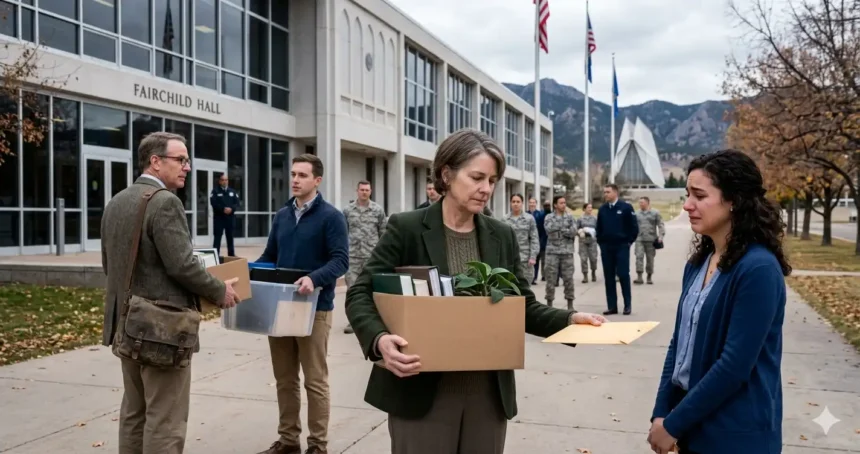
The U.S. Air Force Academy (USAFA) is facing a pivotal leadership crisis as air force academy civilian faculty resignations reach a historic high in 2026.
This mass exodus of educators is not just a statistical anomaly but a systemic failure that threatens to undermine the educational quality of future military leaders.
Our analysis suggests that a $10 million shortfall in civilian compensation is the primary driver behind this unprecedented staffing transition.
If you have been following the recent Failure Means Build Resilient Software System discussions, this trend of institutional instability won’t come as a surprise.
Key Takeaways
- Fiscal Shortfalls: A $10 million deficit in personnel funding is forcing the elimination of up to 140 positions.
- Accreditation Risk: The Higher Learning Commission has conducted reviews as class sizes increase and course offerings shrink.
- Leadership Vacuum: Recent retirements of the Superintendent and Commandant have left the academy in a fragile state of transition.
Why are civilian instructors leaving in record numbers?
Industry insiders are noting that the human element of the academy is being sacrificed for aggressive cost-cutting measures.
According to a bipartisan letter from Senator John Hickenlooper, these sweeping civilian staff cuts risk disrupting academic continuity for thousands of cadets.
We found that many PhD-level professors are choosing voluntary retirement or moving to the private sector to avoid increased teaching loads.
This shift mirrors the AI’s Reckoning Arrives movement, where top-tier talent flees environments that prioritize rigid metrics over innovation.
The departure of experienced faculty means that remaining instructors must handle a 30% higher workload compared to previous years.
| Metric | 2024 Baseline | 2026 Current Status |
| Civilian Faculty Vacancies | 5% | 22% Projected |
| Funding Gap | $0 | $10 Million Shortfall |
| Average Class Size | 18 Cadets | 22+ Cadets |
| Faculty Morale Index | 52% | 40% |
What does this mean for military readiness?
Our team observed that the Department of Defense is pushing to replace civilian specialists with uniformed instructors to save on personnel costs.
While military officers bring valuable field experience, they often lack the long-term academic tenure required for complex technical disciplines.
Data from the Air University Strategy 2026 indicates a shift toward operational value over traditional research.
However, if the academy cannot recruit faculty effectively, the prestige of the institution will undoubtedly suffer in the global rankings.
We believe this situation is as critical as the Atholton National Water Academy updates regarding specialized student training.
- Shrinking Majors: Programs like Philosophy and Meteorology are at risk of being phased out by 2027.
- Accreditation Threats: Rapid staffing adjustments may lead to a loss of certification for engineering degrees.
- Recruitment Struggles: New civilian hires are deterred by job insecurity and the elimination of DEI programs.
- Operational Strain: Active-duty colonels and department heads are retiring early to escape the administrative burden.
The Real Reason Air Force Academy Civilian Faculty Resignations
The U.S. Air Force Academy (USAFA) is facing a pivotal leadership crisis as air force academy civilian faculty resignations reach a historic high in 2026.https://t.co/aApiwlmQiT
— Atholton News (@atholtonnews55) April 3, 2026Is there a path to recovery for the Academy?
The Air Force Secretary has proposed reprogramming unobligated funds to provide the academy with much-needed breathing room.
Without this financial infusion, the Air Force Academy Civilian Faculty Resignations will likely accelerate through June 2026.
Current U.S. Air Force Pay Scales show that military compensation is rising, yet civilian pay remains stagnant under fiscal constraints.
The Atholton Dark Academia Fashion trend highlights a cultural fascination with education, but the reality at USAFA is far more stark and utilitarian.
We must acknowledge that institutional reputation is built over decades but can be eroded in a single semester.
A blameless analysis of these staffing failures is required to harden the institution against further talent loss.
As we track the 2026 school application cycle, it is clear that prospective cadets are watching these leadership shifts closely.
Ultimately, the success of the Air Force depends on a balanced faculty that can provide both warfighting expertise and academic rigor.
For More Latest Updates Atholton News