



Introduction
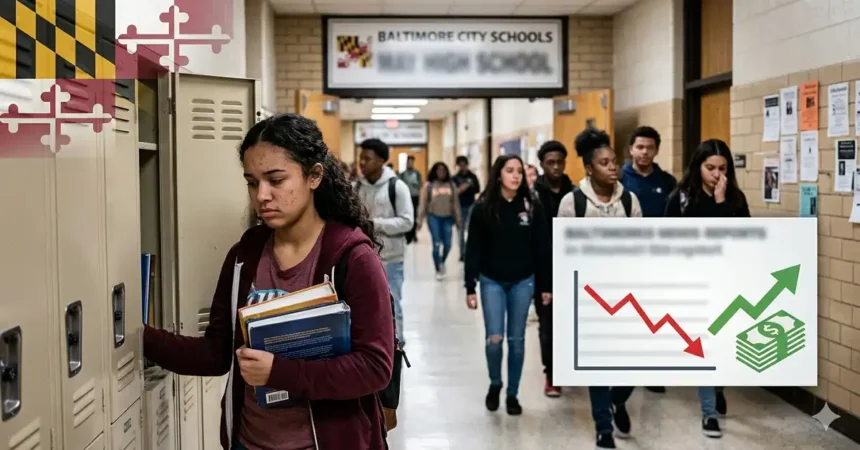
Maryland Schools Crisis is becoming a growing concern for parents, educators, and policymakers. Despite increased education funding over recent years, many schools are struggling with declining graduation rates, learning gaps, and student disengagement.
In this article, you’ll learn why this crisis is happening, what factors are contributing to it, and what realistic solutions could help reverse the trend. Whether you’re a parent, student, or education enthusiast, this guide breaks everything down in simple, clear language.
What Is the Maryland Schools Crisis?
The Maryland Schools Crisis refers to the disconnect between rising education budgets and declining student outcomes—especially graduation rates.
While funding has increased for teacher salaries, infrastructure, and programs, results have not improved as expected.
Key Signs of the Crisis:
- Falling graduation rates in several districts
- Increased absenteeism among students
- Lower standardized test scores
- Teacher shortages and burnout
Featured Snippet Answer:
Why is Maryland facing a school crisis?
Maryland is facing a school crisis due to a combination of declining student engagement, teacher shortages, post-pandemic learning loss, and inefficient use of increased funding.
Dr. Chelsea Taylor Wicomico Teacher of the Year Wins Big
Why Graduation Rates Are Declining
1. Post-Pandemic Learning Gaps
One major factor behind the Maryland Schools Crisis is the long-term impact of COVID-19. Many students missed foundational learning, especially in math and reading.
2. Student Absenteeism
Chronic absenteeism has surged. Students missing too many school days are more likely to fall behind and eventually drop out.
3. Mental Health Challenges
Students today are facing increased stress, anxiety, and social pressure, which directly affects academic performance and attendance.
Increased Funding: Where Is It Going?
Despite the Maryland Schools Crisis, the state has invested heavily in education. However, the issue is not just about how much money is spent—but how it is used.
Common Funding Areas:
- Infrastructure upgrades
- Administrative costs
- Technology investments
- Teacher salary increases
The Problem:
While these investments are important, they don’t always directly impact classroom learning or student outcomes.
Inefficient Resource Allocation
Some schools struggle with distributing resources effectively. For example, funding may not reach underperforming schools where it’s needed most.
Atholton Achievement Academy Celebrates Student Success in 2026
Teacher Shortages and Burnout
Another major contributor to the Maryland Schools Crisis is the shortage of qualified teachers.
Why Teachers Are Leaving:
- High workload and stress
- Lack of classroom support
- Low job satisfaction
Impact on Students:
- Larger class sizes
- Less individual attention
- Reduced learning quality
The Role of Curriculum and Standards
Outdated or Misaligned Curriculum
In some cases, the curriculum does not match current student needs or job market demands. This disconnect contributes to disengagement.
Lack of Skill-Based Learning
Students often lack practical, real-world skills, which reduces their motivation to complete school.
How the Maryland Schools Crisis Affects Families
The Maryland Schools Crisis doesn’t just affect schools—it impacts entire communities.
For Parents:
- Concerns about education quality
- Increased need for tutoring or private schooling
For Students:
- Lower confidence in academic ability
- Limited career opportunities
For Communities:
- Reduced workforce readiness
- Long-term economic challenges
PSLF Changes: What New Loan Forgiveness Rules Mean for You
Solutions: What Can Be Done?
Addressing the Maryland Schools Crisis requires a multi-step approach.
1. Focus on Student Engagement
Schools need to make learning more interactive and relevant.
2. Improve Teacher Support
Providing better resources and reducing workload can help retain teachers.
3. Targeted Funding Use
Funds should be directed toward:
- Classroom learning tools
- Student support programs
- Underperforming schools
4. Strengthen Mental Health Support
Hiring counselors and providing emotional support can improve attendance and performance.
5. Data-Driven Decision Making
Schools should use real data to identify weak areas and act quickly.
Remote Analyst Jobs: Why Demand Is Surging in 2026
Internal Linking Opportunities
You can internally link this article with:
- Education policy updates
- Teacher job trends
- Student mental health resources
- Graduation rate statistics reports
FAQs
1. What is the main cause of the Maryland Schools Crisis?
The main cause is a combination of post-pandemic learning loss, teacher shortages, and inefficient use of funding.
2. Why are graduation rates falling in Maryland?
Graduation rates are falling due to absenteeism, mental health challenges, and lack of academic support.
3. Is increased funding helping schools?
Funding helps, but without proper allocation and strategy, it does not always improve student outcomes.
4. How can schools fix this crisis?
Schools can improve engagement, support teachers, and focus on targeted funding and mental health programs.
5. Who is most affected by the crisis?
Students in underperforming districts and low-income communities are most affected.
Conclusion
The Maryland Schools Crisis highlights a critical issue in modern education: funding alone is not enough. Real change requires smart strategies, strong leadership, and a focus on students’ actual needs.
If you’re a parent, educator, or policymaker, now is the time to stay informed and take action.
Share this article, start conversations, and advocate for better education policies—because every student deserves a fair chance to succeed.
- Houston Texans VS Los Angeles Rams Match Player Stats Today
- Detroit Lions vs Los Angeles Rams Match Player Stats Score Today
- Detroit Lions VS Philadelphia Eagles Match Player Stats Update 2026
- Detroit Airport Travel Gridlock Erupts. The Real Cause?
- Texans VS Baltimore Ravens Match Player Stats Score 2026
For More Latest Updates Atholton News