



Passengers Become the Repair Crew at 30,000 Feet
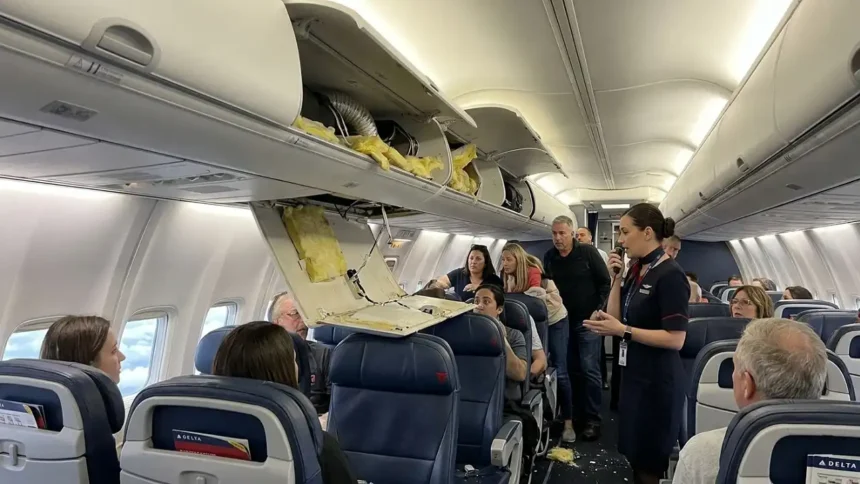
The Delta Flight 2417 ceiling collapse forced travellers to hold up a fallen cabin panel with their bare hands on April 14, 2025.
The Boeing 717, operating the Atlanta to Chicago route, turned back to Hartsfield-Jackson for urgent cabin maintenance.
For nervous flyers, this incident has become a flashpoint in the debate over ageing aircraft.
Delta Planes Face Dual Ceiling Failures on Same Day 🛬
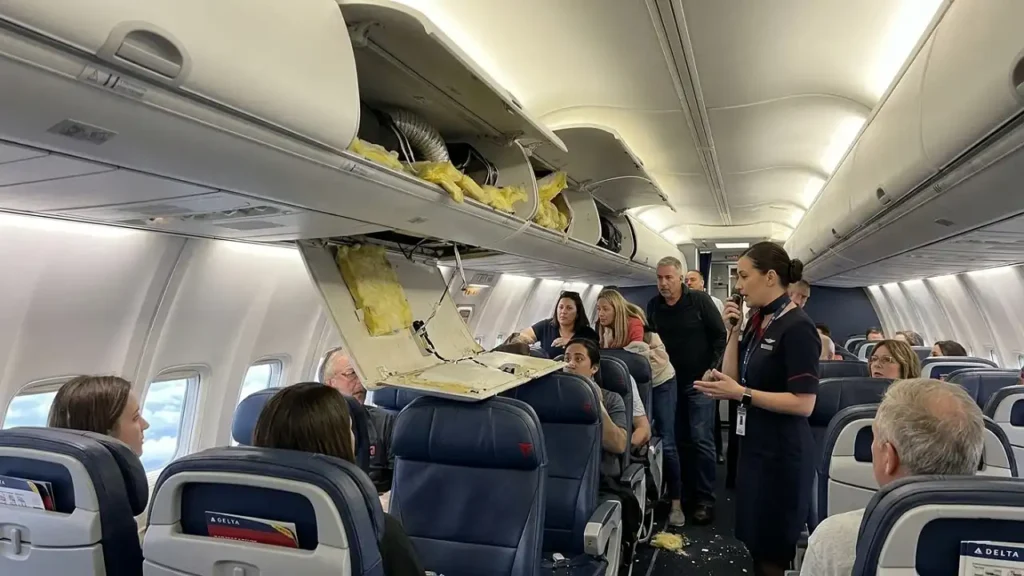
April 14, 2025: Delta Flight 2417 from Atlanta to Chicago suffered a mid-air ceiling panel collapse.
Passengers, including Tom Witschy, had to physically hold it up for 10 to 15 minutes until the crew secured it with tape.… pic.twitter.com/sZb3yWvCe1
— Intrigue Archive (@IntrigueArchive) April 29, 2025How the Mid-Flight Emergency Unfolded
Passenger Tom Witschy, seated in 19B, told PEOPLE a loud bang preceded the ceiling panel crashing down near a woman in row 18.
Cabin crew were strapped in for the climb, so he and two fellow travellers braced the panel themselves. Our team noted they held it for an estimated 30 to 45 minutes before a fix arrived.
- Delta Flight DL1800 Cancellation
- United Airlines Flight UA939 Emergency
- United Flight UA109 Diversion
- Air France A350 Chicago Flight Return
A passenger ahead offered bright yellow scotch tape, which the crew used to secure the loose cabin panel.
😥🛩️ ¡Qué miedo!
Pasajeros del vuelo Delta 2417, que partió de Atlanta con destino a Chicago, vivieron momentos de pánico cuando tuvieron que detener el techo del avión, ya que comenzó a colapsar en pleno vuelo
🎥 RRSS#diariocambio #Puebla pic.twitter.com/eFFGk2OlfH
— Diario Cambio (@Diario_Cambio) April 29, 2025Delta’s Response and the Safety Question
According to the statement carried on Delta News Hub, the jet landed safely and the trip resumed on another aircraft after a two-hour delay.
There were no injuries, and Delta Air Lines apologised for the disruption.
The FAA logs such aviation safety events, while Boeing records show 717 production ended in 2006.
Incident Snapshot: Key Data
Here is how the mid-flight emergency stacks up at a glance.
| Detail | Information |
| Flight | Delta Air Lines Flight 2417 |
| Route | Atlanta (ATL) to Chicago |
| Aircraft | Boeing 717 |
| Date | April 14, 2025 |
| Injuries | None reported |
| Outcome | Returned to ATL; two-hour delay |
Standout efforts inside the cabin:
- Tom Witschy (19B): Grabbed the nearest corner and filmed the clip that went viral.
- Two nearby passengers: Supported the sagging panel right through the climb.
- An engineer on board: Traced the failure to a missing screw above row 18.
- Cabin crew: Taped the panel and steered a calm return to Hartsfield-Jackson.
Our Take
Our analysis suggests the passenger compensation row matters more than the tape. We found that travellers offered 10,000 SkyMiles felt the gesture was thin for an all-day ordeal.
If you have been following NTSB commentary on ageing fleets, this won’t come as a surprise.
Expect interior checks to tighten before passenger trust fully returns.
Related News:
- KLM British Airways Flight Cancellations
- United Flight UA967 Diverted
- Delta Flight DL275 Diverted LAX
- United Flight 1270 Emergency
🔥✈️ ¡TERROR EN LOS AIRES! Al vuelo Delta 2417 que partió de Atlanta hacia #Chicago, se le cayó parte del techo tras el despegue! 😱 Fueron los pasajeros quienes actuaron primero, mientras la tripulación optó por pegar el techo con… ¡cinta adhesiva! pic.twitter.com/lJYu5Gq49Y
— El Incorrecto (@elincorrectosoy) April 30, 2025