



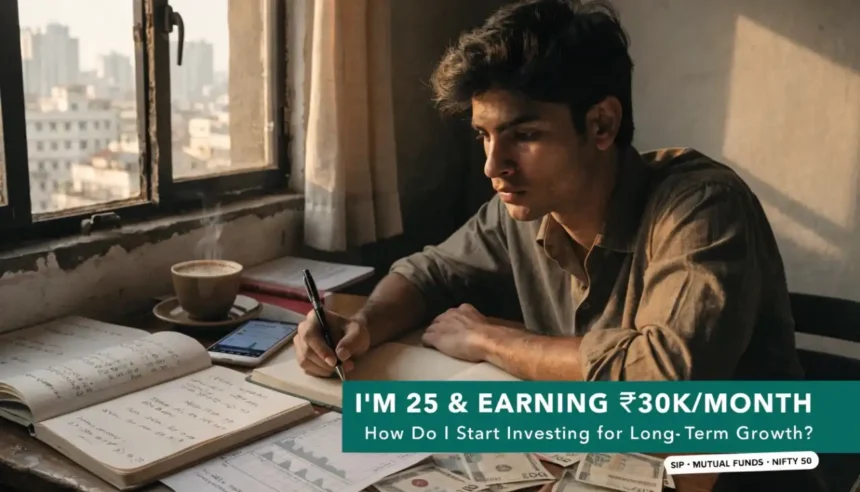
A wave of young earners is asking the same question this year. “I’m 25 and earning ₹30k a month how should I start investing for long-term growth?”
Our analysis suggests the answer has shifted in 2026, with cheaper index funds and faster digital onboarding changing what a small salary can build.
Key Takeaways
- Starting a SIP investment at 25 gives you nearly 35 years of compounding before retirement.
- Index funds and mutual funds India now carry lower expense ratios in 2026, per SEBI.
- Even ₹6,000 a month can grow past ₹2 crore over 35 years at a 12% return.
Check Also: T. Rowe Price Opens Finance Doors for Students
Why 25 Is the Number That Matters
We keep hearing the same worry from young earners: the salary feels too small to invest. That worry is misplaced.
The single biggest advantage you hold at 25 is time, not income. Global data from OECD shows early financial planning at 25 beats larger contributions started a decade later.
If you’ve been following long-term wealth building, this won’t surprise you.
How Should You Split ₹30k a Month?
We recommend a simple, repeatable allocation you can automate on day one.
| Category | Monthly Amount | Purpose |
|---|---|---|
| Emergency fund | ₹3,000 | 6-month safety buffer |
| SIP in index funds | ₹6,000 | Long-term growth |
| Equity mutual funds | ₹3,000 | Higher-return exposure |
| PPF/EPF | ₹2,000 | Tax-free stability |
| Lifestyle & flexible | ₹16,000 | Living costs |
This plan sends ₹11,000 toward your future every single month.
More guidance on tax-saving instruments sits with Income Tax India.
Best Remote BPO Non Voice Process Job in MD Hiring Now in 2026
Which Investment Options Fit a New Investor?
We compared the most common choices for someone starting equity investment India today.
| Option | Risk | Ideal Horizon | 2026 Expense Ratio |
|---|---|---|---|
| Index funds | Moderate | 10+ years | ~0.20% |
| Active mutual funds | Moderate-High | 7+ years | ~1.00% |
| PPF | Low | 15 years | Nil |
| Fixed deposits | Very low | 1-5 years | Nil |
Our team observed that low-cost index funds now anchor most beginner portfolios. Historical market data from RBI supports steady equity exposure over long holding periods.
What Could ₹6,000 a Month Actually Become?
The math is the reason we keep repeating the same advice.
Compounding does the heavy lifting once you stay invested.
| Years Invested | Monthly SIP | Est. Value at 12% |
|---|---|---|
| 10 years | ₹6,000 | ₹13.9 lakh |
| 20 years | ₹6,000 | ₹59.8 lakh |
| 35 years | ₹6,000 | ₹3.8 crore |
These are estimates, not guarantees, and returns vary with the market. Still, the pattern is clear: the longer you wait, the more it costs you.
More on realistic return assumptions is available through AMFI.
Steps To Take This Week
We break the process into concrete moves so nothing feels vague.
- Complete your KYC through any registered app or bank.
- Set up one SIP investment in a broad index fund.
- Automate the transfer on your salary date.
- Add a term insurance and health cover before scaling up.
- Review the portfolio once a year, not once a week.
What This News Means For You
So the honest answer to “I’m 25 and earning ₹30k a month how should I start investing for long-term growth?“ is straightforward.
Start small, start now, and let mutual funds India and index funds compound quietly.
We stand behind one principle: consistency beats timing. For anyone still asking “I’m 25 and earning ₹30k a month how should I start investing for long-term growth?”, the 2026 tools make the first step easier than ever.
Your future portfolio depends on the SIP you set up today.