



DOJ Releases Thousands More Epstein Files, Reveals Investigation Into 10 Unnamed Co-Conspirators
→ Trump Fires Remaining Election Assistance Commission Members Weeks Before Midterms
The Justice Department has released another large batch of files tied to the Jeffrey Epstein and Ghislaine Maxwell investigations, adding thousands of documents to what has become one of the most closely watched public records disclosures in recent memory.
→ Trump Administration Abandons Plan to Put Harriet Tubman on the $20 Bill
The latest release, posted overnight Monday into Tuesday, included emails, videos, spreadsheets, photos, and other records. Among the more striking items was a fraudulent Austrian passport bearing Epstein’s photo under the name Marius Robert Fortelni, raising fresh questions about the lengths Epstein went to obscure his identity and movements.
The 10 co-conspirators nobody can name
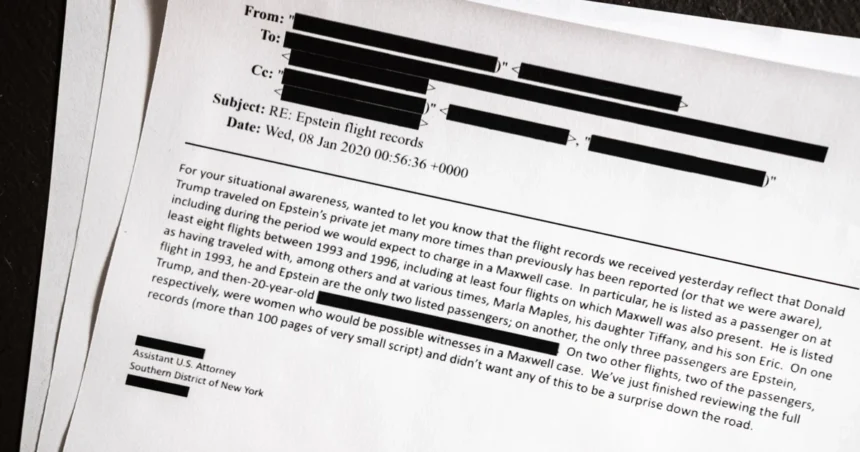
Perhaps the most consequential document in the new batch is a 2019 email chain with the subject line “Epstein update,” which appears to show the DOJ was actively investigating ten co-conspirators at the time. None of them are identified by name. Instead, the email, which appears to originate from an FBI investigator with the Crimes Against Children Human Trafficking Unit, describes individuals only by location: three in Florida, one in New York City, one in Boston, one in Connecticut, and one described as “a wealthy businessman in Ohio.”
The names of the law enforcement officials on the email chain are also redacted, leaving the public with a partial picture that answers almost nothing while raising a great deal more.
A separate legal battle brewing over the DOJ’s own redaction manuals
Beyond the documents themselves, a parallel dispute is taking shape over how the DOJ has been handling the redaction process. Kel McClanahan, executive director of public interest law firm National Security Counselors, and media founder Allison Gill are currently suing the Trump DOJ to obtain the internal training manuals the agency created to guide agents through redacting Epstein-related files.
In the course of that lawsuit, the DOJ made what Gill described as a “stunning” admission in its latest denial of a Freedom of Information Act request for those training documents. Legal analysts watching the case say the admission could expose the DOJ to significant legal jeopardy, though the full implications are still being worked through in court.
A recent trove of Epstein files obtained by Bloomberg reporter Jason Leopold included what Gill believes may be the very PowerPoint slide deck at the center of the dispute, which prompted the latest filing.
What the files still do not show
The releases have generated enormous public interest, but transparency advocates are quick to point out that volume does not equal clarity. Thousands of pages with heavy redactions, unnamed individuals, and geographic placeholders tell a story with most of the characters removed. The identity of the ten co-conspirators referenced in the 2019 email remains unknown, and it is not yet clear whether any of them were ever charged, investigated further, or quietly dropped from the inquiry.
What is clear is that the legal pressure on the DOJ to release more, and to explain how decisions about redactions were made, is not going away anytime soon.
Relevant posts
- Rahm Emanuel Heads to Tel Aviv to Deliver Blunt Warning to Netanyahu Over U.S.-Israel Relations
- Federal Judge Issues Preliminary Injunction Blocking Key USCIS Green Card Policy
- Marriage Used to Be a Fast Track to a Green Card. The Trump Administration Just Changed That.
Visit atholtonnews.com for more stories.