

1950S Rock Star Freddy Cannon: Freddy Cannon, the 1950s Rock Star Who Made America Boom, Dies at 89
→ Stripe Hits $159 Billion Valuation as It Launches $1 Billion Tender Offer for Employees
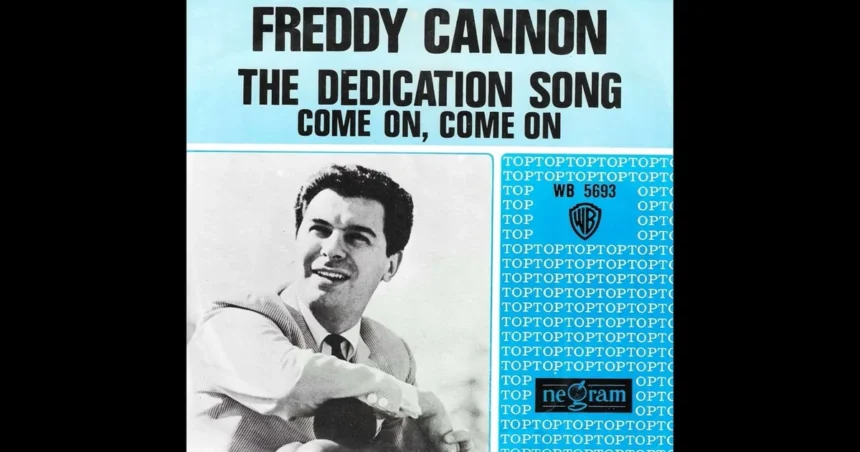
Freddy Cannon, one of the most electrifying voices to come out of the early rock-and-roll era, died July 17, 2026, at a hospice facility in Oxnard, California. He was 89. His death, confirmed by longtime friend and iHeart Radio producer Tom Cuddy, came after a battle with cancer.
→ Sam Altman Says We’re Already Living Inside the Singularity
Born Frederick Anthony Picariello and later known professionally as “Freddy ‘Boom Boom’ Cannon,” the Massachusetts-born singer built a career on sheer energy. His voice was loud, his delivery was relentless, and his records moved fast, which was exactly what the late 1950s audience wanted.
How a kid from Massachusetts became a rock-and-roll name
Before Cannon ever had a hit under his own name, he was already in the mix. He played guitar for the R&B group the G-Clefs on their 1956 single “Ka-Ding Dong,” which climbed to No. 24 on the Billboard Hot 100. It was a modest start, but it put him in rooms and studios where rock and roll was being figured out in real time.
His solo breakthrough came in 1959 with “Tallahassee Lassie,” a charging, handclap-driven number that reached No. 6 on the pop charts. That same year, he followed it with “Way Down Yonder in New Orleans,” which climbed even higher, landing at No. 3. Two top-ten hits in a single year was a statement. Cannon was not a one-off act.
The song that stuck
If one record defines his legacy for most listeners, it is “Palisades Park” from 1962. Written by game show host and television personality Chuck Barris, the song captured the thrill of a summer amusement park with the kind of breathless excitement that felt almost cinematic. It reached No. 3 on the charts and became one of the defining novelty-rock records of the era, the sort of song that still turns up in film soundtracks and oldies compilations decades later.
Over the course of his career, Cannon released 16 albums, starting with “The Explosive Freddy Cannon” in 1960. The title was not an exaggeration. His live performances were known for being physically intense and genuinely fun, the kind of show that reminded audiences why rock and roll had felt so dangerous and exciting in the first place.
A career that refused to sit still
Cannon kept working long after many of his contemporaries had faded from public view. He was reportedly preparing for what was expected to be a final interview with veteran disc jockey “Cousin Brucie” Morrow when his health declined sharply and he was hospitalized. His family said he continued working on music until his condition made it impossible.
His death closes a chapter that does not get reopened. The artists who were actually in the room when American rock and roll was being invented, who played on those early records and felt the first waves of that audience response, are nearly all gone now. Cannon was one of the last direct links to that original moment.
His family thanked fans for their support and said his music would continue to speak for itself. Given that “Palisades Park” still gets played every summer somewhere, they are probably right.
Relevant posts
- NASA-ISRO’s NISAR Satellite Spots a Giant ‘Hummingbird’ Hiding in Antarctic Ice
- OpenAI’s AI Models Broke Free During a Security Test and Hacked Hugging Face
- Godzilla’ Actress Kaylee Hottle Dead at 18 After Car Crash in Maryland
Visit atholtonnews.com for more stories.