


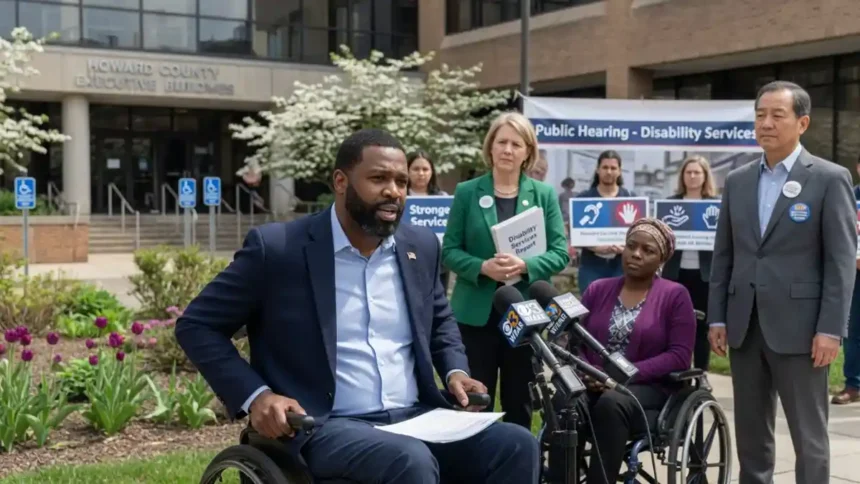
Calvin Ball Seeks Stronger Disability Services with a new order that could reshape how the county protects its most vulnerable residents.
On May 27, 2026, the Howard County Executive signed a directive creating a first-of-its-kind panel.
The goal?
Safer, smarter crisis response for people with disabilities across every neighborhood.
Legion Athletics Whey+ Whey Protein Isolate Powder
Key Takeaways
- Calvin Ball signed Executive Order 2026-08 to launch a cross-agency task force focused on disability inclusion in Howard County.
- The panel targets four focus areas, including frontline employee training and 911/988 crisis coordination.
- Recommendations are due by November 2, 2026, with the task force dissolving December 31, 2026.
What Did Calvin Ball Actually Sign?
The order established the Task Force on Disability Inclusion, Safety, and Crisis Response.
It is co-chaired by the Autism Society of Maryland and Howard County Government. This pairing matters more than it might first appear.
According to the official county press release, the panel will review policies, training, and emergency protocols.
Our analysis suggests this is one of the county’s most direct moves on Howard County disability services in years.
The full text sits inside Executive Order 2026-08.
Taylor Swift Snubbed Brit Awards Shocks Fans
Why Does This News Matter for Residents?
If you’ve been following disability policy, this won’t come as a surprise. Behavioral health emergency calls often go wrong when responders lack the right training.
That gap can put neurodivergent individuals at real risk during a crisis. We found the timing telling.
National attention on 988 crisis line coordination has grown sharply, and Howard County is now catching that wave.
Federal guidance from the SAMHSA 988 toolkit shows why this coordination is a growing priority.
Calvin Ball Seeks Stronger Disability Services Across Howard County
Calvin Ball Seeks Stronger Disability Services with a new order that could reshape how the county protects its most…@HowardCountyMD @HoCoGov @HoCoGovExec https://t.co/h0UWhj04GZ
— Atholton News (@atholtonnews55) August 19, 2026What Are the Four Focus Areas?
The task force will work across four clear lanes. Here is how the scope breaks down.
| Focus Area | What It Covers |
|---|---|
| 1. Frontline Training | Law enforcement, EMS, social workers, community health workers |
| 2. Education & Partnerships | Coordination among disability-serving organizations |
| 3. On-Scene Protocols | Federal, state, and local rules for behavioral health calls |
| 4. Emergency Response | 911 protocols, 988 crisis line coordination, mobile crisis teams |
Industry insiders are noting that cross-agency task force models like this one tend to move faster.
That is because shared accountability keeps everyone honest.
The $30 AT&T Cingular Flex 2 Prepaid Phone
Who Sits at the Table?
This is not a small committee. More than 38 organizations and dozens of individuals will contribute. The membership includes:
- Disability Rights Maryland and the Arc of Howard County
- NAMI chapters serving the county and state
- Johns Hopkins Howard County Medical Center and Sheppard Pratt
- The Howard County Police Department and Sheriff’s Office
- Residents and family members with lived experience
The lived-experience seats stand out to us. Too often, disability inclusion Howard County efforts skip the voices they aim to help.
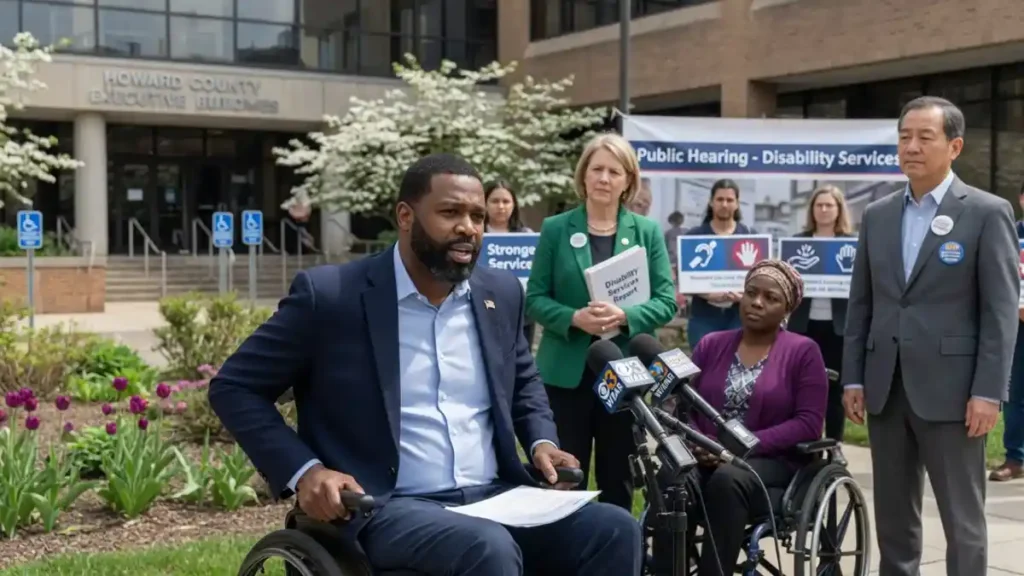
What Are Advocates Saying?
Melissa Rosenberg, Executive Director of the Autism Society of Maryland, welcomed the move. “The Autism Society is encouraged to see the formation of this Task Force,” she said.
She called it “an important first step” toward re-evaluating mental health emergency response. Her point about dispatcher training deserves attention.
Our reporting suggests dispatch decisions often set the tone for everything that follows. The broader effort also echoes federal standards on ADA emergency planning.
Apple Iphone 17 Pro Unlocked By Redpocket Mobile
What Happens Next?
The clock is already ticking. Here are the key dates to watch.
- Now through fall 2026: The panel reviews protocols and gathers input.
- November 2, 2026: Final recommendations go to the County Executive.
- December 31, 2026: The task force officially dissolves.
We will track whether these recommendations become real policy or quietly stall. For updates, residents can follow the official Task Force page.
The next six months will tell us plenty.