



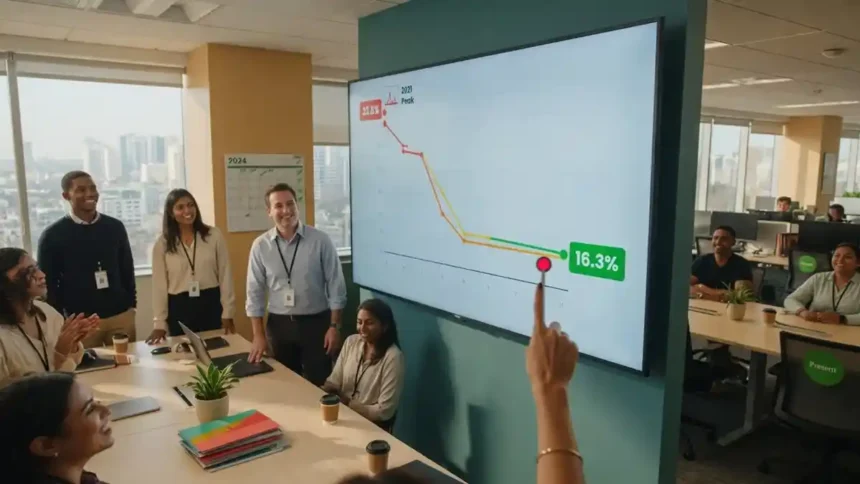
Absenteeism Falls to Just Over 16%, and that shift marks one of the clearest signs yet that the classroom crisis born during the pandemic is finally easing.
After peaking at nearly 24% in 2021, the numbers are moving in the right direction.
For families, educators, and policymakers, this is the recovery signal many have waited years to see.
Family Pleads for Help Finding Desiree Vielle, 31, Missing From Dallas Since April
What Are the Key Takeaways?
- Absenteeism peaked at nearly 24% in 2021 and has since dropped to just over 16%, a meaningful decline.
- Chronic absenteeism in U.S. schools hit roughly 31% in 2021-22, according to the U.S. Department of Education.
- Unplanned absences can cost businesses up to 36% in productivity losses, tying school trends to broader workforce absenteeism.
Why Did Absenteeism Spike So Sharply?
The pandemic broke long-standing habits around student attendance, and the damage showed fast.
Our analysis suggests the surge was not random but rooted in health fears, disrupted routines, and widening attendance barriers.
In one striking case, Connecticut’s rate nearly doubled to 24% by the 2021-22 school year, per the Connecticut Action Lab.
Industry insiders are noting that urban districts carried the heaviest load. School absenteeism rates climbed as illness, transportation gaps, and mental health struggles piled up. If you’ve been following education policy, this pattern won’t come as a surprise.
Trump Appeals Ruling Against Perkins Coie
Absenteeism Falls to Just Over 16% After Peaking at Nearly 24% in 2021
Absenteeism Falls to Just Over 16%, and that shift marks one of the clearest signs yet that the classroom crisis born…@usdoegov @EdSource @EducationWeekhttps://t.co/auafDFuBer
— Atholton News (@atholtonnews55) August 20, 2026How Bad Did It Get Nationally?
The scale was hard to ignore, and the data made that painfully clear. We found three figures that tell the whole story.
- 72% of schools reported increased absenteeism in the 2021-22 school year, a stunning majority.
- Chronic absenteeism reached about 31% nationwide that same year.
- Roughly 14.7 million students were chronically absent, missing large chunks of learning.
Each number reflects a system under real strain. The ripple effects touched achievement, wellbeing, and long-term outcomes alike.
What Do the Numbers Look Like Side by Side?
Here’s how the trend has shifted across key measures and years.
| Measure | 2021 / 2021-22 | Latest Reported | Direction |
|---|---|---|---|
| Overall absenteeism | Nearly 24% | Just over 16% | Falling |
| U.S. chronic absenteeism | ~31% | ~28% | Falling |
| Connecticut absenteeism | 24% | Declining | Improving |
| Schools reporting a rise | 72% | Fewer | Easing |
The gap between the peak and today is real progress, though experts caution it remains above pre-pandemic norms.
Recovery is happening, but the finish line sits further out.
Why Should Parents and Employers Care?
The stakes reach far beyond a single missed class. Post-COVID academic recovery depends heavily on getting kids back in seats.
The Nation’s Report Card (NAEP) links rising absenteeism directly to falling test scores in reading and math.
Research from Stanford’s Thomas Dee warns that higher chronic absenteeism threatens the entire recovery effort.
The classroom problem does not stay in the classroom.
- Students lose critical instructional time and peer connection.
- Families face steeper long-term risks, including lower graduation odds.
- Employers feel the strain later through workforce absenteeism and lost output.
$326,000 Investment to Expand STEM Opportunities for Students
What Is Driving the Turnaround?
Districts are fighting back, and the tactics are getting smarter. Our team observed that targeted interventions are doing real work.
Connecticut’s Hartford schools built Attendance, Culture, and Engagement teams to tackle root causes head-on.
- Home visits and consistent check-ins re-engage at-risk students.
- Text-based nudges to parents cut unexcused absences, a low-cost win.
- Mentoring programs rebuild the trust that keeps kids coming back.
These are not silver bullets, but together they move the needle.
Calvin Ball Seeks Stronger Disability Services Across Howard County
What Happens Next?
The decline is encouraging, yet nobody is declaring victory. Absenteeism Falls to Just Over 16%, and that milestone deserves recognition.
Still, the Bureau of Labor Statistics reminds us that absence patterns shift with health, weather, and economic pressure.
We believe sustained progress needs steady data, smart policy, and community effort. The trend is our friend, but only if we keep pushing.