



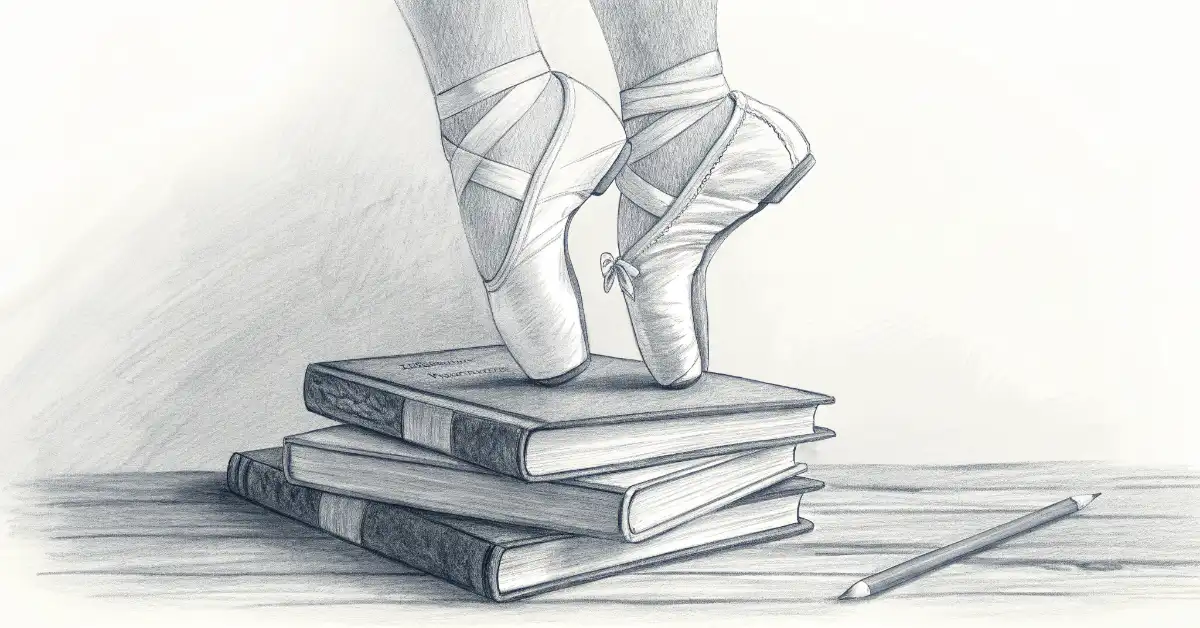
The art of dance celebrates the human experience by communicating a vast range of emotions. From the graceful movements of ballet to the energetic rhythms of hip-hop, they all tell a tale. The long extension of an arm captures the grief of a friend, the flex of a foot expresses unruly rage—every movement tells a story.
Balancing Priorities
These inspiring stories are not told effortlessly; they are born from dedication. Every movement takes hours upon hours of practice. Many dancers cannot handle the commitment and quit before the age of 13; they would rather spend time hanging out with friends, going to the mall, and enjoying the normal teenage experience.
However, two dancers at Atholton High School have traded hanging out with friends for pointed toes and pirouettes.
Nick Herrera and Kayla Mazzei-Williams have mastered the art of Balancing Priorities between rigorous coursework and their passion for dance.
They juggle late-night rehearsals and early morning classes, mountains of homework and endless hours of dance practice, and the constant challenge of excelling in both academics and performance.
Despite their demanding workload and overwhelming schedules, both Herrera and Mazzei-Williams remain honor students. Their ability to not only manage their busy lives but thrive in both dance and school comes down to one essential trait: work ethic.
Nick Herrera spends a significant amount of time at his dance studio, Power Up Dance, where he attends over 30 hours of classes each week. His week begins on Monday with multiple two-hour lessons.
He starts with a two-hour tap class, followed by long sessions of ballet, jazz, and other styles. Out of all the styles, Nick says jazz is his favorite.
“I started tap the same time I started dancing. It’s grown up with me,” he shared.
Between school and these strenuous dance lessons, he only gets about thirty minutes of rest at home before heading back to the studio. Once classes finish around 10 p.m., Herrera returns home to complete a pile of homework. Although this routine is exhausting, he approaches it with discipline.
He explained, “At dance, once we start a combination, we must finish.”
This mindset carries over into his academics. Once he begins an assignment, he finishes it. This philosophy of Balancing Priorities allows him to stay focused and productive, even when he is tired. After finishing his assignments, he finally goes to bed around midnight.
Because of his late nights, Herrera is often exhausted the next day. Still, he continues this schedule five days a week. This lifestyle leaves little time for a social life outside of school and dance.
Even though he misses out on typical teenage experiences—like spending evenings with friends or taking a break from responsibilities—he believes his dedication will pay off in the future.
Mazzei-Williams follows a similarly demanding schedule. She also trains at Power Up Dance and studies various styles including tap, ballet, and hip-hop. Like Herrera, she has a favorite: ballroom dance.
Since ballroom is not offered at Power Up Dance, she attends four-hour classes at That’s Ballroom Dancing. She discovered her love for ballroom at just five years old after attending a convention where it was offered. Since then, she has remained devoted to the style.
Mazzei-Williams openly admits that Balancing Priorities between school and dance can be challenging. After long days of academic classes followed by intense dance training, she often feels exhausted.
Unlike Herrera, she prioritizes sleep and goes to bed immediately after finishing her work so she can have enough energy for the next day. Rest is essential for maintaining both her academic performance and the physical stamina dance requires.
Her routine repeats throughout the week: school, dance, homework, and sleep. Though the schedule is intense, her passion keeps her motivated. She dreams of becoming a dance instructor one day. “My dream job is being a dance instructor,” she said, hopeful about sharing her love of dance with future students.
Herrera and Mazzei-Williams lead emotionally and physically demanding lives. Their days revolve around school, dance practice, and finding time to rest. They sacrifice many typical teenage experiences to pursue excellence in both academics and dance.
They miss social events, return home late, and complete countless assignments—all to continue doing what they love.
The art of Balancing Priorities is not easy. It requires discipline, sacrifice, and resilience. Yet both dancers prove that with determination and strong work ethic, it is possible to succeed in multiple demanding areas of life. Although dance consumes much of their time, their passion remains unwavering.
As Herrera expressed, “Of course I’ve had my ups and downs, but in the end, I wouldn’t trade it for anything.”
The heavy workload is difficult to manage, but through dedication and commitment, they continue to succeed—perfectly embodying the true meaning of Balancing Priorities.