

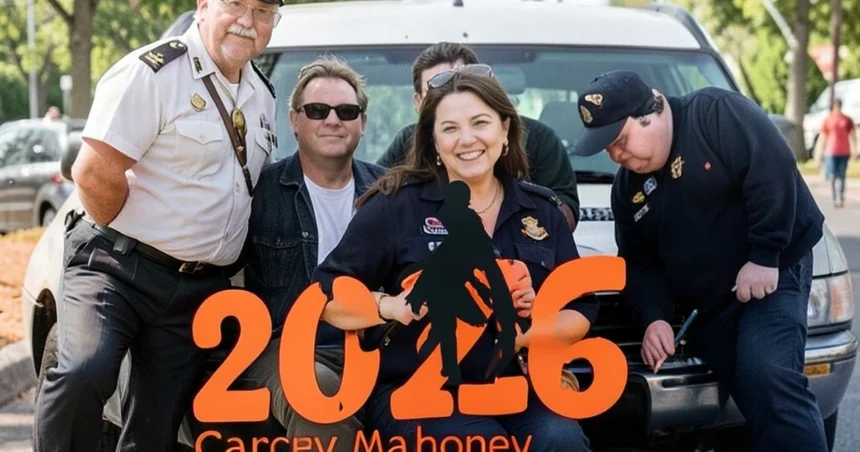
You’ve probably seen the posters floating around social media: a familiar, goofy font, maybe a silhouette of Carey Mahoney, and a bold “2026” promising a return to the madcap world of the Police Academy. It’s the rumor that won’t die, and it’s why “police academy” is surging. But as our team dug into the buzz, we found a much more importantstory hiding in plain sight. The real question isn’t just *if* a movie reboot is coming, but *why* we’re so fascinated with the idea of a police academy right now.
- Viral Rumors Fuel Nostalgia: Fan-made posters and trailers for a new Police Academy film in 2026 have exploded online, reigniting interest in the classic 1980s comedy franchise.
- A Tale of Two Academies: While fans debate a movie reboot, a parallel, urgent conversation is happening in the real world about the need to fundamentally overhaul how police officers are actually trained.
- Star-Fueled Speculation: Original series star Steve Guttenberg has continued to hint that a new installment is in the works, adding fuel to the speculative fire that has been burning for years.
Is a New Class Really on the Horizon?
Let’s get one thing straight: as of today, there is no officially confirmed Police Academy 8 or reboot with a 2026 release date. The slick posters and “official trailers” you might have seen are the work of passionate fans. However, the smoke isn’t coming from nowhere. For over a decade, whispers of a new installment have circulated in Hollywood. At one point, comedy duo Keegan-Michael Key and Jordan Peele were attached to produce a new take on the franchise, though it never materialized. More recently, Steve Guttenberg, who played the charming troublemaker Mahoney, has kept hope alive, stating in interviews that a new movie is still a possibility.
The conversation online is electric, and deeply divided. On Reddit, one user in the r/movies forum expressed excitement, suggesting a soft reboot could work if it’s “smart, slap stick, and witty versus fart and dick jokes.” Another user was more skeptical, posting, “I love those movies too much to want to see them bastardized and rebooted.” This split reaction shows the tightrope any new project would have to walk: honoring the anarchic, often politically incorrect spirit of the original while appealing to a modern audience.
For more discussion, see this discussion on Reddit.
That sounds great on paper, but it’s a massive challenge. The original 1984 film was a lightning-in-a-bottle hit, an R-rated comedy that grossed nearly $150 million on a tiny budget and captured a moment of irreverent, anti-establishment humor. Recreating that magic is a tall order.
The Fictional Academy vs. The Real-World Gauntlet
The appeal of the movies was simple. They presented a world where any misfit could become a cop, where the stuffy rules of a powerful institution were constantly upended by lovable weirdos. It was a fantasy of democratized authority. But how does that stack up against the reality of police training in 2026?
Our team looked at the data and the expert analysis, and the picture is starkly different.
| The Police Academy Movie Fantasy | The 2026 Police Academy Reality |
|---|---|
| Open-door policy: Anyone and everyone is accepted, regardless of fitness or background. | Rigorous Screening: Applicants face intense physical, psychological, and background checks. Many are weeded out before day one. |
| Core Skill: Mastering elaborate pranks on Lieutenant Harris. | Core Skill: De-escalation, crisis intervention, and complex legal knowledge. |
| Training Style: Comical drills, slapstick scenarios, and outsmarting instructors. | Training Style: Often a high-stress, quasi-military environment that is under intense scrutiny for its effectiveness and psychological impact. |
| The Goal: Somehow graduate and prove the doubters wrong. | The Goal: Prepare officers for the immense physical and emotional challenges of modern policing, a task many experts argue current academies are failing to do. |
The Reboot We Actually Need
While conventional wisdom says a Police Academy reboot would be a fun, nostalgic trip, our data points to a different reality: the timing might be all wrong. In an era of intense scrutiny on law enforcement, the idea of “bumbling police” as pure comedy feels out of step for some. As one Reddit user bluntly put it, “I don’t need to see more bumbling police right now.”
This is the real heart of the trend. The goofy, lighthearted vision of the Police Academy films is colliding with a very serious, real-world debate. Experts and reformers are calling for a fundamental reboot of police training itself. A recent report highlighted how the high-stress, military-style training in many academies can be counterproductive, leading to higher dropout rates for women and minority recruits and potentially fostering an “us versus them” mentality. A TIME magazine piece argued that training focuses too much on worst-case “officer survival” scenarios, creating fear instead of fostering community engagement.
In practical terms, this means that while we’re laughing at the memory of Michael Winslow’s sound effects, real academies are grappling with how to better train officers in psychological resilience, de-escalation, and implicit bias. Organizations like Police1 are publishing articles on “Why police academies are letting recruits down” and calling for a renovation in how skills and knowledge are delivered.
The Hidden Cost of Outdated Training
Here’s the kicker, and the part that only insiders usually see: clinging to old training models isn’t just ineffective; it’s expensive. It costs agencies significant money to recruit and train an officer. When that officer drops out because the training environment is misaligned with the needs of modern policing, or quits the force early due to burnout that could have been addressed with better psychological preparation, that’s a tangible loss. The “tough it out” boot camp mentality, which made for great comedy in the 80s, is now being viewed as a liability.
The translation for your day-to-day is simple. The quality of police training directly impacts the safety and trust in your community. A better-trained officer, equipped with skills beyond just firearms and defensive tactics, is better prepared to handle the complex social issues they inevitably face on the street.
The enduring popularity of the *Police Academy* movies reveals a deep-seated desire to see policing as human, approachable, and even a little bit silly. It’s a comforting thought. But as the real-world conversation about police reform intensifies, the trending search for “police academy” serves as an accidental referendum. It asks us whether we’re content with the fantasy, or ready to engage with the difficult, necessary work of rebooting the real thing.