


An ominous 2026 wildfire forecast, coupled with a deepening insurance crisis, is forcing a rapid evolution in the fire damage restoration industry. As homeowners face unprecedented risk, our analysis shows that technological innovation and a focus on resilience have become more critical than ever, fundamentally changing how the nation prepares for and recovers from fire-related disasters. This isn’t just about cleaning up; it’s about rebuilding smarter in the face of a volatile climate.
→ England Cricket Team vs India National Cricket Team Match Scorecard
Key Takeaways
- Severe Wildfire Season Ahead: Federal agencies are predicting an “above-normal” wildfire potential for large portions of the United States in 2026, driven by widespread drought, low snowpack, and unusually high temperatures.
- Insurance in Crisis: In response to escalating climate risks, home insurance providers are dramatically increasing premiums or withdrawing coverage from high-risk states like California, leaving homeowners financially exposed.
- Technology Revolutionizes Recovery: The restoration industry is rapidly adopting advanced technologies like AI-powered assessments, thermal imaging, and ultrasonic cleaning to make recovery faster, more precise, and more effective.
What’s Driving the 2026 Wildfire Threat?
Our team observed that the 2026 fire season is off to an alarming start, with over 1.4 million acres already burned by March. According to the National Interagency Fire Center’s latest outlook, a convergence of troubling environmental factors is to blame. An “unprecedented” snow drought has left mountainous regions in the Western U.S. with snowpack levels not seen in 40 years, drastically reducing the moisture that would normally temper spring and summer fire risk.
This dryness is compounded by record-breaking temperatures. Experts point to these conditions creating historically dry fuels across the Great Plains, Southwest, and even parts of the Southeast, including Florida and Texas. The result is a landscape primed for significant fire activity, expanding the geographic areas of concern and threatening to stretch firefighting resources thin if multiple large-scale incidents occur simultaneously.
How Is the Insurance Market Responding to the Risk?
The escalating wildfire threat is a major factor in a growing crisis within the homeowners’ insurance industry. Our analysis of market trends shows insurers are struggling to price the escalating risk associated with climate change. In states like California, this has led to a market in turmoil. Major insurers have paused writing new policies, and even those remaining are seeking significant rate hikes, with some increasing by nearly 7-8%.
This industry retreat is forcing tens of thousands of homeowners, even those in lower-risk urban zones, onto last-resort state insurance plans, which offer less coverage at a higher cost. According to a Reddit discussion among Bay Area homeowners, insurance costs in high-risk zones can already exceed $10,000 a year, and recent rate hikes are making homeownership even less affordable. This trend isn’t isolated to California; homeowners in other disaster-prone states like Florida and Colorado are reporting similar challenges with massive premium increases. The financial burden of recovery is increasingly shifting to property owners, making the efficiency and effectiveness of professional fire damage restoration more important than ever.
| Insurer | Approved/Requested Rate Change (Homeowners) | Effective Date |
|---|---|---|
| Farmers Insurance Group | 6.99% (Pending) | Pending |
| Mercury Insurance | 8.2% | July 1, 2026 |
| CSAA | 6.9% | Mar. 1, 2026 |
| USAA | 7.3% | June 17, 2026 |
Table data reflects recent rate filings in California, indicating a trend of rising premiums across the board.
What New Technologies Define Modern Fire Damage Restoration?
In response to these immense challenges, the fire damage restoration sector is undergoing a technological revolution. The industry, projected to grow into a multi-billion dollar market, is leveraging innovation to improve outcomes for property owners. Our team has identified several key technologies that are becoming the new industry standard.
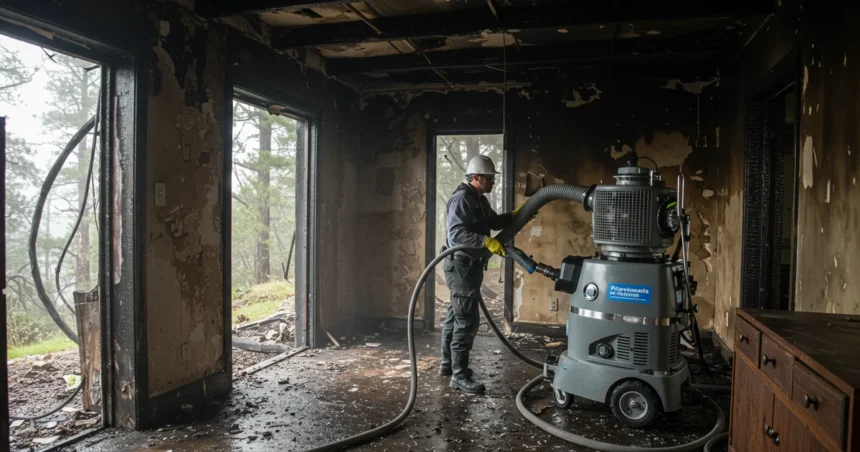
The process of fire damage restoration now begins with far greater precision. Instead of relying only on visual inspection, professionals use advanced tools to see the unseen. Thermal imaging cameras, for instance, can detect lingering heat or hidden moisture behind walls, preventing future flare-ups or mold. Drones are also increasingly used for initial assessments, providing a safe and comprehensive view of structural damage, especially on hard-to-reach rooftops.
Once work begins, the focus of fire damage restoration shifts to decontamination and cleaning.
* Ultrasonic Cleaning: This method uses high-frequency sound waves in a cleaning solution to gently remove soot from delicate items like jewelry and electronics that would be destroyed by traditional methods.
* Laser Cleaning & Dry Ice Blasting: For structural surfaces, new techniques like laser cleaning and dry ice blasting can remove soot and char without the use of harsh chemicals or abrasive materials, preserving the integrity of the original structure.
* Advanced Air Scrubbing: To combat smoke odor and harmful airborne particles, fire damage restoration teams deploy high-efficiency air scrubbers and hydroxyl generators that neutralize contaminants at a molecular level.
These advancements mean that a modern fire damage restoration process is not just about rebuilding but about precise, scientific recovery.
What This Means for Every Homeowner
The convergence of extreme weather, a volatile insurance market, and a technologically advancing recovery industry creates a new reality for homeowners. The risk of fire is no longer a distant threat confined to a few remote areas. Our analysis suggests that preparedness is now a year-round necessity.
Industry insiders are noting a shift from reactive response to proactive risk management. Homeowners are encouraged to understand the specifics of their insurance policies, particularly their deductibles and coverage limits for events like wildfires. As insurers pull back, the financial gap between what insurance covers and the total cost of a rebuild is widening. Knowing the capabilities of a professional fire damage restoration company can be crucial in planning for this gap. These companies are no longer just cleanup crews; they are vital partners in resilience, equipped with the technology to salvage more and rebuild smarter. According to the National Interagency Fire Center, being prepared is essential as the nation faces a challenging fire year.
Relevant posts
- Today Cleveland Browns Vs Chicago Bears Match Player Stats 2026
- Massive Eye Drop Recall Shakes Consumer Confidence
- Denver Broncos vs Indianapolis Colts Match Player Stats Matter in 2026 Final Score
Visit atholtonnews.com for more stories.