



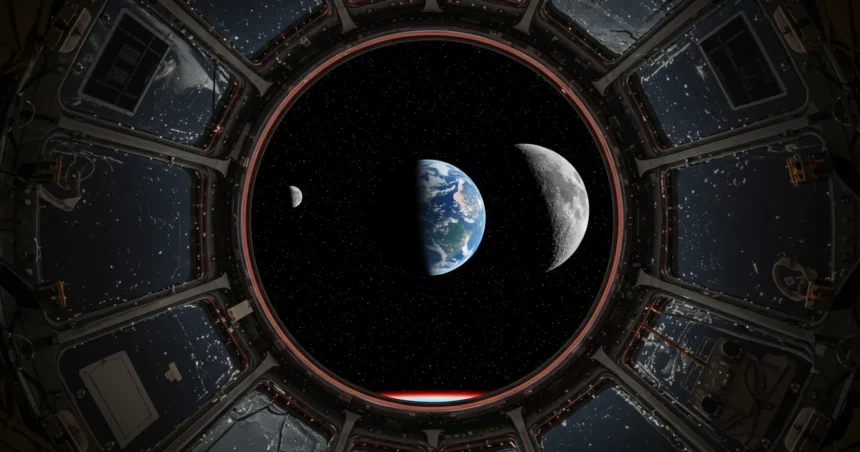
Our team has been tracking the historic Artemis II flight, and the news today is electrifying. The mission marks a monumental step for the NASA Moon program, as the four-person crew not only completed a successful lunar flyby but also traveled farther from Earth than any human in history. They are now on their way home, armed with breathtaking images and invaluable data.
→ Top Jobs in Baltimore Maryland: Latest Hiring Trends in 2026
The Orion spacecraft, carrying NASA astronauts Reid Wiseman, Victor Glover, Christina Koch, and CSA astronaut Jeremy Hansen, smashed the long-standing Apollo 13 record by traveling approximately 252,756 miles from our planet. This journey took them around the far side of the lunar surface, a part of the NASA Moon mission that resulted in a planned 40-minute communication blackout. During this flight, the crew captured thousands of images, including unprecedented views of a solar eclipse from deep space.
→ Neuro Critical Care Physician Job: Roles, Salary, and Career Path
These achievements are more than just milestones; they are the bedrock for the future of space exploration. The data gathered will directly inform upcoming landings and the ambitious goal of establishing a sustained human presence. This successful NASA Moon flyby reinvigorates the global ambition for crewed deep-space missions.
Timeline of a Historic Lunar Flyby
The critical phase of the Artemis II mission unfolded over a packed and historic seven-hour period. Our team has compiled the key moments from this incredible event.
For more discussion, see this discussion on Reddit.
- Record Broken: At 1:57 p.m. ET on April 6, the crew officially surpassed the Apollo 13 distance record of 248,655 miles from Earth, set back in 1970.
- Closest Approach: The Orion capsule made its closest approach to the Moon at 7:02 p.m. ET, flying just 4,067 miles above the cratered surface.
- Maximum Distance: Minutes later, at 7:07 p.m. ET, the crew reached their maximum distance from Earth, setting the new human spaceflight record.
- Behind the Moon: The spacecraft disappeared behind the Moon, entering a planned loss of signal where the crew witnessed a stunning “Earthset.”
- Unique Eclipse: While behind the Moon, the crew observed a solar eclipse lasting nearly an hour, providing views of the Sun’s corona impossible to see from Earth.
- Homeward Bound: After emerging from the far side, the crew began their multi-day journey back to Earth, with splashdown expected on Friday, April 10.
Myth vs. Fact: The New NASA Moon Mission
With renewed attention on lunar exploration, it’s easy for misconceptions to arise. We’re here to set the record straight on this pivotal NASA Moon endeavor.
Fact: This is fundamentally different. While Apollo was about “flags and footprints,” the Artemis program, as detailed by NASA, is focused on establishing a long-term, sustainable presence on and around the Moon. This involves building infrastructure and creating a lunar economy to serve as a stepping stone for future missions to Mars.
Fact: The stunning photos are just one piece of the puzzle. According to official mission updates from NASA, a primary goal is testing the Orion spacecraft’s life-support systems, navigation, and re-entry capabilities. Every part of this NASA Moon flight is a test to ensure the hardware is ready for future landings.
Fact: Artemis II is a powerful example of international collaboration. The crew includes Canadian Space Agency astronaut Jeremy Hansen, and the broader Artemis Accords involve dozens of countries working together on the future of space exploration. You can follow real-time updates on the official @NASAArtemis X account.
This mission is a bold declaration of intent. The success of this complex flyby provides critical confidence and a treasure trove of scientific data. As noted by sources like Space.com, this is a crucial step before NASA attempts to land astronauts on the lunar surface with Artemis IV. The journey of this NASA Moon mission is paving the way for humanity’s next giant leap.
Key Takeaways
- Record-Breaking Flight: The Artemis II crew broke the 54-year-old Apollo 13 record for the farthest distance humans have traveled from Earth.
- Stunning Visuals: Astronauts captured thousands of high-resolution images, including a rare solar eclipse and views of the Moon’s far side.
- Foundation for the Future: This successful flyby is a critical test of the Orion spacecraft, paving the way for future lunar landings and the goal of a sustained human presence.
Relevant posts
- Providence College DEI and Ministry Office Merger: The Truth
- Bahamas Paradise Lost: The Search for a Missing American
- Spring Shock: Freeze Warning Blankets Midwest and Northeast
Visit atholtonnews.com for more stories.