


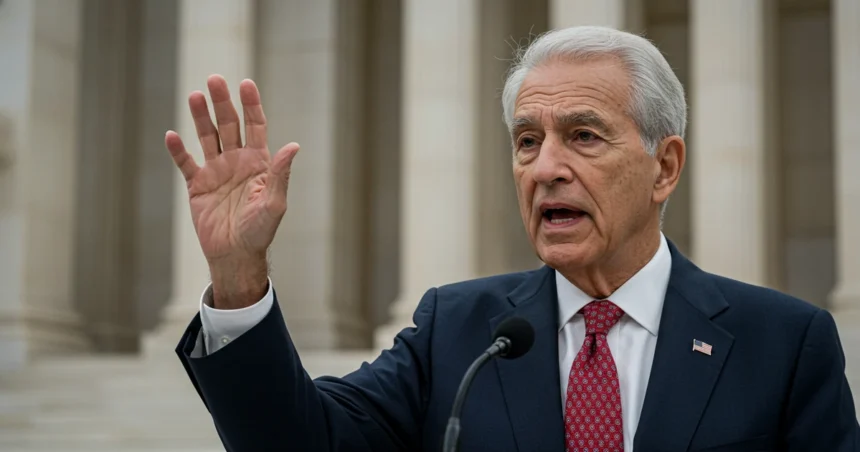
WASHINGTON – In a landmark 6-3 decision today, the U.S. Supreme Court significantly weakened the voting rights act, delivering a ruling that alters the landscape of electoral map drawing and protections against racial discrimination. The decision, centered on a case from Louisiana, raises the bar for proving racial gerrymandering, a move that could reshape political representation across the nation. This ruling effectively limits the use of race as a factor in creating congressional districts.
→ Jacksonville Jaguars Vs 49ers Match Player Stats
The case, Callais v. Louisiana, challenged a newly drawn congressional map that created a second majority-Black district in the state. The court’s conservative majority argued that using race to create this district was itself a form of unconstitutional racial gerrymandering. While the ruling does not strike down Section 2 of the voting rights act entirely, it establishes a much higher standard, requiring plaintiffs to show “intentional discrimination” to win future cases.
→ Seth Rogen’s New Show: A Hollywood Satire Success
Key Takeaways
- The Supreme Court ruled 6-3 to weaken a key provision of the voting rights act concerning redistricting.
- The decision raises the legal standard for proving racial gerrymandering, making it harder to challenge electoral maps on the basis of discriminatory outcomes.
- The ruling came in a Louisiana case, invalidating a map that had created a second majority-Black congressional district.
The “Demolition” of a Landmark Law
For more discussion, see this discussion on Reddit.
In a scathing dissent, Justice Elena Kagan, joined by the court’s other liberal justices, wrote that the majority’s decision continues the “demolition of the Voting Rights Act.” She argued that the new standard is nearly impossible to meet, effectively making Section 2 “all but a dead letter.”
This sentiment was echoed by civil rights organizations. NAACP President Derrick Johnson called the ruling a “devastating blow” and a “betrayal” of Black voters. The decision is the latest in a series of rulings by the court that have scaled back the landmark 1965 law, most notably the 2013 Shelby County v. Holder decision which gutted federal preclearance requirements for states with a history of discrimination. The historic voting rights act was signed into law to ban discriminatory practices like literacy tests and poll taxes.
“Under the Court’s new view of Section 2, a State can, without legal consequence, systematically dilute minority citizens’ voting power.” – Justice Elena Kagan, in her dissent.
What Happens Now?
The immediate impact of this ruling on the voting rights act is that the Louisiana congressional map must be redrawn. The decision is also expected to trigger a wave of legal challenges and efforts by some state legislatures to redraw districts in ways that could dilute the voting power of minority communities, according to reporting from The Washington Post.
Our team observed that discussions on social media, particularly on X (formerly Twitter), show a surge of concern, with many users expressing fear that the ruling will lead to immediate Republican gains in the House, as noted in a thread on Reddit’s politics forum. The ruling on the voting rights act gifts Republicans a potential advantage in the fight for future congressional control.
Key Figures to Watch
- Justice Samuel Alito: Wrote the majority opinion, arguing that using race to draw districts violates the Constitution.
- Justice Elena Kagan: Authored the fiery dissent, claiming the court has now completed the “demolition” of the voting rights act.
- Derrick Johnson: President of the NAACP, a leading voice for civil rights who has strongly condemned the court’s decision.
- Congressional Democrats: Proponents of the John R. Lewis Voting Rights Advancement Act, legislation meant to restore protections, are now under immense pressure to act.
The future of voting rights litigation now shifts to a much more challenging legal battlefield. While the core of the voting rights act remains, its most powerful enforcement tool against discriminatory maps has been severely blunted.
Relevant posts
- Pittsburgh Steelers Vs Chicago Bears Match Player Stats
- The Real News Kansas City Chiefs Dale Carter Retirement is Trending Right Now
- Chicago Bears Vs Detroit Lions Match Player Stats
Visit atholtonnews.com for more stories.