



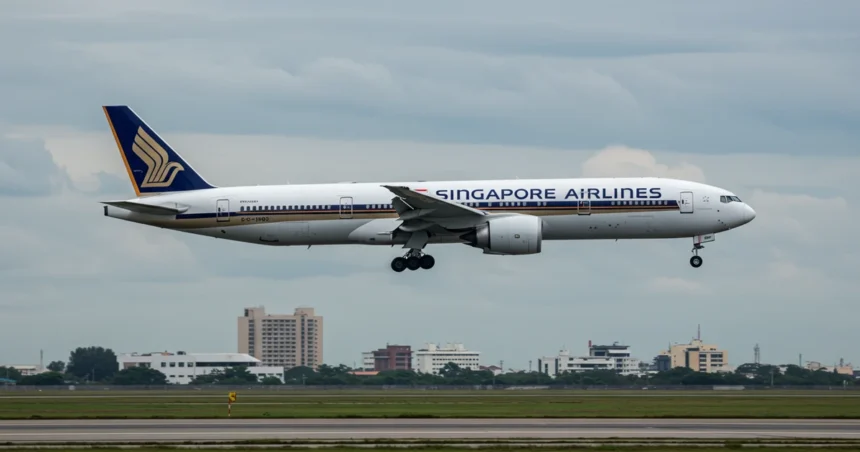
The final report is in on the fatal Singapore Airlines Flight SQ321 incident, which resulted in an emergency landing in Bangkok two years ago. Investigators pointed to convectively induced turbulence from rapidly developing thunderstorms as the cause, but startling questions remain about whether the aircraft’s on-board weather radar failed to detect the imminent danger. The incident, which occurred on May 21, 2024, involved a Boeing 777-300ER traveling from London to Singapore.
→ Real Story: AA9600 Flight Diversion London Impact
The aircraft, carrying 211 passengers and 18 crew members, encountered sudden, extreme turbulence over Myanmar, leading to the death of one passenger and injuring over 100 others. The pilots initiated an emergency landing at Suvarnabhumi Airport in Bangkok to provide urgent medical care to the injured. The final investigation by Singapore’s Transport Safety Investigation Bureau (TSIB) was released just days before the two-year anniversary of the tragedy.
→ Why Delta Flight DL1800 Cancellation Demands Answers?
Key Takeaways
- Cause of Turbulence: The final report concluded the turbulence was “convectively induced,” caused by strong updrafts from rapidly growing storm clouds, not clear-air turbulence as initially suspected.
- Radar Malfunction?: Investigators could not rule out a failure of the on-board weather radar, which did not show the developing storm system, leaving the pilots unaware of the threat. The same aircraft had documented radar issues on flights prior to the incident.
- Human Cost: A 73-year-old British passenger died from a suspected heart attack, and dozens of others suffered severe injuries, including skull, brain, and spinal damage, after being thrown around the cabin.
A Timeline of a Tragedy
The sequence of events aboard SQ321 shows how quickly a routine flight descended into chaos, culminating in a necessary emergency landing. Our team has reconstructed the key moments based on the final investigation report.
- 07:49:32 UTC: The “fasten seat belt” sign is turned on, but there is insufficient time for a cabin announcement.
- 07:49:40 UTC: The aircraft experiences a violent change in vertical acceleration, dropping from +1.35G to -1.5G in just 0.6 seconds. This change likely sent any unbelted passengers and crew airborne.
- 07:49:41 UTC: In the next four seconds, the acceleration reverses, surging to +1.5G, causing airborne occupants to fall forcefully.
- 07:50:05 UTC: After 21 seconds of manual flying to stabilize the plane, the crew re-engages the autopilot.
- 08:06:00 UTC: The pilots begin a diversion and descent toward Bangkok.
- 08:45:00 UTC: Flight SQ321 successfully completes its emergency landing in Bangkok, where medical teams are on standby.
Expert Q&A: Lingering Questions
The final report has been released, but does it resolve all questions about the emergency landing?
Not entirely. According to legal experts, the report raises “huge questions” about why neither the pilots nor the radar system detected the severe weather. While the investigation concluded the pilots’ actions were appropriate for the situation, the fact that the radar manufacturer found no evidence of malfunction creates a perplexing gap in the narrative, potentially opening the door for litigation against Singapore Airlines, according to a report from CNA.
What does this mean for future flight safety?
The findings have put a spotlight on technology and procedure. Investigators recommended that aircraft manufacturers develop better methods to confirm weather radars are working correctly. For its part, Singapore Airlines has enhanced its in-flight turbulence management, including providing refresher training for crews on weather radar and turbulence protocols, as noted by sources like The Business Times. This emergency landing has become a critical case study in aviation safety.
The incident highlights the violent potential of turbulence, even for a modern aircraft like the Boeing 777. The rapid G-force changes were so extreme that unbelted passengers were thrown to the ceiling with enough force to cause severe head and spinal injuries. This tragic emergency landing serves as a stark reminder of the importance of keeping seatbelts fastened whenever seated.
The investigation’s focus on the weather radar’s potential failure is a significant development. Data showed 103 instances of weather radar issues across the airline’s Boeing 777 fleet between May 2023 and July 2025, with three involving the specific aircraft used for flight SQ321. This history of technical issues preceding a fatal emergency landing is a central point of scrutiny.
Ultimately, the resolution of this tragic event extends beyond the technical report. Singapore Airlines has offered compensation to passengers, but the findings, particularly the questions surrounding the radar, may influence further legal action from those who suffered in the moments leading up to the emergency landing. The aviation world will be watching closely to see what further safety improvements are implemented following this devastating emergency landing.
Relevant posts
- Why Flight 6469 Emergency Landing Impacts Air Safety Now
- Why the United Airlines Flight 2323 Issue Alarms Flyers
- Why Delta Flight DL636 Diversion Shifts Safety Standards
Visit atholtonnews.com for more stories.