



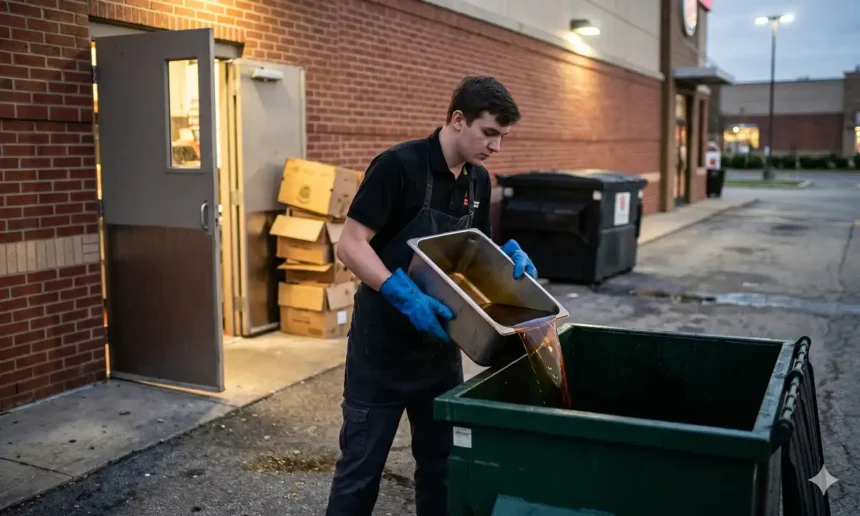
A viral video of a Burger King Employee Grease Dumping incident has sparked an environmental outcry and severe regulatory crackdowns. This isn’t just about one isolated franchise in New York or Florida. For local taxpayers and restaurant owners, these illegal disposal methods are triggering massive fines and soaring utility bills.
Key Takeaways
- Environmental Hazard: Discarded fryer oil flows into storm drains, devastating local creeks and forming massive, concrete-like “fatbergs” in city sewers. Moneywise
- Financial Fallout: Municipalities spend millions clearing these blockages, costs that inevitably trickle down to taxpayers through higher utility rates. Moneywise
- Stricter Oversight: The recent Burger King Employee Grease Dumping scandal is accelerating new waste-management policies and mandatory grease interceptor upgrades nationwide.
What exactly happens during a Burger King Employee Grease Dumping incident?
When workers bypass designated holding tanks, the damage extends far beyond the parking lot. Our analysis suggests that pouring just a few gallons of hot fryer oil into a storm sewer sets off a disastrous chain reaction.
As the oil cools, it congeals and bonds with other non-biodegradable waste.
Moneywise
According to guidelines from the Environmental Protection Agency (EPA), fats, oils, and grease (FOG) are the leading cause of sanitary sewer overflows. Instead of reaching a water treatment plant, storm drains often dump directly into local waterways.
Industry insiders are noting that this practice suffocates aquatic life and requires thousands of dollars in specialized spill response efforts.
Orlando Weekly+ 1
How does this impact local taxpayers and public infrastructure?
If you’ve been following urban infrastructure issues, the financial toll won’t come as a surprise. The latest Burger King Employee Grease Dumping controversy highlights a hidden tax on citizens. When oil hardens underground, it forms massive blockages known as fatbergs.
Lakers vs Denver Nuggets Match Player Stats: Luka’s OT Win
To understand the scale of the problem, we found that clearing these blockages requires high-powered water jets and heavy machinery. The environmental damage and cleanup costs compound the price tag well beyond preventative measures.
| Impact Area | Immediate Effect | Long-Term Consequence |
|---|---|---|
| City Plumbing | Minor clogs in storm drains | Formation of massive fatbergs costing millions to extract |
| Local Wildlife | Hot oil coats aquatic habitats | Toxic degradation of local ecosystems and waterways |
| Taxpayer Costs | Emergency cleanup fees | Permanent hikes in city water and sewage utility rates |
Discussions across social media highlight the growing public frustration. In a recent Reddit thread detailing the Rochester incident, locals expressed outrage over the ecological damage, pointing out that franchise owners must be held financially accountable.
Similarly, historical footage shared on Reddit proves this is a recurring systemic failure rather than a single mistake.
Why is another Burger King Employee Grease Dumping case happening now?
We observed that while corporate policies require commercial kitchens to maintain grease interceptors, high turnover and inadequate training often lead to dangerous shortcuts.
Franchise owners pay for commercial hauling, but sometimes these protocols are simply ignored by staff on the ground.
Celtics vs Magic Player Stats: Reserves Stun Orlando
Here are the primary reasons these violations keep occurring:
- Improper Training: Night-shift workers frequently lack guidance on operating complex holding tanks.
- Cost-Cutting Pressures: Some managers illegally avoid paying commercial hauling fees by disposing of waste themselves.
- Logistical Failures: Overflowing grease bins tempt employees to use nearby storm drains as a quick fix.
What does this mean for the future of fast-food waste management?
The viral nature of the latest Burger King Employee Grease Dumping event is forcing the industry to adapt. State departments of environmental conservation are now issuing direct citations to both franchises and individual workers.
Why Sports Fans Now Follow More Than Just the Score
Furthermore, data cited by the Johns Hopkins Bloomberg School of Public Health underscores that urban sanitation systems can no longer absorb the strain of commercial grease dumping. We anticipate a major shift in how fast-food restaurants operate moving forward.
With every new Burger King Employee Grease Dumping headline, regulatory agencies are pushing for mandatory smart-sensors in grease tanks. These stricter penalties aim to stop environmental violations before they destroy local ecosystems.
RECENT POST
- Quartz Events Sponsor Matching Companies Drive ROI
- Tori Spelling, 4 Kids Hospitalized After Crash
- AtelierGolddruck: Why It Is Redefining Premium Print in 2026
- The Max Verstappen Decision Sabbatical Shaking F1 in 2026
For More Latest Updates Atholton News