


Nyc Half Marathon 2026 Route:
It’s happening right now.
→ Chelsea vs Newcastle Reveals European Destiny
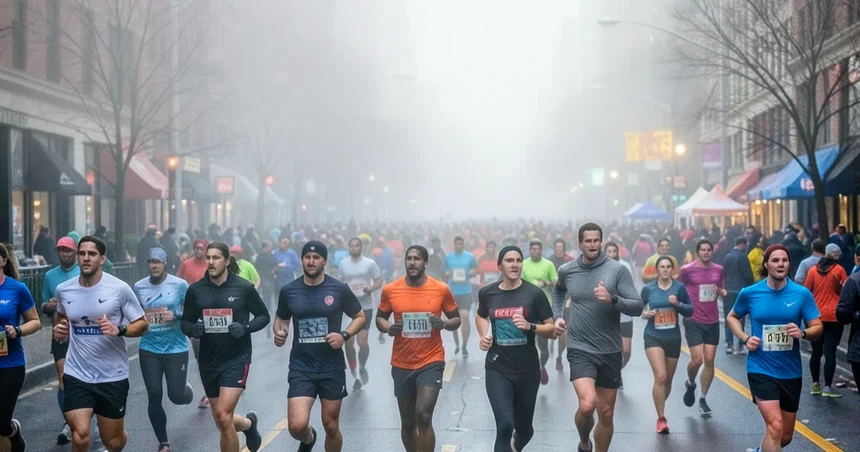
As you read this, more than 30,000 runners are pounding the pavement, their breath fogging in the cool March air.
The 2026 United Airlines NYC Half is not just a race; it’s a 13.1-mile-long festival that reclaims the city’s most iconic streets, transforming them from arteries of commerce into a roaring stadium of human endeavor.
- What’s Happening: The 2026 United Airlines NYC Half Marathon is taking place today, Sunday, March 15, 2026.
- The Path: Runners are navigating a 13.1-mile course that begins near Brooklyn’s Prospect Park, crosses the Brooklyn Bridge, surges through a car-free Times Square, and concludes in Central Park.
- The Impact: Expect significant road closures and “gridlock alerts” throughout Brooklyn and Manhattan for most of the day as the city accommodates one of the world’s premier half marathons.
What Makes This a Bucket-List Route?
For runners, this course is a highlight reel of New York City.
→ Court’s Ruling Ends Italian Dream for Millions
Organized by New York Road Runners (NYRR), the route is a masterclass in urban racing.
The race kicks off on Washington Avenue in Brooklyn, immediately immersing runners in the borough’s energy.
They pass the historic Brooklyn Museum and tackle an early challenge with a run up Battle Pass Hill inside Prospect Park.
From there, it’s a tour of landmarks.
Runners loop around the majestic Grand Army Plaza, past the modern facade of the Barclays Center, and then onto the main event: the Brooklyn Bridge.
For a few precious hours, the bridge’s Manhattan-bound roadway is entirely for the runners, offering breathtaking, unobstructed views of the skyline ahead.
It’s a moment so profound that it defines the race for many.
Once in Manhattan, the course sends runners up the FDR Drive before the incredible crescendo: a full-speed run through a completely closed-off Times Square.
For more discussion, see this discussion on Reddit.
This is an experience so rare it’s almost surreal.
The race finishes with a final, challenging loop within Central Park, ending near the iconic 72nd Street Transverse.
The Runner’s Grind: More Than Just a Pretty View
While the sights are spectacular, the course is not a simple walk in the park.
Our team analyzed the technical data, and it reveals a deceptively challenging profile.
The course has a net elevation drop of about 8 meters from start to finish, but that number hides the real story: a total of 96 meters (over 314 feet) of ascent is woven into the 13.1 miles.
For a runner, that’s a significant amount of climbing.
The translation for your legs is this: the inclines are real.
The climb over the Brooklyn Bridge is the first major test, followed by the relentless, rolling hills of Central Park in the final miles when fatigue is setting in.
One analytics source estimates that the elevation profile can make a runner’s pace about 2.8% slower than on a completely flat course.
That could mean minutes added to your finish time.
It’s that simple.
| Route Section | Key Landmark | The Runner’s Challenge |
|---|---|---|
| Start (Brooklyn) | Prospect Park | Managing adrenaline and tackling an early climb up Battle Pass Hill. |
| Mid-Race (Bridges) | Brooklyn Bridge | A sustained, iconic incline with major crowd energy. |
| Manhattan Surge | Times Square | Sensory overload; resisting the urge to sprint too early from the excitement. |
| The Finish (Manhattan) | Central Park | Fighting fatigue on the undulating, rolling hills to the finish line. |
The Real Race Begins After Times Square
While conventional wisdom says the spectacle of a deserted Times Square is the race’s peak, our data points to a different reality.
The true make-or-break moment for most runners happens in the final 5K, within the winding confines of Central Park.
The sensory explosion of Times Square fades, replaced by the internal battle against screaming muscles and mental exhaustion.
This is where races are won and lost.
Here’s the kicker.
The park’s “rolling hills,” as they’re gently called, feel like mountains at mile 11.
This is the race’s hidden pain point.
After the flat, fast sections on the FDR and through Midtown, the body is unprepared for the change in rhythm.
Add to this the frustrating reality of spotty cell service at the finish line, a common complaint we observed from runners on forums like Reddit, making that triumphant call to family a challenge in itself.
A City in Motion (and Gridlock)
Of course, an event of this magnitude requires the city to adapt.
Extensive road closures are in effect.
In Brooklyn, streets around Prospect Park like Washington Avenue and Flatbush Avenue have been closed since the early morning hours.
In Manhattan, the impact is even greater, with closures on the FDR Drive, major cross-streets like 42nd Street, and a significant portion of 7th Avenue.
For anyone not running, navigating the city today requires patience and a good mapping app.
Detailed closure information has been released by authorities and is covered by outlets like CBS News.
The energy, however, is infectious.
The community buzz, which we saw building for weeks on social platforms like the r/RunNYC subreddit, has spilled onto the streets, with thousands of spectators lining the course to cheer on friends, family, and strangers alike.
Whether you are a runner pushing through the final miles in Central Park or a spectator sipping coffee on a street corner in Brooklyn, one thing is clear: for one Sunday in March, this race owns New York.
Relevant posts
- Why This March Heatwave Is A Game Changer
- Why the US Just Bombed Iran’s Crown Jewel
- Rivalry’s New Chapter: Why Today’s Hoops Game Matters.
Visit atholtonnews.com for more stories.