



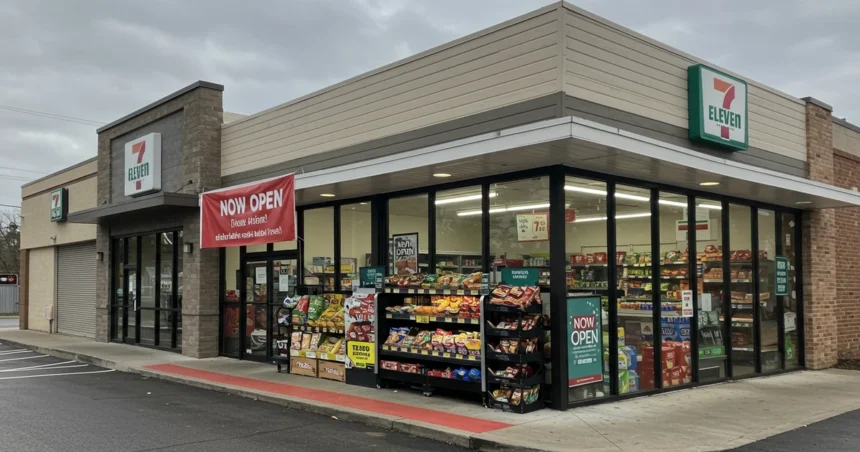
A significant number of 7-Eleven closing locations has become a notable trend, but our team found the reality is a strategic overhaul, not a collapse. The convenience store giant is aggressively culling underperforming stores to finance a major pivot towards a more food-focused model, all while preparing for a delayed but anticipated IPO.
→ One Piece Popeyes Collab Bento Box: Is It Worth It? [Review]
The news of 7-Eleven closing locations isn’t new, but the scale is accelerating. Parent company Seven & i Holdings has confirmed plans to close 645 stores in North America during fiscal year 2026. This comes after hundreds of closures in the preceding years, marking a clear strategy of portfolio optimization. This move is less a sign of distress and more a calculated transformation of its business model.
→ Bahamas Mystery Deepens: Husband’s Story Questioned After Arrest
This will be the fifth consecutive year that the company has closed more stores than it has opened. The goal appears to be a leaner, more profitable footprint ahead of a planned IPO, which has been delayed until 2027 at the earliest. The company is shifting its focus to larger-format stores with expanded fresh food offerings, aiming to compete more directly with chains like Wawa and Sheetz.
The strategy involves not just shutting down stores, but also converting some locations to “wholesale fuel stores,” which are not included in the company’s official store count. This allows 7-Eleven to reduce operational costs while still profiting from fuel sales. This aggressive pruning is a direct response to shifting consumer behavior, inflationary pressures, and a notable decline in traditional revenue streams like cigarette sales.
Key Takeaways
- Strategic Transformation: The closures are part of a deliberate plan to shift from a traditional convenience model to a food-focused destination, not a sign of business failure.
- IPO Preparation: By closing underperforming stores, 7-Eleven is streamlining its operations to present a more attractive, high-margin business for its planned 2027 IPO.
- Hundreds of Closures: 7-Eleven plans to close 645 locations in fiscal 2026, following a multi-year trend of significant closures across North America.
The Shift Away from Tradition
The core of this strategic pivot is a move away from the classic convenience store model. The company is actively closing stores that cannot be adapted to its new, larger, food-centric format. This explains the steady stream of news about 7-Eleven closing locations. This transformation is about creating a new kind of store that can better compete in the modern market.
While hundreds of stores are being shuttered, 7-Eleven also plans to open over 200 new, larger-format locations. This dual strategy of closing and opening highlights the significant capital reallocation happening within the company. The emphasis is on quality over quantity as it redefines its brand. This explains why we continue to see headlines about 7-Eleven closing locations.
The company’s focus is now on prepared foods and beverages, a segment that has seen a 12% year-over-year increase in the convenience sector. By shedding older, less profitable stores, the company is freeing up resources to invest in this high-growth area. The trend of 7-Eleven closing locations is a direct result of this forward-looking strategy.
Timeline of 7-Eleven’s Strategic Closures
- 2023: 7-Eleven closed 184 stores in America.
- 2024: The company announced plans to close approximately 444 “underperforming” locations across the U.S. and Canada, citing inflation and shifting consumer habits. This represented about 3% of its North American stores.
- 2025: Closures continued as part of the ongoing portfolio review, contributing to a combined total of over 600 closures with 2024.
- Fiscal 2026: The company plans to accelerate the process, with 645 stores slated for closure or conversion.
- Fiscal 2027: The North American IPO, originally planned for an earlier date, is now expected this year “at the earliest” as the company works to stabilize performance.
Expert Q&A
Q: Is 7-Eleven going out of business?
A: No. Our research indicates the widespread reports of 7-Eleven closing locations are not signs of a collapse but part of a strategic repositioning. According to reports from publications like Convenience Store Dive, the company is optimizing its portfolio by closing underperforming stores to focus on a new, food-centric model in preparation for a future IPO.
Q: Why are so many locations closing?
A: The closures are driven by a need to adapt to a changing market. Factors include a decline in traditional profit drivers like cigarettes, rising inflation impacting consumer spending, and the need to compete with food-focused rivals. The plan for 7-Eleven closing locations allows the company to reinvest in larger stores with better food service, a growing segment of the convenience market.
The discussion around the future of these neighborhood staples is active on social media, with many customers on platforms like Reddit sharing news of local closures and speculating on the company’s new direction. The consistent news about 7-Eleven closing locations has become a hot topic. This strategic shift, while disruptive, is a calculated bet on the future of convenience retail. The pattern of 7-Eleven closing locations is likely to continue as the company modernizes its fleet.
Relevant posts
- The Atholton Acceptance Rate Isn’t What You Think
- Mets vs Washington Nationals Match Player Stats: 2026 Analysis
- Chicago Cubs vs Cincinnati Reds Match Player Stats Prediction Today
Visit atholtonnews.com for more stories.