



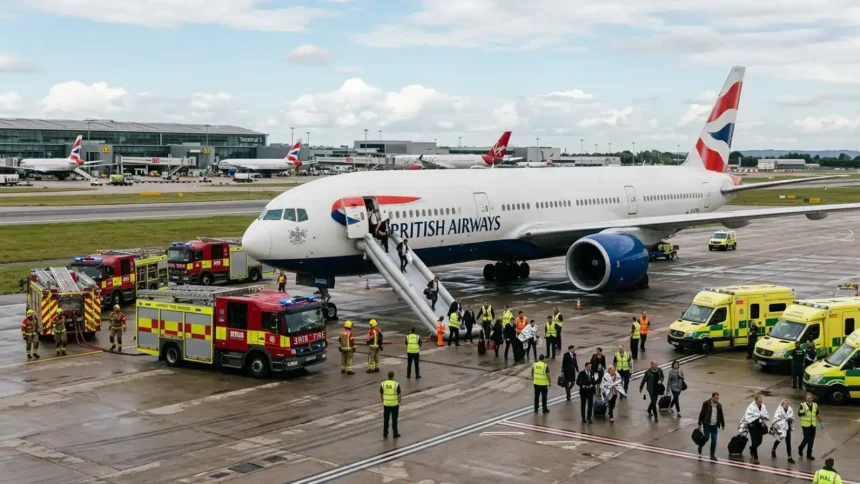
A long-haul flight turned tense in the skies over Scotland. The British Airways Emergency Flight B286 drew attention after the aircraft signaled distress mid-route.
Pilots requested priority landing at Heathrow Airport while cruising high above the UK.
Here is what we verified, and what stays unconfirmed.
✈️ THE FLIGHT
Japan Airlines Flight 1628 was travelling from Paris to Tokyo via Anchorage.
The aircraft was a Boeing 747 cargo jet carrying a crew of three.
At approximately 5:11pm Alaska time, Captain Kenju Terauchi reported seeing unusual lights ahead of the aircraft.
— STORM ⚡️ (@Truth_SeekersTV) June 11, 2026Key Takeaways
- British Airways BA286 flew the San Francisco to London route on an Airbus A380.
- One report says the jet squawked 7700 and sought a priority landing for a medical emergency.
- Heathrow flight status later listed BA286 details, including a separate cancelled entry on another date.
What Did the Aircraft Actually Signal?
The central detail is the distress code. According to AirLive, the Airbus A380 registered G-XLEG squawked 7700 while cruising at 41,000 feet over Scotland. That code means general emergency.
Our analysis suggests the signal triggered the priority handling that followed. The same report says pilots requested a priority landing at London Heathrow due to a medical emergency on board.
We have not independently verified the nature of that medical issue.
- Air France Flight Emergency Madrid Diversion
- Flight 6469 Emergency Landing
- United Express Flight UA5971 Emergency Diversion
- Delta Flight DL636 Diversion
When and Where Did This Unfold?
The timeline is tight and specific. The flight reportedly departed SFO on Monday, May 26, 2025 at 19:33 PDT. It was scheduled as a roughly 10-hour journey to London Heathrow.
If you’ve been following aviation disruptions, this won’t come as a surprise. Long-haul medical events often force priority landings rather than full diversions.
The aircraft continued toward Heathrow rather than turning back.
La aeronave ejecutiva de matrícula estadounidense N318JF se declaró en emergencia este domingo mientras volaba al suroeste de La Romana, antes de precipitarse cuando intentaba regresar al Aeropuerto Internacional de La Romana. A bordo viajaban el piloto y el copiloto, quienes… pic.twitter.com/JUsNlDp8Rl
— Jean Rodriguez (@jeannicol85) June 8, 2026The Reported Facts at a Glance
Here is the case in one view.
| Detail | What Was Reported |
|---|---|
| Route | San Francisco to London (BA286) |
| Aircraft | Airbus A380, registration G-XLEG |
| Reported trigger | Medical emergency on board |
| Emergency signal | Squawk 7700 over Scotland |
| Outcome | Landed at Heathrow, runway 27L; taxied to stand C56 |
The table separates what is confirmed from what is not. We know the signal and the landing, but not the patient’s condition.
What Happened After Landing?
The post-landing notes are brief but clear. AirLive reported the jet landed on runway 27L and reached stand C56. No official British Airways statement on this specific event was available to us. We are not attributing any injuries or causes beyond what was reported.
That restraint matters in fast-moving aviation stories. For airline contact and updates, readers can check British Airways directly.
How Can Travelers Track BA286?
The practical steps are simple. We’ve grouped the most useful checks below.
- Open the official Heathrow flight status page for arrival updates.
- Confirm your terminal and time before heading to the airport.
- Contact British Airways for rebooking if a flight is delayed or cancelled.
- Note that Heathrow listed a cancelled BA286 entry for June 10–11, a separate status item.
- Cross-check live tracking through reputable platforms like Flightradar24.
Different dates can carry very different statuses. Always match the date before assuming the worst.
Why Do These Incidents Get So Much Attention?
A squawk 7700 call rarely stays quiet. The Airbus A380 is one of the largest passenger jets flying.
Any emergency on a packed long-haul draws instant scrutiny.
Our analysis suggests the aircraft’s size amplifies public interest. Industry insiders are noting that medical diversions and priority landings have grown more visible as live tracking spreads.
What This Means for Passengers
The takeaway for flyers is steady, not fearful. Priority landings are a safety tool, not a sign of failure.
Crews train for medical events as a routine part of the job.
Reaching the ground quickly is the goal. For context on past BA286 events, The Guardian documented a 2016 diversion to Vancouver.
The Bottom Line
We found a flight that signaled trouble and landed safely. BA286 squawked 7700, requested priority, and reached Heathrow. The medical details remain unverified on our end.
The confirmed facts end at the gate, not beyond it. For live updates, the safest sources stay the Heathrow flight status page and British Airways.
One emergency code does not define an entire route.
Related News: