



Jee Score Vs Stanford Caltech: Got Into Stanford, Princeton, and Caltech but Scored 15% on JEE — What That Actually Tells Us
→ Early Childhood Education News Transforms US Pre-K
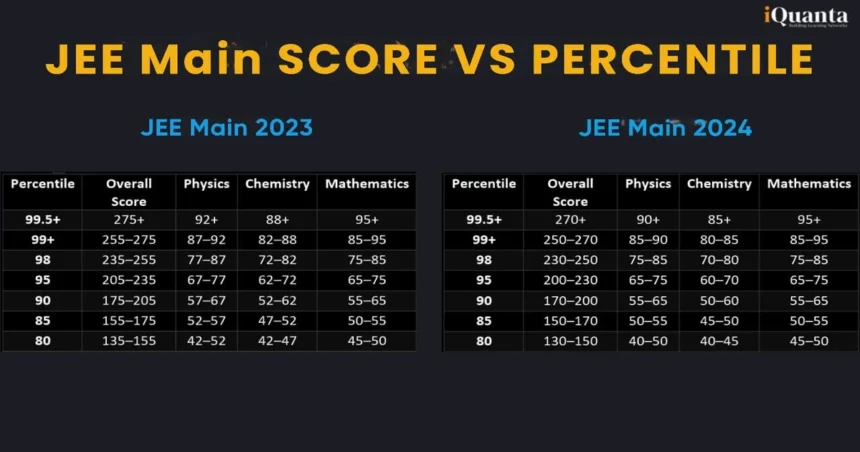
There is a viral LinkedIn post making the rounds that stops you mid-scroll. A student named Justin Sato announced he had received admission offers from Stanford University, Princeton University, and Caltech to study physics. Then came the twist: he also revealed he scored just 53 out of 360 on the JEE, India’s notoriously brutal university entrance exam. That’s roughly 15%.
→ University Of Maryland College Park Address is Changing Regional Development in 2026
The post wasn’t a brag. It was a point about something much bigger than one student’s admissions story.
Two exams, two completely different ideas about intelligence
To understand why this comparison landed so hard, you need to understand what the JEE actually is.
The Joint Entrance Examination is the gateway to India’s Indian Institutes of Technology. Roughly 1.2 million students sit for it each year. The top IITs accept somewhere around 1 to 2 percent of those candidates. The questions are designed to break you — dense, multi-step problems in mathematics, physics, and chemistry that demand not just knowledge but speed, precision, and the ability to hold several complex ideas in your head simultaneously. A score of 15% on the JEE is not a passing score. It would not get you close to an IIT seat.
Stanford, Princeton, and Caltech are, by any global measure, among the most selective universities on the planet. Caltech’s acceptance rate hovers around 3 to 4 percent. Stanford sits below 4 percent. These schools are not easy to get into. But they are selecting for something different.
American elite university admissions weigh research potential, essays, recommendations, intellectual curiosity, and demonstrated passion for a specific field. A student who has spent years going deep on physics, who can articulate why they care about it, and who shows genuine creative thinking in their application can earn a place even if they have never trained for a high-pressure, time-limited multiple-choice gauntlet.
The JEE tests a very specific kind of mastery. It rewards students who have spent years drilling a particular style of problem-solving. Neither approach is wrong. They are just measuring different things.
What Sato’s post was really about
Sato was not trying to suggest the JEE is unfair or that his Stanford admission was undeserved. His point was about the people who do score well on the JEE.
If he, someone who gained entry to three of the world’s most prestigious physics programs, could only manage 15% on that exam, what does that say about the students who score in the top percentiles? His answer: the density of technical talent in India is extraordinary, and much of the world, including Silicon Valley, has not fully grasped its depth.
He tied the observation to his own startup, Skarmy, noting that this understanding is part of why the company is building a presence in India. The post was, in part, a business argument dressed up as a personal reflection.
Why this comparison resonates far beyond one LinkedIn post
The reaction to Sato’s post touched something real. Indian students and professionals responded strongly, many pointing out that the country’s talent is consistently underestimated on the global stage. The JEE’s difficulty is not abstract to them. They lived it, or watched siblings and friends live it, spending years in coaching centers, sacrificing almost everything else to prepare.
There is a genuine tension here that the post exposed. The students who clear the JEE with high scores are, in many cases, among the most rigorously trained technical minds anywhere. Yet the global perception of Indian educational institutions, outside of the IITs themselves, often lags behind that reality. Meanwhile, students from Western systems can reach elite universities through a completely different path, one that values breadth, narrative, and demonstrated curiosity over raw problem-solving endurance.
Neither path guarantees a better engineer, scientist, or founder. What the comparison does is highlight how differently countries have decided to identify and sort talent.
The bigger question this raises
If a student can score 15% on one of the world’s hardest entrance exams and still get into three world-class universities, the honest question is: what are entrance exams actually measuring, and who do those measurements serve?
The JEE measures something real. So does the Stanford admissions process. But they are not measuring the same thing, and treating either as a universal proxy for potential is a mistake. The students who crack the JEE at the top end are exceptional. So are the students who earn Caltech offers through a portfolio of research and passion projects. The overlap between those two groups might be smaller than anyone assumes.
Sato’s post went viral because it made that gap visible in a single, concrete comparison. A 15% score on the JEE. Three offers from the world’s top physics programs. Both things, true at the same time.
Relevant posts
- Varsity University Of Maryland Trends In 2026
- Maryland State Department Of Education Changes State Policies
- The Best Universities for Radiology Education in 2025, Ranked by U.S. News & World Report
Visit atholtonnews.com for more stories.