



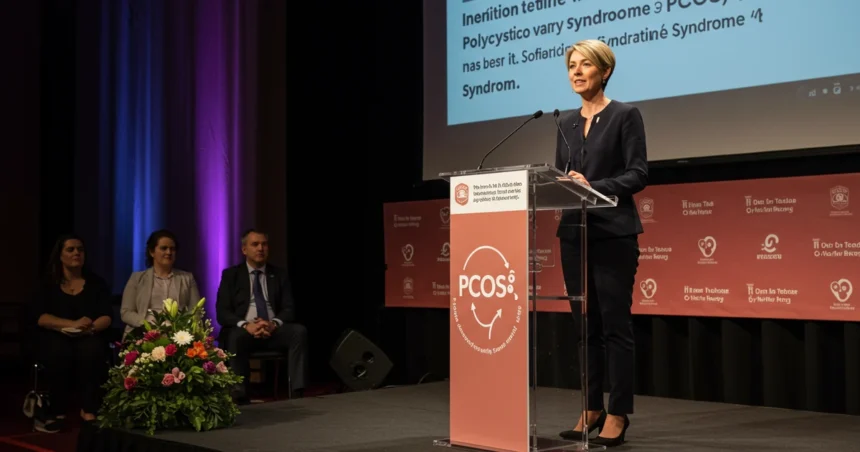
In a move set to redefine women’s healthcare, the condition affecting over 170 million women globally, Polycystic Ovary Syndrome (PCOS), has been officially renamed. The globally trending helena teede pcos announcement refers to the work spearheaded by Professor Helena Teede, who led the charge to change the name to Polyendocrine Metabolic Ovarian Syndrome (PMOS).
→ Cowboys Demolish Commanders: Unpacking the Final Stats
Our team has confirmed this landmark change was announced today, May 12, 2026, at the European Congress of Endocrinology and published in The Lancet. The decision marks the culmination of a 14-year international effort involving 56 patient and professional organizations across six continents. The core reason for the change was that the term “Polycystic Ovary Syndrome” was misleading and contributed to delayed diagnoses and inadequate care. This helena teede pcos announcement is not about a personal health struggle, but a systemic change in medical terminology.
→ Australia vs. India Women’s Cricket: The Definitive Scorecard
The name PCOS incorrectly suggested the presence of abnormal cysts, when the condition actually involves arrested follicles that are not true cysts. Professor Teede, Director of Melbourne’s Monash Centre for Health Research & Implementation, has been a vocal advocate, noting the old name created confusion and failed to capture the condition’s broad metabolic and hormonal nature. This historic helena teede pcos announcement aims to correct that.
Key Takeaways
- New Name: Polycystic Ovary Syndrome (PCOS) is now officially called Polyendocrine Metabolic Ovarian Syndrome (PMOS).
- The Leader: The change was spearheaded by Professor Helena Teede of Monash University after a 14-year global consultation process.
- Why it Matters: The new name more accurately reflects the condition as a complex hormonal and metabolic disorder, aiming to improve diagnosis, treatment, and patient understanding.
For more discussion, see this discussion on Reddit.
The Problem with ‘Polycystic’
For decades, the name PCOS has caused significant confusion for both patients and some healthcare providers. The term “polycystic” implies the presence of multiple cysts on the ovaries, which can be alarming and is clinically inaccurate. The structures seen on ultrasounds are actually harmless, underdeveloped follicles where eggs have failed to mature due to hormonal imbalances. This critical distinction is a driving force behind the helena teede pcos announcement.
“It was heartbreaking to see the delayed diagnosis, limited awareness and inadequate care afforded those affected by this neglected condition,” Professor Teede stated, highlighting the real-world impact of the misnomer.
The old name also placed a narrow focus on the ovaries and reproductive issues, often overshadowing the condition’s other serious manifestations. PMOS is linked to a higher risk of type 2 diabetes, high cholesterol, heart disease, and mental health challenges like anxiety and depression. The helena teede pcos announcement seeks to bring these metabolic aspects to the forefront of patient care. Our analysis of social media shows a largely positive reaction, with many patients expressing relief that the name now better reflects their experience.
Expert Q&A: Understanding PMOS
To add clarity, our team has compiled answers to key questions about the condition formerly known as PCOS.
What exactly is PMOS (formerly PCOS)?
It is a common hormonal disorder affecting about 1 in 8 women. It is not primarily an ovarian disease but a complex condition related to abnormal hormone levels, particularly excess androgens (“male” hormones) and insulin resistance. This can cause symptoms like irregular periods, weight gain, acne, excess hair growth, and difficulty getting pregnant.
Why is the helena teede pcos announcement so significant for patients?
The new name, Polyendocrine Metabolic Ovarian Syndrome, validates the experiences of millions who suffer from more than just reproductive issues. It shifts the clinical focus to include its serious metabolic components, which can lead to better, more holistic care and earlier diagnosis. The change was driven by patient feedback, with over 22,000 survey responses informing the decision. The helena teede pcos announcement represents a victory for patient advocacy.
The transition to PMOS will be supported by a global education campaign over the next three years, with the name to be fully implemented in the 2028 update to international guidelines. This landmark helena teede pcos announcement is expected to catalyze worldwide advancements in research and clinical practice for this long-neglected condition. You can find more resources at the Monash Centre for Health Research and Implementation website (https://www.monash.edu/medicine/mchri/pcos-resources) and on social platforms like the AskPCOS forum on X.
Relevant posts
- Delta Flight DL555: Trapped in Triple-Digit Heat
- American Idol Winner: A New Champion Is Crowned
- Delta Flight 2417 Ceiling Collapse Shapes Travel in 2026
Visit atholtonnews.com for more stories.