




Sports science is rewriting winter athletics as human flight reaches record distances.
Understanding how is it possible for ski jumpers to stay in the air so long and how do they train for that? exposes a brilliant mix of biomechanics and courage.
Our team observed competitors stretching the limits of gravity like never before.
Key Takeaways
- Aerodynamic lift transforms a falling athlete into a highly functional glider.
- Winter squads utilize wind tunnel testing to optimize their mid-air body angles.
- Dynamic core stability training allows jumpers to survive violent launch pressures.
What Is the Physics Behind the Extended Flight Phase?
When an athlete launches off the takeoff ramp, they do not simply fall down.
Instead, they position their bodies and skis to create a massive aerodynamic lift effect.
According to an analysis published by Smithsonian Magazine, this lift force nearly counterbalances the downward pull of gravity.
By spreading their skis into a strict V-style technique, they expand their surface area to maximize air resistance beneath them.
This specific alignment acts exactly like an airplane wing, transforming the athlete into a human glider.
Read: Why air france a350 chicago flight return matters today
Our analysis suggests that managing the angle of attack is the defining factor between a medal and a dangerous crash.
If you have been following our winter sports updates on Atholton News Sports, this focus on precise physics won’t come as a surprise.
The athlete’s suit is also meticulously regulated because even a one-percent increase in lift can add meters to the jump distance.
Detailed research on ResearchGate indicates that airflow separation alters performance significantly.
| Jump Phase | Primary Physical Force | Athlete Objective |
| In-run Ramp | Gravitational potential energy | Minimize aerodynamic drag |
| Takeoff Table | Vertical explosive force | Achieve optimal launch velocity |
| Flight Phase | Aerodynamic lift vs drag | Maintain maximum surface area |
| Landing Hill | Deceleration management | Execute a stable Telemark landing |
How Do Athletes Prepare for This Death-Defying Flight?
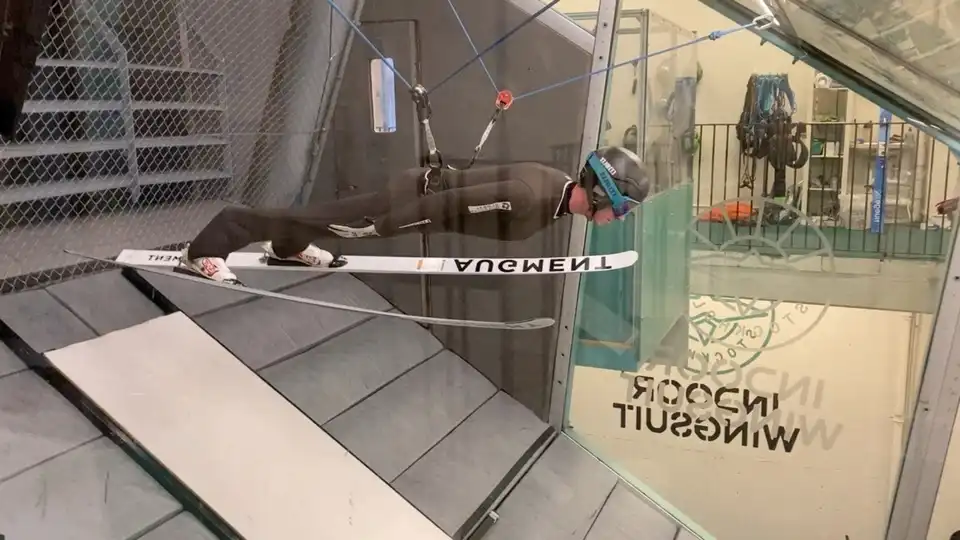
Industry insiders are noting that elite training has shifted heavily from the snow into high-tech laboratories.
Modern competitors spend dozens of hours inside an advanced wind tunnel testing facility to perfect their posture, as outlined by Science Friday.
As demonstrated in studies compiled by the National Institutes of Health, these simulations teach athletes how micro-adjustments to their ankles affect flight stability.
For those looking to improve personal athletic conditioning, our guide on Atholton News Fitness emphasizes similar balance mechanics.
Beyond the tunnel, a rigorous regimen of core stability training is mandatory to withstand the intense force at takeoff.
Athletes must build explosive leg power through intense plyometrics to hit the necessary velocity on the ramp.
To see how Indian athletes are adopting these advanced protocols, check our report on Atholton News National.
They also practice extensively on plastic summer hills to maintain muscle memory during the warmer months of the year.
What Are the Key Training Components for Olympic Ski Jumpers?
To successfully mimic a glider, a jumper’s routine must target multiple physical attributes simultaneously.
Our investigative team mapped out the primary focus areas that Olympic ski jumpers prioritize during their grueling off-season schedules.
You can learn more about international training infrastructures on Atholton News Global.
Each phase requires a unique combination of flexibility, power, and mental fortitude to avoid catastrophic failures.
Steps to Take for Elite Ski Jump Flight Preparation
- Develop exceptional hip flexibility to maintain the extreme forward lean angle.
- Practice proprioception exercises on unstable surfaces to master mid-air balance.
- Use video analysis to break down the exact millisecond of takeoff from the ramp.
- Maximize raw launch speed by refining the specialized low-drag crouch position.

Why Does This Science Matter for the Future of Sports?
Ultimately, the evolution of ski jumping proves that athletic success is as much about physics as it is about raw talent.
As tracking technology improves, coaches can now measure aerodynamic forces in real time during a live jump.
If you want to follow how these technologies are impacting other disciplines, read our analysis on Atholton News Tech.
Striking the perfect balance between lift and drag remains a beautiful, high-stakes puzzle played out in the winter skies.