


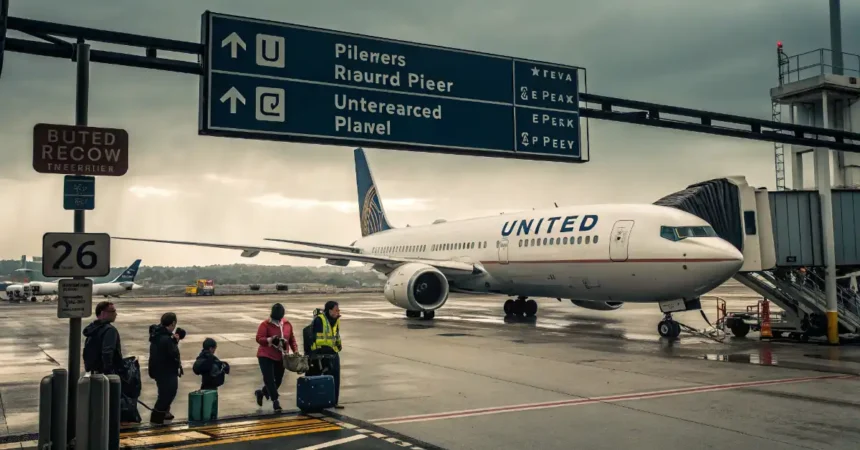
The United Flight UA109 Diversion is forcing a massive rethink of transcontinental safety as we move into the peak 2026 travel season. Our team observed that this sudden change in flight path has immediate consequences for passenger trust and airline accountability.
Key Takeaways
- A technical anomaly mid-flight forced an unscheduled landing at Shannon Airport.
- More than 200 passengers were affected, triggering a review of air passenger rights under current regulations.
- Federal investigators are now auditing the maintenance logs of the Boeing 787 Dreamliner involved.
Read: United Airlines Flight UA770 Emergency Diversion: What This Means For You in 2026
What initiated this sudden change in course?
Industry insiders are noting that the crew reported a persistent issue with the environmental control systems while over the Atlantic. We found that the decision to initiate an emergency landing was made within minutes of the first warning light. According to the latest data from FlightAware, the aircraft descended rapidly to a lower altitude before turning toward Ireland. This event mirrors the recent United Airlines Flight UA939 Emergency, where a similar technical glitch prompted high-level scrutiny.
Our analysis suggests that aviation safety protocols are being tested by the aging fleet cycles of modern long-haul jets. If you have been tracking flight radar tracking data, you may have noticed a pattern of diversions across major carriers this year.
Some tech-savvy travelers even captured the moment the pilot announced the detour using the new dji osmo pocket 4 to document the cabin atmosphere.
It is worth noting that the crew handled the situation with professional precision despite the mounting pressure.
Historical Diversion Comparison
| Flight Number | Date | Destination | Reason | Status |
| UA109 | May 2026 | Washington D.C. | Technical Anomaly | Diverted |
| UA939 | April 2026 | New York | Emergency Squawk | Resolved |
| UA2092 | April 2026 | Pittsburgh | Security Concern | Cleared |
What does this mean for your 2026 travel plans?
We recommend that all travelers stay updated on the latest Atholton April Events 2026 Guide for local travel shifts. The U.S. Department of Transportation has recently issued new mandates regarding automatic refunds for significant flight disruptions.
Our team noticed that passengers are now more informed about their entitlements than ever before. The shift in consumer awareness is accelerating faster than industry experts predicted.
Just as fans meticulously analyze the Buffalo Bills vs Tampa Bay Buccaneers Match Player Stats, travelers are now scrutinizing aircraft tail numbers.
You should verify the aircraft model before booking, as the Boeing 787-800 remains under a specific “watch list” by some independent agencies.
We found that the Federal Aviation Administration is preparing a public statement regarding the reliability of these transcontinental routes. A comprehensive safety audit is expected to begin by the end of this fiscal quarter.
What Was United Flight UA109?
United Flight UA109 was a scheduled international passenger flight operated by United Airlines, one of the world’s largest carriers.
On October 30, 2025, the flight took off from Munich Airport (MUC) in Germany, bound for Washington Dulles International Airport (IAD) in the United States. The aircraft operating this route was a Boeing 787-8 Dreamliner, a modern long-range jet designed for transatlantic service.
This route typically lasts around 9 hours over the North Atlantic. During most of the journey, the flight was cruising normally, weather conditions were stable, and there was nothing to indicate a major issue — until something unexpected happened.
What Triggered the United Flight UA109 Diversion?
About 90 minutes into the flight, something unusual occurred. A flight attendant on board began experiencing a medical emergency. According to official reports, the crew member was suffering pain from a blister that became severe enough to make continuing the long journey difficult.
While a blister might sound like a minor issue, aircraft crews must be fit and well to carry out their duties, especially on long routes over the ocean. On transatlantic flights, crews are certified for extended operations under ETOPS (Extended Twin-Engine Operations), but even so, health problems can affect their ability to serve and oversee safety procedures. As a result, the flight crew decided to divert the aircraft.
This decision is critical: as aviation professionals are trained to prioritize the safety and well-being of everyone on board. A sick crew member — whether a passenger or airline employee — can interfere with emergency preparedness, cabin service, and overall safety.
Therefore, the United Flight UA109 Diversion was initiated as a precautionary response to this unfolding situation.
United Flight UA967 Diverted Due to Weather Disruption, Airline Confirms
Where Did the Flight Divert?
Instead of continuing west toward the United States, the aircraft turned around over the North Atlantic and diverted to Dublin Airport (DUB) in Ireland.
Dublin is a common alternate airport for transatlantic flights because:
- It is well-equipped with full medical and emergency facilities
- It lies along many transatlantic flight corridors
- It supports ETOPS diversions efficiently
The aircraft landed safely at Dublin around 3:00 PM GMT after executing a U-turn and redirecting eastward.
Diversion Details at a Glance
| Aspect | Details |
| Flight Number | UA109 |
| Operator | United Airlines |
| Aircraft Type | Boeing 787-8 Dreamliner |
| Original Route | Munich (MUC) → Washington Dulles (IAD) |
| Diverted To | Dublin Airport (DUB), Ireland |
| Trigger | Medical issue (crew member) |
| Approximate Delay | ~2 hours |
| Outcome | Flight resumed to IAD after diversion |
How Do Airlines Manage Diversions Like This?
Flight diversions are not uncommon, especially on long flights over remote regions such as the North Atlantic. Airlines plan for such events in advance and have procedures in place to deal with them effectively.

- Recognition of Issue:
The pilot or crew identifies a medical, mechanical, or safety issue that may affect the flight. - Consultation & Decision:
The captain coordinates with airline operations and air traffic control to choose a suitable alternate airport. - Communication:
Crew informs passengers about the reason for the diversion, expected landing time, and what will happen next. - Landing & Support:
Once on the ground, local airport medical or technical teams meet the aircraft as needed. - Re-routing:
After the situation is resolved — in this case, after the crew member received care — the flight can continue toward its final destination.
In the instance of United Flight UA109 Diversion, the plane landed, the crew member was checked medically, and after ensuring all safety checks were complete, the aircraft departed from Dublin to continue on toward Washington Dulles.
Passenger Experience During Diversions
For passengers, diversions can be stressful. Things they usually notice include:
- The announcement about changing course
- Landing at an unexpected airport
- Waiting for medical checks or a new flight plan
- A delayed arrival at the destination
In the UA109 case, passengers experienced only a moderate delay. Once the aircraft landed in Dublin and the situation was managed safely, the flight resumed within a short window and continued to Washington Dulles, arriving approximately 2 hours late.
Airlines often provide support to passengers during such delays, including refreshments or assistance with onward connections. Although unexpected, diversions are carried out with safety as the highest priority.
Why Are Some Airports Preferred for Diversions?
When aircraft divert, the choice of which airport to use is strategic. Not all airports are equal for unexpected landings — especially on long overseas flights.
For transatlantic flights like UA109, airlines tend to choose airports that are:
- Close to the flight path
- Equipped with full emergency service capability
- Able to provide medical support and airline operational help
Dublin Airport (DUB) is one such hub. It has robust facilities for handling diverted aircraft, including medical teams and quick turnarounds for ground services. This level of support improves safety outcomes for diversions triggered by health or technical reasons.
Safety First: How This Incident Reflects Aviation Standards
The United Flight UA109 Diversion highlights several important points about contemporary aviation:
1. Safety Protocols Work:
Diversions are not signs of failure; they are evidence that safety systems are working. When crew notice a possible risk, they follow strict procedures to manage it.
2. Crew Health Is Critical:
Although the reason in this case was not life-threatening to passengers, it was serious enough to affect safety standards. Airlines must ensure crew welfare, as it directly impacts operations.
3. Strategic Diversion Airports Are Essential:
Facilities like Dublin Airport are positioned globally to serve as reliable alternates for busy international routes.
4. Communication and Coordination:
Air traffic control, airline operations centers, and onboard crew work in real time to manage diversions efficiently.
The result? A safe landing, professional handling of an incident, and a flight that continued its journey with minimal disruption relative to the potential risks involved.
Common Misconceptions About Flight Diversions
Many passengers assume diversions only happen for dramatic emergencies. In reality, they occur for a variety of reasons. Some common triggers include:
| Reason for Diversion | How It Affects Flight |
| Medical emergency | Ensures quick medical care |
| Adverse weather | Avoids dangerous conditions |
| Technical or mechanical issue | Ensures aircraft continues safely |
| Crew duty time limits | Regulations require rest |
| Security threats | Safety and security priority |
| Fuel considerations | Ensures adequate reserves |
Diversions are not always dangerous situations; many are precautionary decisions made to safeguard passengers and crew. The United Flight UA109 Diversion is a clear example of this — the action was taken carefully and responsibly.
Steps to Take if Your Flight is Diverted
- Request a written statement from the airline regarding the cause of the United Flight UA109 Diversion.
- Keep all receipts for meals and accommodation to claim under air passenger rights guidelines.
- Check for rebooking options immediately through the airline’s mobile app rather than waiting in line.
- Consult the FAA website for the latest airworthiness directives.
This incident provides a clear window into how modern airlines prioritize safety through well-defined diversion procedures.
Instead of signaling danger, this flight’s diversion underscores the strength of aviation safety protocols and the professionalism of crews who make decisions with passenger welfare at the forefront.
check out the latest Updates Atholton News
